Silicone, fabric, nylon, elastic, vinyl and Tyvek. Which one you need is decided by how long the band stays on a wrist.
Guest bands that open a room, a gate or a locker and stay on for the length of a stay. The lock decides the chip, so we start from the lock and work back. The length of the stay decides the material, and that is usually the harder question of the two.
Hospitality →Lockers, turnstiles and pool access, where the band goes into water every day and comes back out. Silicone and elastic are the two that survive that, and neither has a closure to break. Membership numbers can be laser engraved rather than printed, so they are still readable a year later.
Clubs and associations →Site and back of house identification where a card is impractical and a band is not. Tamper-evident closures in vinyl and Tyvek mean a band cannot be passed from one person to another once it is fitted, which is the whole reason a site chooses one.
Access control and security →The production drawings for the formats we run most, at the same scale so the proportions compare rather than sit in a list. Every one of them carries the same chip families, so what you are choosing here is the shape and how long it stays on.
Reusable materials, for lockers, memberships, staff and anywhere the same band is issued again next week. None of the three has a closure that can fail, because none of them has a closure.
Waterproof, moisture proof, shock proof and rated from −30 °C to 220 °C. The band that goes into a pool or a spa and comes back out.
A nylon strap carrying an NFC card, rated −30 °C to 75 °C. Waterproof, moisture proof and shock proof.
A stretch band in plastic or fabric, rated −30 °C to 75 °C. Nothing to fasten and nothing to break, which is why lockers and leisure centres use it.
Single visit and single day materials, plus the multi-day fabric band that sits between the two. The closure is the whole point here: it is what stops a band being passed from one wrist to another.
A woven strap with a separate tag carrying the chip, in wood or PVC. The closure decides whether it comes off, so specify that before the artwork.
Disposable PVC with a snap closure, rated −30 °C to 75 °C. Waterproof, and it cannot be moved from one wrist to another once it is on.
High-density polyethylene fibre with a tamper-evident adhesive closure. Tear resistant, waterproof and the lightest thing on this page.
The same three bands and the same chip families as our cards, so a site already running card readers can add wristbands without touching the door.
The method changes with the material. Silicone takes a laser, fabric takes thread and ink, and the flat plastics take print.
This is the question that decides the order, and it is worth answering before anything else. A band that has to come off every night and one that must never come off are two different products, whatever the chip inside them.
| Wear | Closure | Waterproof | |
|---|---|---|---|
| Silicone | Years | None, it slips on | Yes |
| Fabric with a tag | Days | Single use or multiple use, in wood | Per model |
| Nylon | Repeat use | Per model | Yes |
| Elastic | Repeat use | None, it stretches | Yes |
| Vinyl | One use | Snap, tamper proof | Yes |
| Tyvek | One day | Adhesive, tamper evident | Yes |
Send us the reader, lock or turnstile model you use, and tell us how long the band has to stay on. We confirm both before you order, rather than guess.
Frequency and chip family, from the reader, lock or turnstile model, or from the credential you use now. You can also post us a band or a card and we verify it here.
Read distance on a wrist is not the same as read distance on a card, particularly in UHF, so a band that works on the bench still has to be tried on the gate. On encrypted systems we supply the correct chip and the key holder writes the credential.
A free sample in the material and chip you need, tested on your own reader and worn by somebody for a day. The wrist tells you things the specification cannot.
All trademarks are the property of their respective owners. No affiliation or endorsement is implied.
10M
Cards a month
1,300m²
Plant floor in Dongguan
87
People in the plant
15+
Years making cards at this plant
A day, a stay, or indefinitely. This is the first question rather than the last one, because it rules out most of the materials before anything else is decided.
Send the model name or system and version, for the door, the turnstile or the locker. A clear photo of the reader is often enough to identify it.
A vector file for anything engraved or screened, and a print-ready file for anything printed. Tell us whether the artwork has to run all the way around.
Approximate figures are enough to start. They help us recommend the right production setup and confirm the best option for your order.
It is decided by how long it stays on a wrist. One day is Tyvek, one visit is vinyl, several days is fabric, and anything that comes back and goes out again is silicone, nylon or elastic. Tell us the length of stay and the environment and we will narrow it to two.
If the reader runs at 125 kHz, 13.56 MHz or UHF, yes. The chip in a band is the same chip that goes in a card, so a site already running card readers can add wristbands without changing anything on the door.
Silicone, nylon, elastic, vinyl and Tyvek are all waterproof. Silicone is the one rated for heat as well, from −30 °C to 220 °C, which is why pools and spas use it.
That depends on the closure, and it is usually the point of the choice. Vinyl uses a snap closure and Tyvek an adhesive one, both tamper evident, so neither can be moved once fitted. Silicone, nylon and elastic are meant to come off and go back on.
Yes. Numbers and QR codes are laser engraved individually on silicone and printed individually on the others, and the chip can be encoded individually as well. Send the data as a spreadsheet, one row per band.
Diameters from 45 to 74 mm depending on the model, across twelve shapes. Tell us who is wearing them, adults, children or both, and we will suggest which sizes to order.
On silicone, yes, by water transfer printing. On fabric, both the strap and the tag are printable. On Tyvek and vinyl the printable area is the flat face, and we send you the exact dimensions with the quote rather than after it.
Yes. The same three bands and the same chip families, from EM4200 and T5577 at 125 kHz, through MIFARE, NTAG and ICODE at 13.56 MHz, to U-CODE Gen2, Alien and Impinj in UHF.
Yes, and with wristbands we push for it. We send a free sample in the material and chip you asked for, so you can try it on your own reader and, just as usefully, wear it for a day.
Guests on bands, staff on cards, one system behind both. The chip and the encoding are the same, so adding cards changes nothing on the reader.
RFID and NFC cards →For back of house and maintenance, where a band is impractical and a keyring is already there. Same chip, encoded in the same run, on one order.
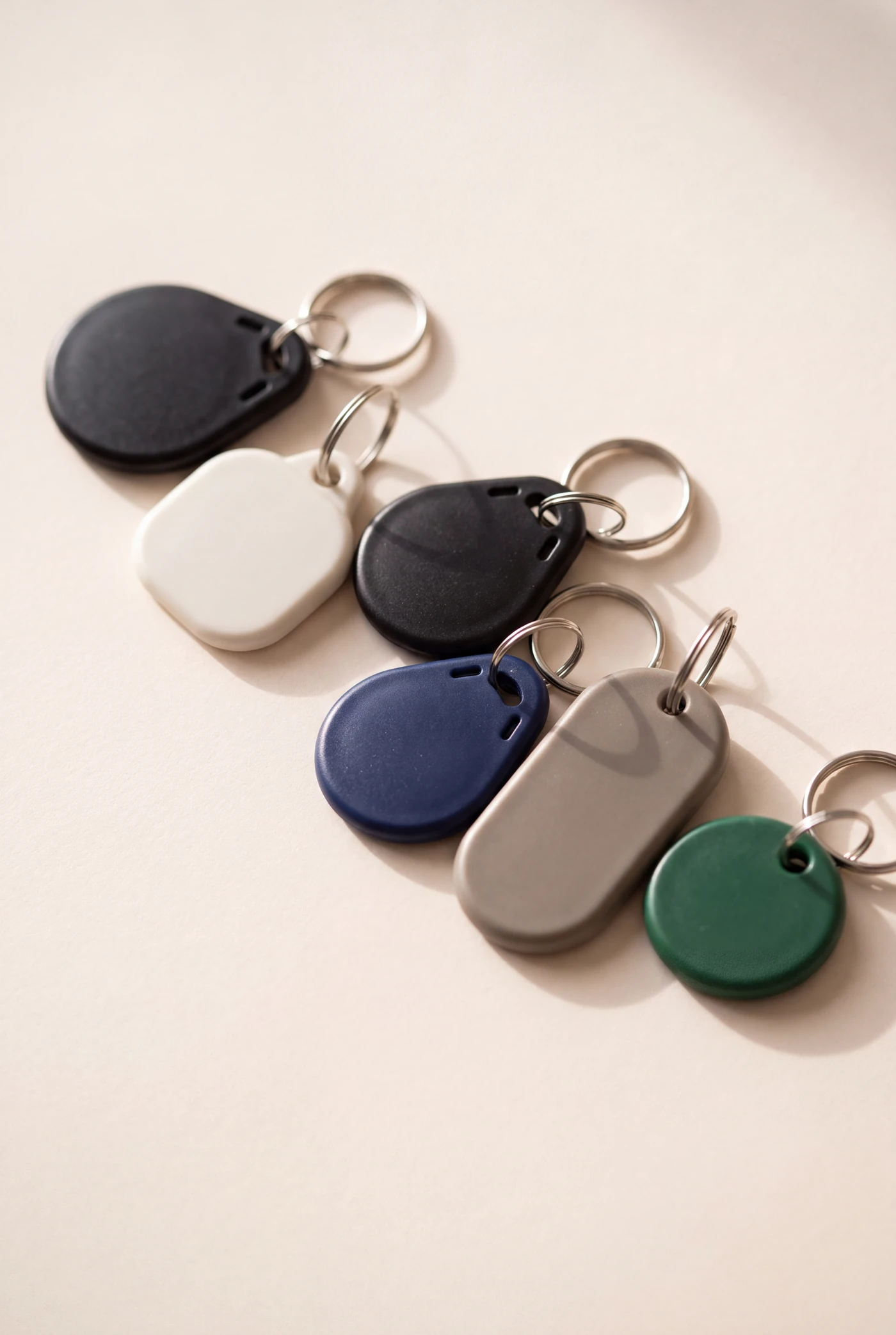
Key fobs →The printed pieces that go around a resort or a leisure site, produced from the same artwork and shipped on the same order as the bands.
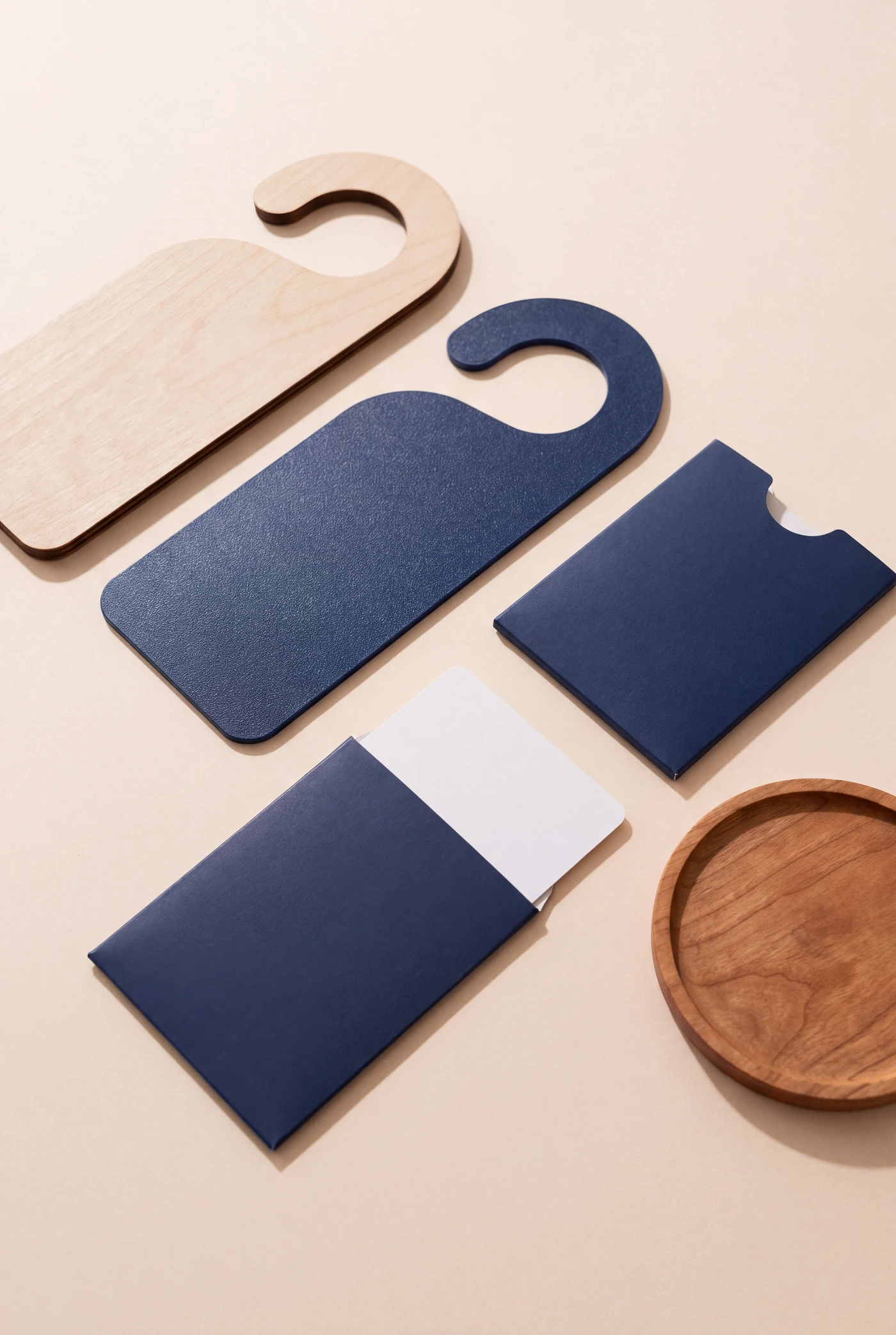
Accessories →