Request a quote
CapabilitiesThe plantResourcesContactRequest a quote
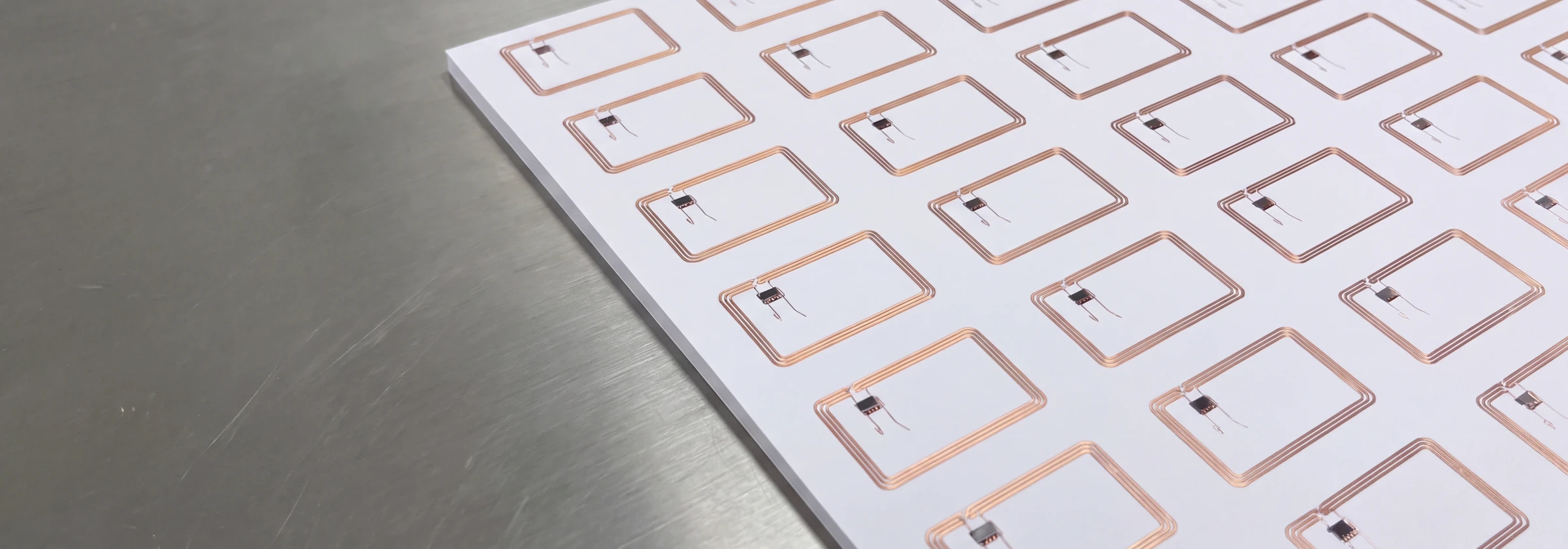
A sheet of RFID inlays with their copper antennas and chips, on the production bench
Home/Access control integrators
Industries · Access control integrators

We match the credential to your system

Send the reader or the lock model. We confirm the chip against it in writing before anything goes into production.

Chip confirmed in writing first125 kHz, 13.56 MHz and UHFCards, fobs and bands on one order
Send us a reader model →
What decides compatibility

You already know this. It is here so that a client of yours reading over your shoulder knows it too, and so you can point at it instead of explaining it again.

The frequency

125 kHz, 13.56 MHz or UHF. This one we can confirm from the reader or lock model on its own, and it is the fastest of the three for us to settle.

The chip family

MIFARE Classic 1K and DESFire EV1 share a frequency and are not substitutes. The reader decides, not the age of the chip, and the model usually tells us.

How the system was configured

This is the one that sometimes needs a card in a door rather than a document. Where that is the case we say so, instead of quoting it as settled.

What we send before you commit

A written chip confirmation, and a physical sample where the specification sheet is not enough to settle it.

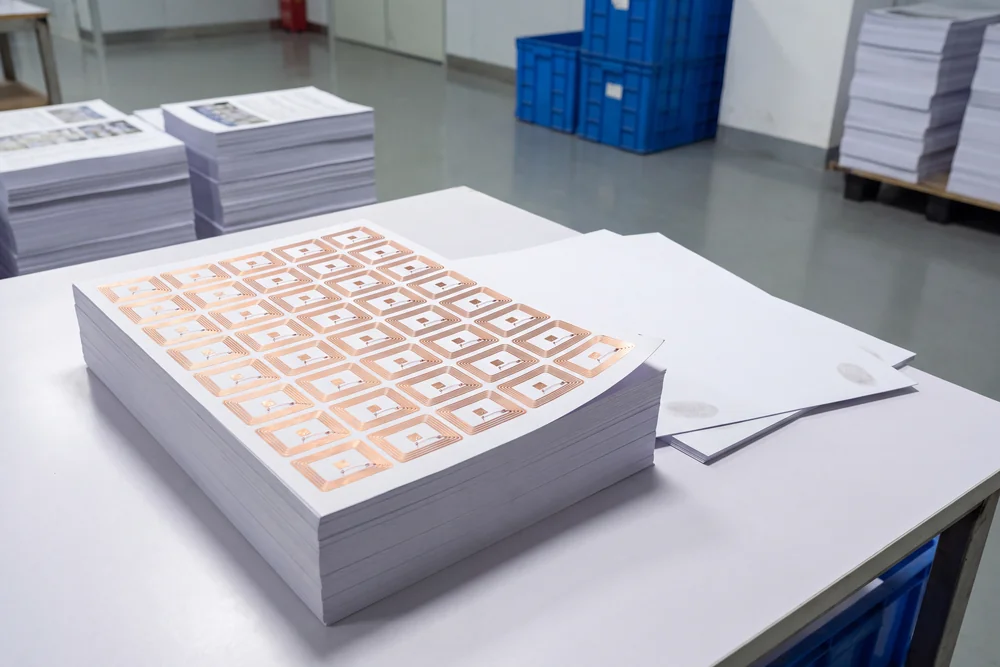
Sheet of RFID inlays, each copper antenna carrying its chip
The reader or lock model you send us, and the chip we confirm against it.
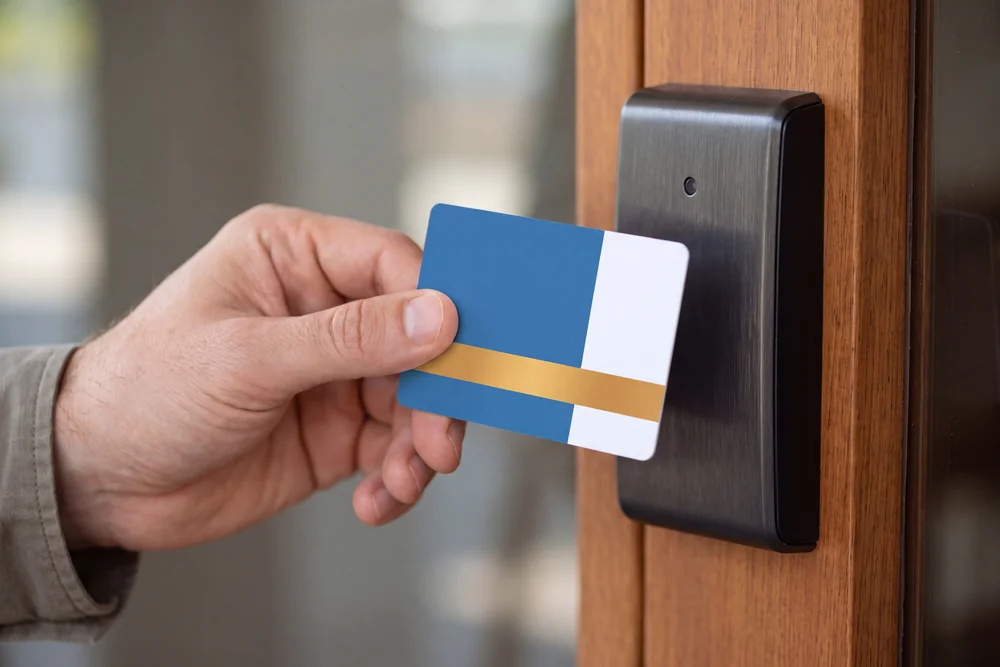
An access card presented to a wall reader on a door
A sample card encoded to your system, tested on your own door.
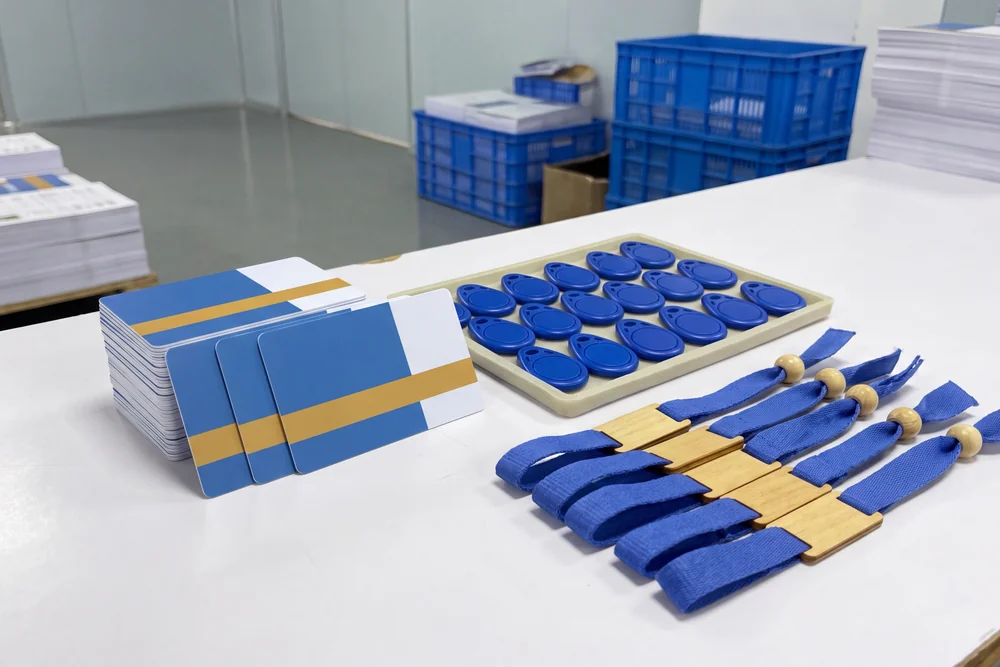
Cards, key fobs and wristbands from one order laid out on a bench in the plant
Cards, fobs and wristbands carrying the same chip on one order.
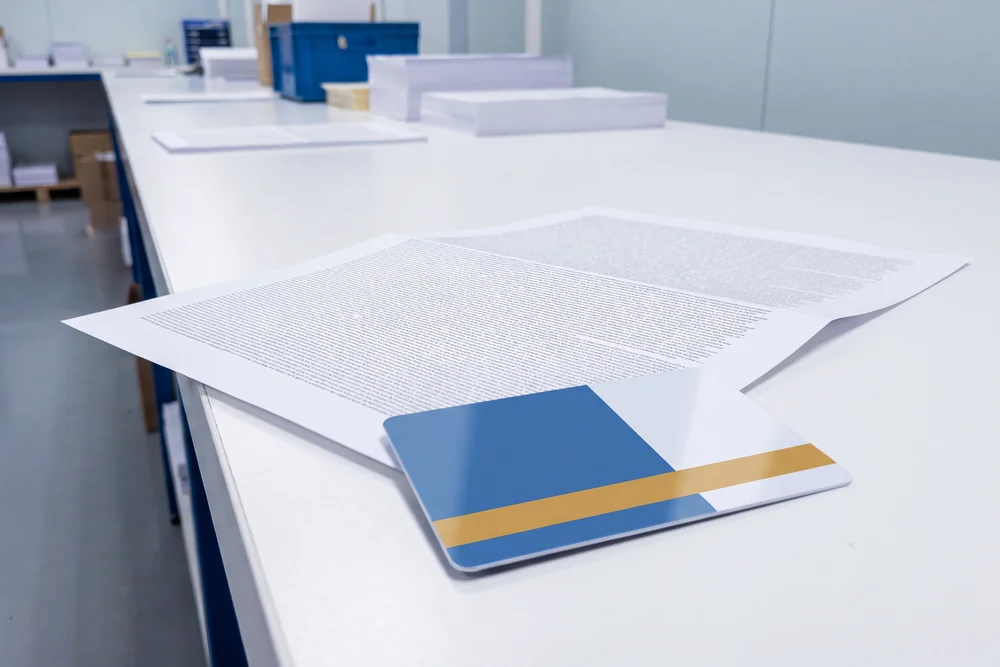
An access card resting on the approved specification sheet
The approved specification kept on file for every reorder that follows.

What we hold as standard

If the chip you need is not on this list, send the part number. Holding it as standard and sourcing it are different things, and we say which applies.

13.56 MHz and NFC

MIFARE Classic 1K, MIFARE Plus 4K, MIFARE Ultralight C, MIFARE DESFire EV1, NTAG and ICODE. On wood: NTAG 213, 215 and 216, MIFARE Ultralight EV1, MIFARE Classic 1K and 4K, MIFARE DESFire EV2 and EV3, ICODE SLIX.

125 kHz

EM4200 and T5577 in cards. In key fobs, also EM4305, TK4100 and Hitag. This is what the legacy proximity readers, the door intercoms and the older access systems still in service are reading.

UHF, 860 to 960 MHz

UHF Gen 2 in cards. In wristbands, U-CODE Gen2, Alien and Impinj. Not available in key fobs. If a site reads at UHF, the credential has to be a card or a wristband. Better known now than at quotation.

Where the material limits the chip

Wood takes contactless only. A contact module cannot be milled into it reliably, and a wood card is 1.20 to 1.30 mm against 0.76 mm in PVC, so the slot is what to check rather than the read.

Encoding, and who holds the keys

Encoding happens in our own plant, so credentials arrive ready to issue. What we can write is not always ours to decide.

Open or unencrypted systems

We encode to your specification and ship the credentials programmed. Sequential or non sequential numbering, and a UID list delivered with the order so your system has the population before the box arrives.

Encrypted systems

Where the keys belong to the system owner, we supply the correct chip and the credential itself is written by whoever controls those keys. That is usually you. We will not pretend otherwise to win a line on a quote.

We tell you which one you are in

Before you order, not after. It changes what you have to do on site, and finding out at delivery is the expensive way to learn it.

Systems our cards work with

Send the system name and its version, because a lock or firmware upgrade can change the chip a site needs without changing anything anyone can see.

What we confirm

Frequency and chip family, from the reader or lock model, or from the credential in service today. Post us a card and we verify it here.

Where the limits are

We supply the correct chip on encrypted systems. Where the keys belong to the system owner, the credential is written by whoever holds them, which is usually you.

What comes back

A written answer within 24 hours, and a free sample in the chip you specify so you can test it on the installed base before you order.

Compatible with
Assa Abloy VingCardVisionlineSaflokdormakabaOnitySaltoHäfele Dialock

All trademarks are the property of their respective owners. No affiliation or endorsement is implied.

One chip, three form factors

Staff take a card, contractors take a fob, a leisure area takes a wristband, and the reader has to treat all three the same.

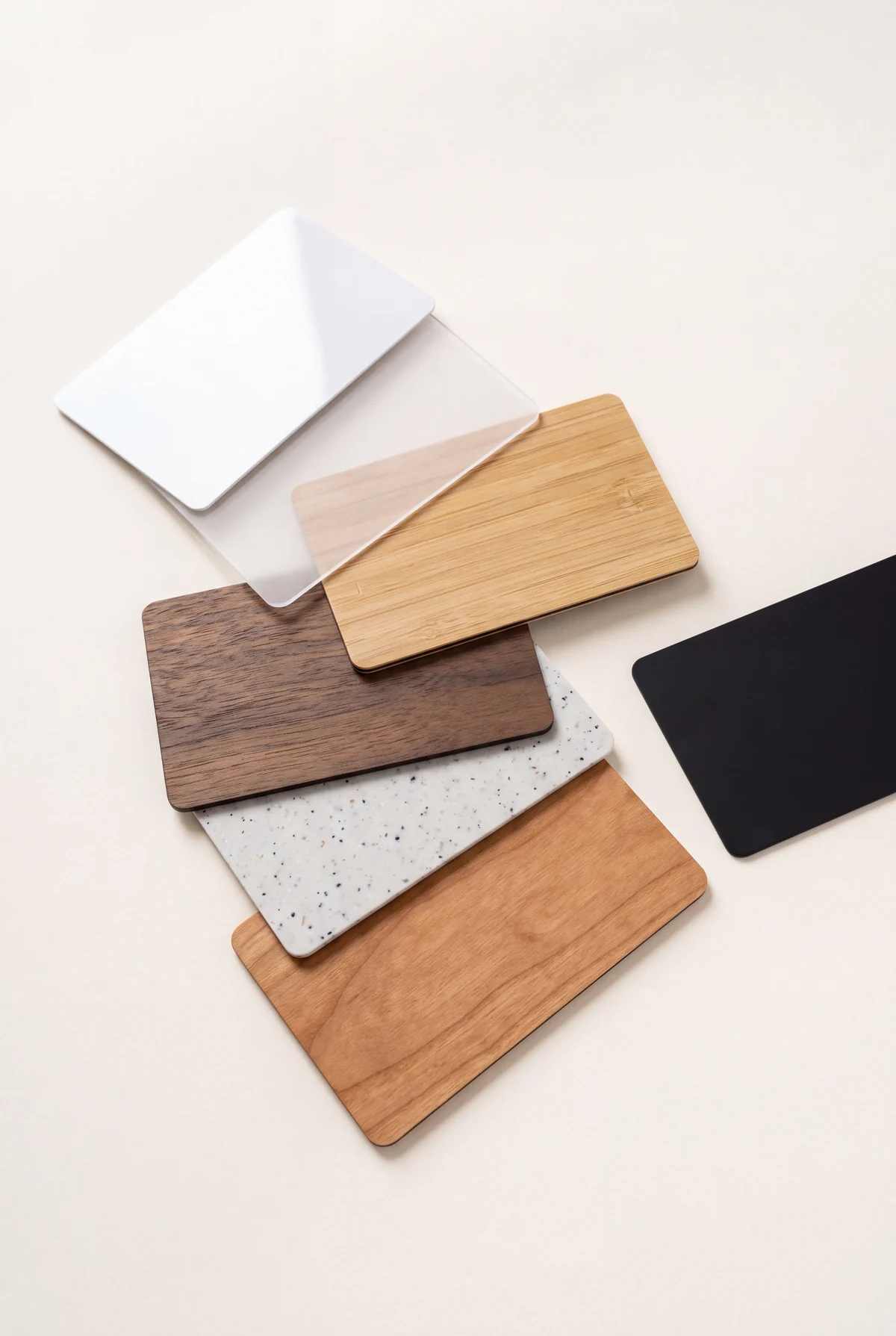
Blank cards in white PVC, recycled PVC, bamboo, cherry and black walnut

Cards

CR80 as standard, in PVC, recycled PVC or wood, and cut to your own outline where the credential has to do something a rectangle cannot.

RFID and NFC cards →
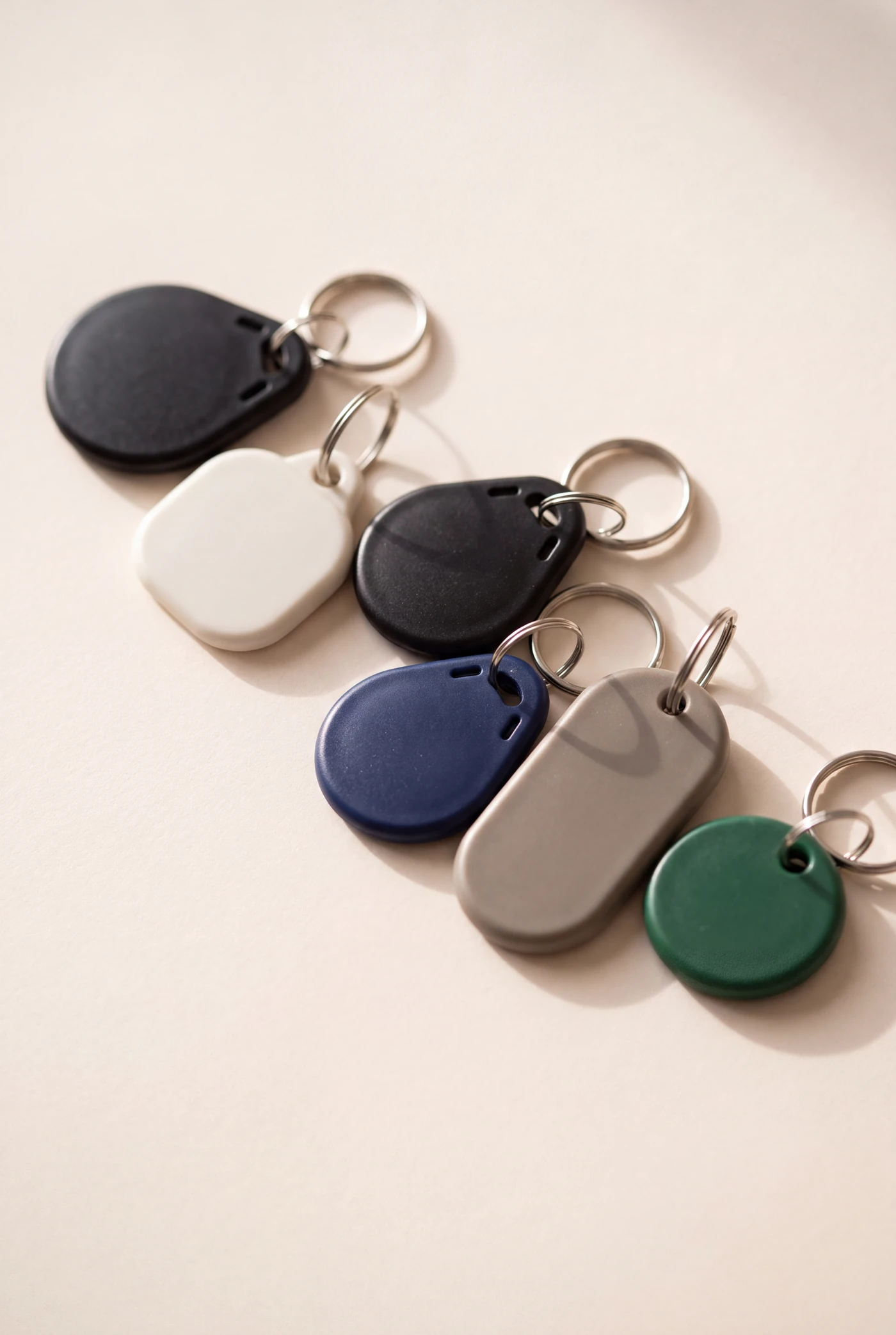
Blank ABS key fobs on split rings, in black, white, navy, grey and green

Key fobs

Moulded ABS, 31 to 56 mm across twelve shapes, at 125 kHz and 13.56 MHz. The material that survives a keyring, which is the whole job.

Key fobs →

Wristbands

Silicone, fabric, vinyl and Tyvek, chosen by how long the band stays on the wrist and whether it has to be tamper evident on the day.

Wristbands →

Before you order

01

The reader or lock model

The most useful thing you can send. A photo of the card you use today works just as well.

02

A written answer the same day

The frequency, the chip family, and a price against that specification, in writing.

03

A sample in your own door

Free where the request is qualified. Test it in the lock or turnstile it will live in.

04

Production and reorders

13 calendar days from artwork approval to dispatch, 8 on express. The specification stays on file.

Questions we hear the most

Can you encode to our system before shipping?

On open or unencrypted systems, yes, and we deliver a UID list with the order. Where the keys belong to the system owner, we supply the correct chip and the credential is written by whoever holds those keys.

We only have the card, not the documentation. Is that enough?

Often. Send the physical card with the reader or lock model. Between the two we can usually identify the frequency and the chip family. Photographs of both faces help where posting a card is not practical.

Can you supply UHF fobs?

No. Fobs are 125 kHz and 13.56 MHz only. At UHF the credential has to be a card or a wristband, and we make both, so the answer is a different form factor rather than a different supplier.

Can one order cover cards, fobs and wristbands?

Yes, with the same chip in all three, encoded the same way, so the reader does not know the difference. Quoted, produced and delivered together.

Will a reorder read the same as the batch already installed?

Yes. The chip, the artwork, the colour references and the finish stay on file and the reorder is produced against them, so you are not re-testing a specification the site already accepted.

The client is changing lock system. Can you match both for a while?

Tell us both models. Where a single chip covers both we will say so, and where it does not we will say that instead, which is the more useful answer during a migration.

Do you make metal cards?

No. PVC, recycled PVC, wood and bamboo in cards, moulded ABS in fobs. If the specification calls for metal we are not the right supplier for it and would rather say so early.

Can a card carry a chip and a magnetic stripe?

On PVC, yes, on the same card. Send the encoder or the system that writes the stripe so the coercivity is matched rather than assumed. Wood cannot take a stripe at all.

Start with a free sample.

A sample on your own reader
Free, in the chip family you specify, so you can test it on the system you already have installed before you order.
A reply within 24 hours
We answer the same day your request arrives, and always within 24 hours.
Compatibility first
Send us the reader or lock model. We confirm the frequency and chip family against it, and we tell you when we cannot.