Products
CapabilitiesThe plantResourcesContact
Request a quote
CapabilitiesThe plantResourcesContactRequest a quote
Home/Products/
Membership cards

Membership cards

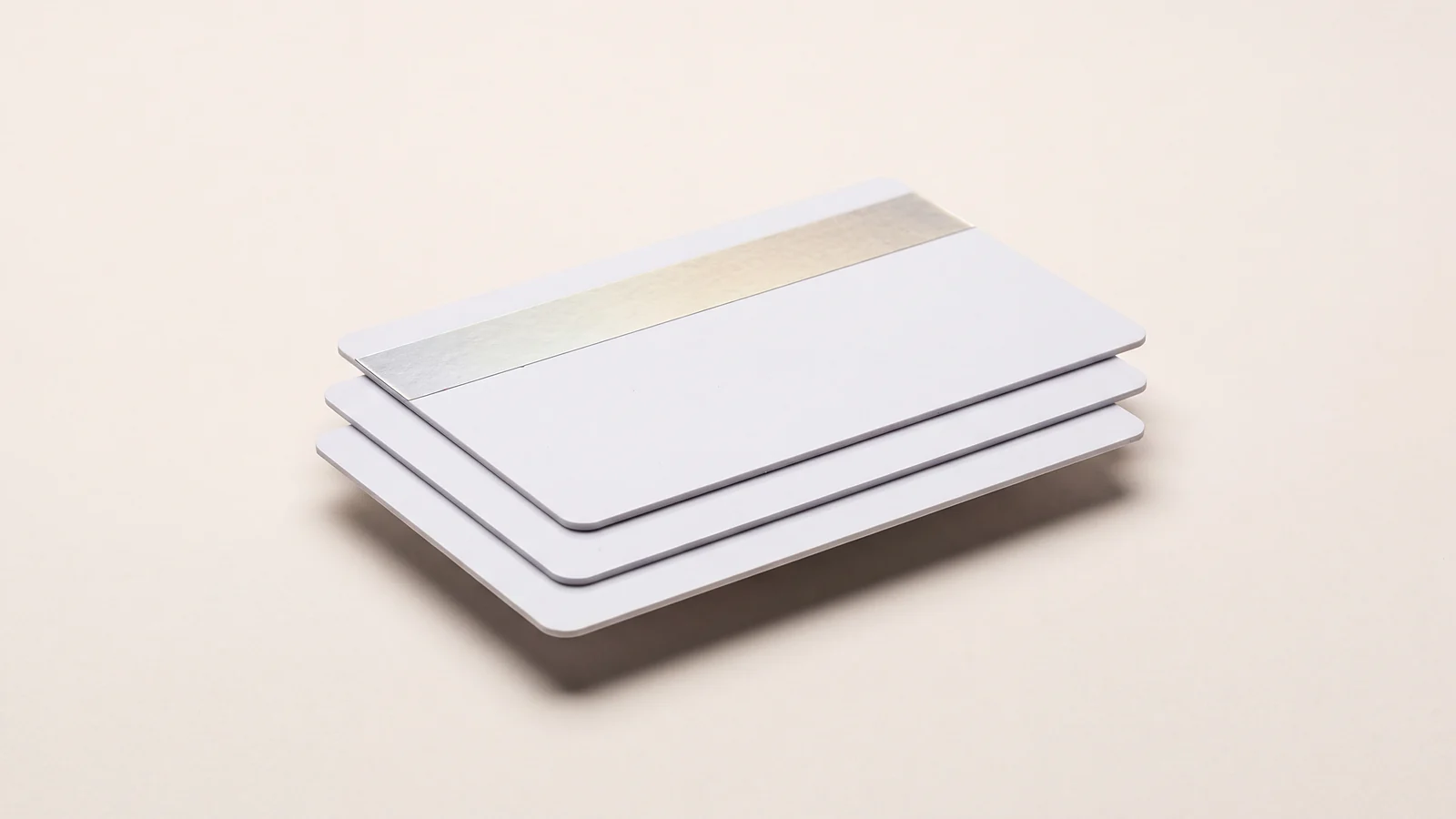
CR80 membership cards in PVC, recycled PVC or wood, printed and personalised in one pass, with the name, member number and the barcode, stripe or chip the entrance already reads.

For gyms, clubs, associations and loyalty programmes. Name, photo and member number go on in one pass with the barcode, QR code, magnetic stripe or chip the door already reads, from EM4200 and T5577 to MIFARE and NTAG. Matching key tags and wristbands can carry the same chip.

Membership cards
Specifications

Membership cards

Ideal for
Gyms · Clubs · Associations · Loyalty programmes
Materials
PVC · Recycled PVC · Wood
Tag or smart card
Laminated inside the card
Dimensions
CR80, 85.60 x 53.98 mm
Minimum order
500 units
Durability
PVC: 0.76 mm · Wood: 1.20 to 1.30 mm
Sustainability
Recycled PVC · Wood produced at an FSC certified facility (FSC-C195226)
Request a quote
Production

Made in-house

Lead time
12 calendar days
Encoding
Name and number in one pass, every chip tested
Sample
Available
Quote
Same working day
Print area

Print area

Measures
A
Front: 85.60 x 53.98 mm, edge to edge
B
Back: 85.60 x 53.98 mm, edge to edge
Production drawings
Front, CR80, 85.60 x 53.98 mm
Inside: antenna and chip
Back: mag stripe and signature panel
Card and key tag, 85.6 x 54 mm
Connection

RFID technology

LF (125 kHz) · HF (13.56 MHz, NFC)
Chips available
EM4200 · T5577 · MIFARE Classic EV1 · MIFARE DESFire EV2 / EV3 · NTAG 213 / 215 / 216
Choose your style

Look and feel

Closures, single use
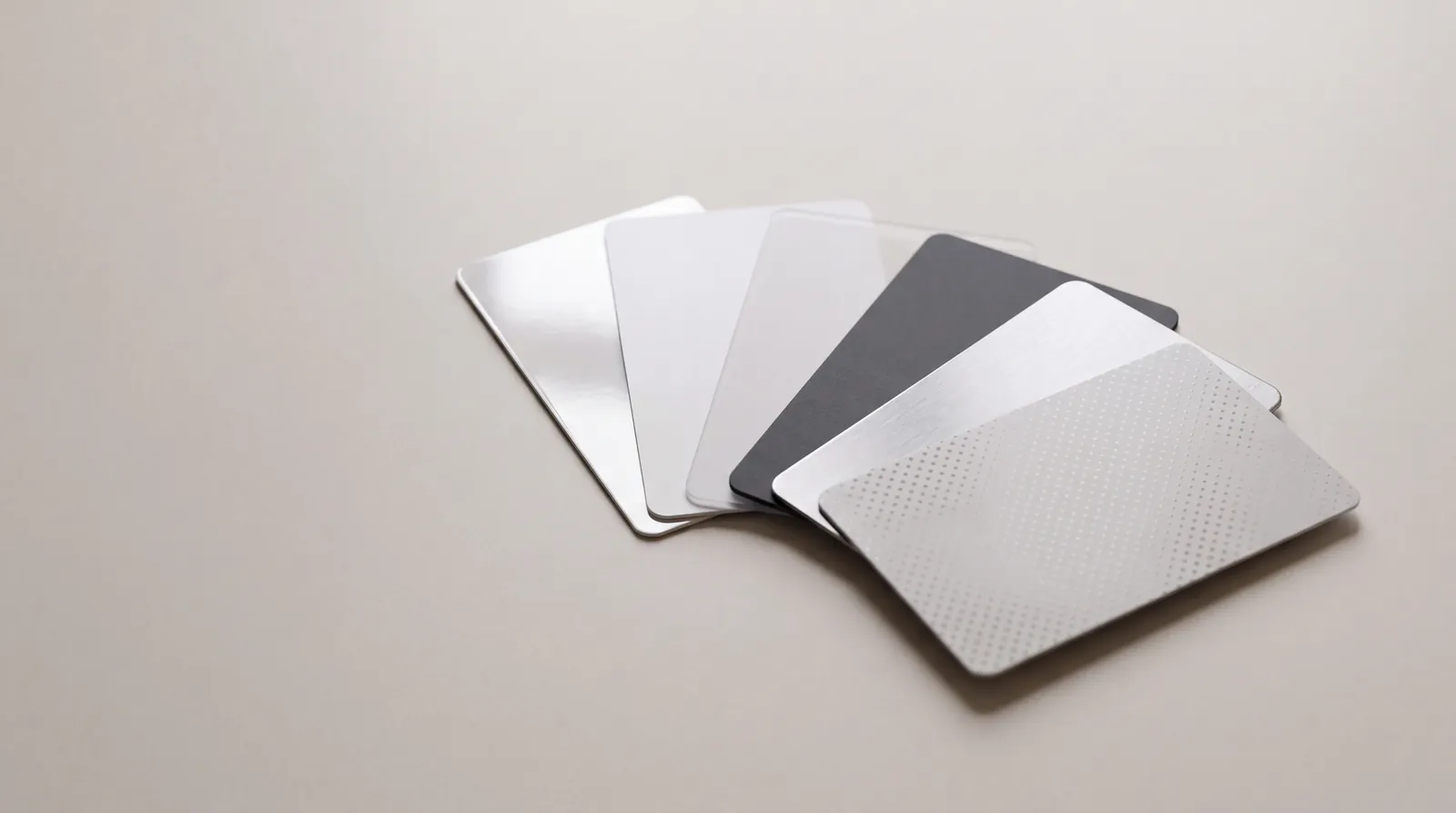
Gloss lamination · Matt lamination · Pearlescent · Metallic PVC
Closures, reusable
Hot stamping · UV spot · Signature panel · Magnetic stripe
Colours
One design per programme, colour coded per tier on request.
Made to measure

Personalisation

Options
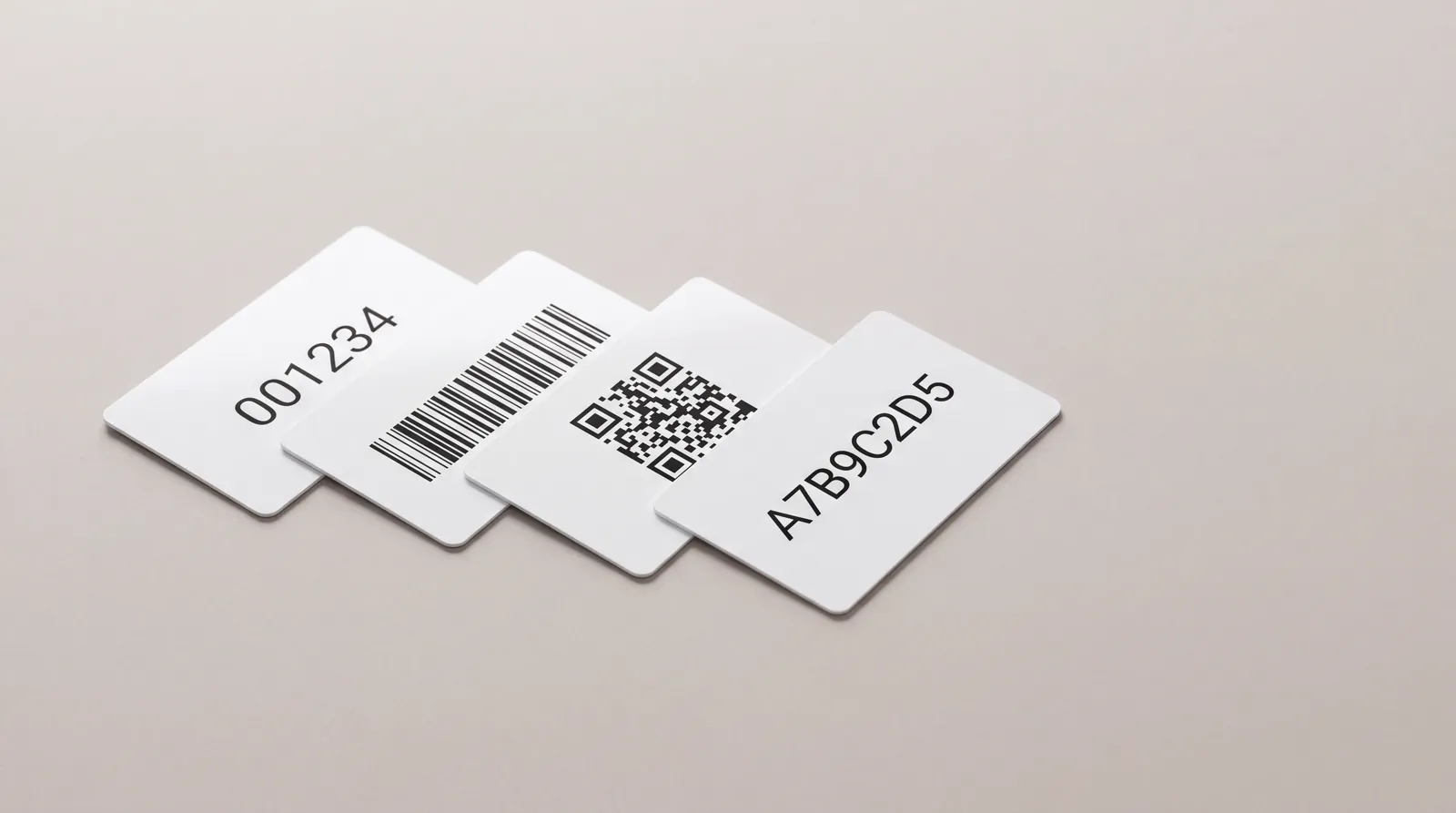
Names · Photos · Member numbers · Barcodes and QR · Magnetic stripe · Chip encoding
Ideas made to measure →

What we can put on it

Personalisation
Full colour (CMYK)
Chip encoding
000127
Sequential numbering
4 018127 003
Barcodes and QR
Magnetic stripe
Security
Signature panel
418290
Scratch panel
UV ink
KAWAYKAWAYKAWAYKAWAY
Microtext
Guilloche
Hologram
Finishes
000127000127
Embossing
Hot stamping
Spot UV varnish
MATTEGLOSS
Matte and gloss
Custom die-cutting
Transparent
See how each one is made →
Card body

PVC, recycled PVC or wood?

All three carry the same chip and the same encoding. The choice is about how the card looks and is finished, and wood is the one with real limits.

PVCRecycled PVCWood
Made fromVirgin PVC sheetEighty per cent recycled coreBasswood, black walnut, cherry or bamboo
Thickness0.76 mm0.76 mm1.20 to 1.30 mm
Full colour printYesYesYes
Laser engravingNoNoYes
Magnetic stripeYesYesNo
Lead time12 calendar days12 calendar days12 calendar days
Compatibility

Will it work with your reader?

The reader or the lock on the door decides the chip, never the card. Send the model and we confirm it in writing before you order.

CONFIRMED

Frequency and chip

From the reader or lock model, or from a card you use today. Post us a card and we verify it here.

LIMITS

Encrypted systems

We supply the correct chip. Credentials controlled by the system owner may need to be written by them.

FREE

A free sample

In the material and chip you specify, to test in your reader or lock.

Built toISO/IEC 7810 ID-1ISO/IEC 14443 Type AISO/IEC 15693ISO/IEC 18000-63
Compatible withVingCardSALTOdormakabaOnitySaflok125 kHz readers13.56 MHz readersUHF readersNFC phones

Lock encoding depends on the chip and on each system's technical requirements, keys and authorisation. All trademarks are the property of their respective owners. No affiliation or endorsement is implied.

Questions

Asked before every order

The short answers. Anything else, send the reader or lock model and we reply the same working day.

Will the cards work with the readers we already have?

Usually, but it is checked rather than assumed. The reader or lock model tells us the frequency and the chip family. System configuration sometimes needs a physical test, and we say so rather than guess.

Can you match the RFID card we already use?

Usually. We work from the card you use now, the reader or lock model, and any specification you were given at installation. Where that is not enough, we ask for a sample rather than a description.

Can you encode the cards before they ship?

Yes: UID reading, sectors and blocks where the chip allows it, and URLs or NDEF data on NFC chips. Every chip is read-tested before shipping. On encrypted systems we supply the correct chip and the key holder writes the credential.

Can each card carry different data, numbers or codes?

Yes. Numbering, barcodes, QR codes and other variable data can change on every card, and the chip can be encoded individually. Send the data as a spreadsheet, one row per card.

Do you supply cards for hotel lock systems?

Yes. Cards can be encoded at the plant for VingCard, SALTO, dormakaba, Onity and Saflok, depending on the chip and on the system's technical requirements, keys and authorisation. Send the lock system and version, and test a sample in your door.

Can we test a physical sample before production?

Yes, and we recommend it. Ask for a free sample, sent by courier, and try the card in your reader before committing a run.

Questions

Asked before every order

The short answers. Anything else, send the reader or lock model and we reply the same working day.

What thickness should we order?

0.76 mm is the standard and the thickness most readers, printers and wallets expect. We run from 0.40 mm to 1.0 mm, and the technology inside changes what is possible, so tell us what the card has to do before you fix the number.

What is the difference between offset and silkscreen?

Offset lays four colours and handles photographs and gradients. Silkscreen lays one dense colour, which is how you get a true Pantone, a silver or a gold that offset cannot mix. A lot of cards use both on the same face.

Can a card carry a magnetic stripe and a chip?

Yes, on the same card. The stripe is applied to the PVC body and the chip sits inside it. Send us the encoder or the system that writes the stripe so we match the coercivity rather than assume it.

Is recycled PVC the same card?

Same format, same thickness, same chip, same printing and the same finishes. The card has an eighty per cent recycled core, and the only visible difference is the shade: it sits close to virgin PVC with a faint warm cast to it. Under a full colour print you cannot see it. Ask for a sample in both if the white matters.

Which security features can you add?

UV ink, microtext, holograms and optical variable ink, usually alongside a signature panel or a serial number. Tell us what the card is protecting against and we will say which combination is worth the cost.

Can each card carry different data?

Yes. Names, numbers, barcodes and QR codes can change on every card, and the chip can be encoded individually. Send the data as a spreadsheet, one row per card.

Will the colour match the proof?

The card is printed in the same plant that makes it, so the colour you approve is the colour that ships. Send a Pantone reference for any brand colour. A screen is not a reliable way to agree one.

Can you match a card we already use?

Usually. Send a physical card if you can, with the reader or lock model, the chip type if you know it and any specification you were given at installation. The card itself settles it.

Questions

Asked before every order

The short answers. Anything else, send the lock model and tell us whether the property uses an energy-saving card slot.

Will a wood card work in the locks we already have?

Usually. It carries the same chip as a PVC card and reads the same way. What has to be checked is the slot rather than the chip, because a wood card is thicker than PVC. Test a sample in your door before a full run.

How thick is a wood card?

1.20 to 1.30 mm, against 0.76 mm for a PVC card. For properties using an energy-saving card slot, 1.10 mm can be produced on request, with a tolerance of plus or minus 0.1 mm.

Why do the cards not all look the same?

Because they are wood. Colour and grain change from card to card even within one species, following the age of the tree, where it grew and the weather it grew in. It is the material behaving normally, not a fault in the batch.

Which woods can we choose from?

Basswood, black walnut, cherry and bamboo. Each one takes engraving and printing differently, so tell us which finish matters most and we will say which species suits it. Bamboo is a grass rather than a timber, and it behaves a little differently under a laser.

Can a wood card carry a magnetic stripe?

No. A stripe needs the smooth continuous surface that wood does not give. Where a property needs a stripe the card has to be PVC. We make both, so a mixed order across the same property is not a problem.

Are the wooden cards FSC certified?

Wooden cards are produced at an FSC certified facility (FSC-C195226), and the claim does not cover bamboo. Where an FSC claim applies to an order, it is stated on the sales and delivery documents for that order, so ask for it when you specify the card.

Can you print in full colour on wood?

Yes. CMYK offset prints photographic artwork directly onto the wood and the grain stays visible underneath. Laser engraving and silkscreen are the other two finishes, and all three can be combined on one card.

Can we see one before we commit?

Yes, and with wood we push for it. Ask for a free sample in the wood and chip you need, and test it in your door.

Questions

Asked before every order

The short answers. Anything else, send the outline and the reader model together and we reply the same working day.

What shapes can you make?

More than 180 outlines are already tooled, from key tags, discs and break-apart cards to hexagons, teardrops and custom outlines. The full shape library is available as a PDF on request. Anything outside it is quoted from your drawing: send a vector outline with the overall dimensions and we tell you what we can cut, what we would change and why.

How big can a special shape be?

Up to 200 mm on the longest edge. The shapes we already hold tooling for run to 150 mm, so a lot of outlines turn out to be something we have cut before. Send the drawing with the overall width and height and we confirm it against your shape.

Can a special shape carry a chip?

Yes, the same chips as a standard card. The antenna has to sit inside your outline, so send the shape at the same time as the reader model rather than after it. A small shape can rule out a chip family, and it is better to find that out now.

Can it carry a magnetic stripe?

On PVC only, and only where the outline leaves the stripe a straight run. Send the shape and we confirm it. Wood cannot carry a stripe at all, whatever the shape.

Can you make them in wood?

Yes, in basswood, black walnut, cherry and bamboo. Wood runs at 1.20 to 1.30 mm rather than 0.76 mm, it takes contactless chips only, and grain and colour vary from piece to piece even within one species.

Is there a minimum order?

Yes, 500 units, the same as a standard card, with standard production of 12 calendar days. Send the outline and the quantity you have in mind and the quote follows.

Can we see one before we commit?

Yes. Ask for a free sample in the body and chip you need, and test the read on your system. A sample in your outline is a separate step, and we tell you what it involves when we quote.

Can you copy a shape we already use?

Usually. Send the card itself if you can. A physical sample gives us the outline, the thickness and the chip in one go, which a drawing alone does not.

Questions

Asked before every order

The short answers. Anything else, send the point of sale system and the quantity and we reply the same working day.

Is every gift card numbered differently?

Yes. Send the number range or the data file, and each card is printed with a sequential number, barcode or QR that matches it.

Do gift cards need a chip?

Usually not. A barcode, QR or magnetic stripe works with most point of sale systems. An optional NFC chip is added when the card should also open a page on a phone tap.

Can the PIN sit under a scratch panel?

Yes. The PIN or code is printed first and covered with a scratch panel on the same run, so it stays hidden until the buyer scratches it off.

Is recycled PVC the same card?

Same format, same thickness, same printing and the same finishes. The card has an eighty per cent recycled core, and the only visible difference is the shade, which a full colour print hides. Ask for a sample in both if the white matters.

Can a gift card carry a magnetic stripe?

Yes. The stripe is applied to the PVC body, LoCo or HiCo. Send the encoder or the point of sale system that writes it, so the coercivity is matched rather than assumed.

Can cards ship in carriers?

Yes. Cards are placed in printed carriers or envelopes at the plant, and boxes carry the client logo printed in black, ready for the shop floor.

Will a reorder match the first run?

Yes. Artwork and colour references stay on file, and each reorder is checked against them, so cards from different batches look the same on the rack.

Is there a sample before ordering?

Yes. Ask for a free sample and test the barcode or stripe on the point of sale system first.

Questions

Asked before every order

The short answers. Anything else, send the scanner or reader at the entrance and we reply the same working day.

Can each card carry a name and member number?

Yes. Names and numbers arrive in one data file and are printed in a single pass, so the cards leave the plant ready to hand to members, with nothing left to add.

Which data carrier should a programme choose?

It depends on the scanner in use. Barcode and QR suit tills and phone cameras, a stripe suits swipe readers, a chip suits gates and tap to app. Send the reader model for a written check.

Which chips are available for member cards?

At 13.56 MHz, MIFARE Classic EV1, MIFARE DESFire EV2 and EV3, and NTAG213, NTAG215 or NTAG216 for tap to app on a phone. EM4200 and T5577 at 125 kHz suit older gates.

Can key tags and wristbands match the card?

Yes. Same chip, same member number and same design, quoted and encoded together, so every reader in the building sees one person.

Can one order cover several membership tiers?

Yes. Standard, premium, family or corporate cards share one design, colour coded per tier, and are made in one batch.

What are the lead time and minimum order?

Standard production is 12 calendar days and the minimum order is 500 units. Allow time to approve the proof before production starts.

Will reorders match the first batch?

Yes. Every renewal and reorder is matched to the approved sample, so colours, finish and encoding stay consistent from one year to the next.

Is there a sample before ordering?

Yes. Ask for a free sample, encoded with the chosen chip, and test it on the live gates, tills and app first.

Questions

Asked before every order

The short answers. Anything else, send the reader model and we reply the same working day.

Can you print names and numbers on every card?

Yes. Send a spreadsheet with names, numbers, roles and expiry dates. Every card is printed from its row in the same pass as the artwork, then checked against the file and read-tested before shipping.

Which chip should the ID cards use?

The one the reader expects. Send the reader model, or post a card in use today, and the chip is confirmed in writing before production: EM4200, T5577, MIFARE Classic EV1, DESFire EV2 or EV3, or UHF.

What security features can be added?

UV ink, microtext, guilloche, hologram, hot stamping, a signature panel and a magnetic stripe, all applied at the plant. They are combined per design and confirmed on the sample.

Do lanyards and holders come with the cards?

Yes, from the same order. Lanyards and card holders are quoted, produced and delivered with the ID cards, so the site receives one shipment.

Will new cards match the ones already issued?

Yes. The layout, colour references, chip and numbering sequence stay on file, so cards for new starters continue the series and read the same as the first batch.

Do you make visitor and contractor cards?

Yes. Visitor and contractor cards can carry a different colour band and a separate numbering series, so a guard tells them apart at a glance. The chip is matched to the same reader.

How long does production take?

Standard production is 12 calendar days and the minimum order is 500 units. Transit time to the delivery address comes on top, and the date is confirmed with the quote.

Is there a sample before ordering?

Yes. Ask for a free sample, printed with your layout and test data, and check the print, the data and the chip on your reader first.

Questions

Asked before every order

The short answers. Anything else, send the URL or data and the quantity and we reply the same working day.

Will the cards work on Android phones and iPhone?

Yes, with the right chip and data. NTAG213, NTAG215 and NTAG216 read on current Android phones and iPhone. Older iPhones need an app to read a tag, and we flag that before the order rather than after.

Which NFC chip should a product brand choose?

NTAG213 for one URL, NTAG215 when the link carries more data, NTAG216 for vCards or several records. MIFARE Ultralight EV1 suits very large runs that only need a short link.

Can every card open a different URL?

Yes. Each chip can carry a unique URL or NDEF record from a spreadsheet, one row per card. The UID list is supplied with the order, so every card can be matched to a unit, a serial number or a buyer.

What is the difference between NTAG and Ultralight EV1?

Both are 13.56 MHz chips that phones can read. NTAG comes in three memory sizes, up to 888 bytes, and is built around NDEF for phone taps. Ultralight EV1 has less memory and suits short links at very high volume.

Are the cards encoded and tested before shipping?

Yes. URLs and NDEF data are written in-house, UIDs are read and listed, and every chip is read-tested one by one before shipping. A card that fails the read is pulled before packing.

Can the print change from card to card?

Yes. Serial numbers, QR codes and barcodes can be printed per card and matched to the data in the chip. Send one spreadsheet with a row per card, and the print and the encoding follow it.

How long does production take?

Standard production is 12 calendar days from approval, and the minimum order is 500 units, so a product launch and the reorders after it run on the same line.

Is there a sample before a bulk order?

Yes. Ask for a free sample, sent by courier with the chip, data and print specified, so the brand team can tap it on real phones before signing off a run.

Complete the order

Shipped with the cards

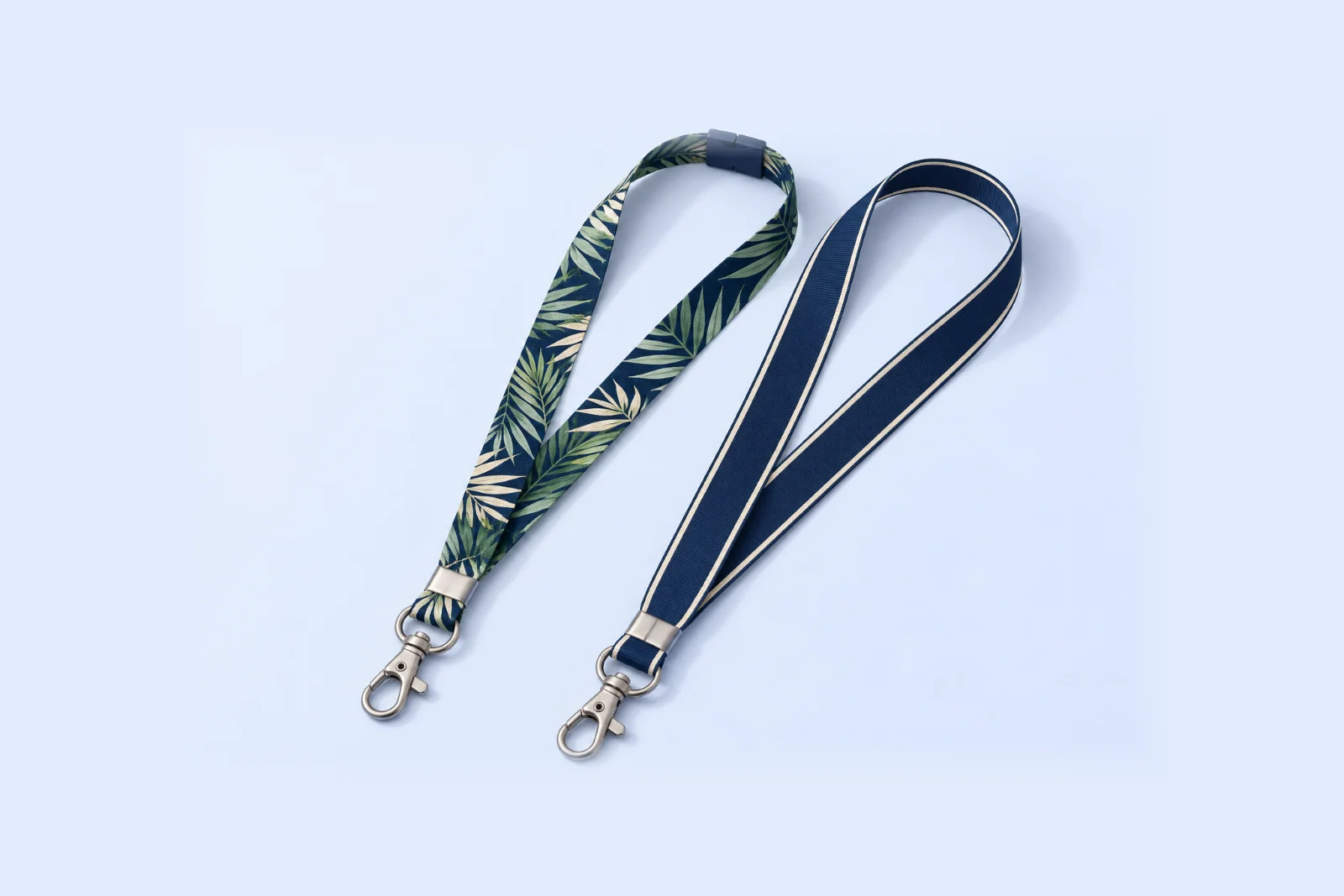
Sleeves carry the card artwork, holders keep it on the lanyard and bands carry the same chip, all quoted and delivered on the same order.

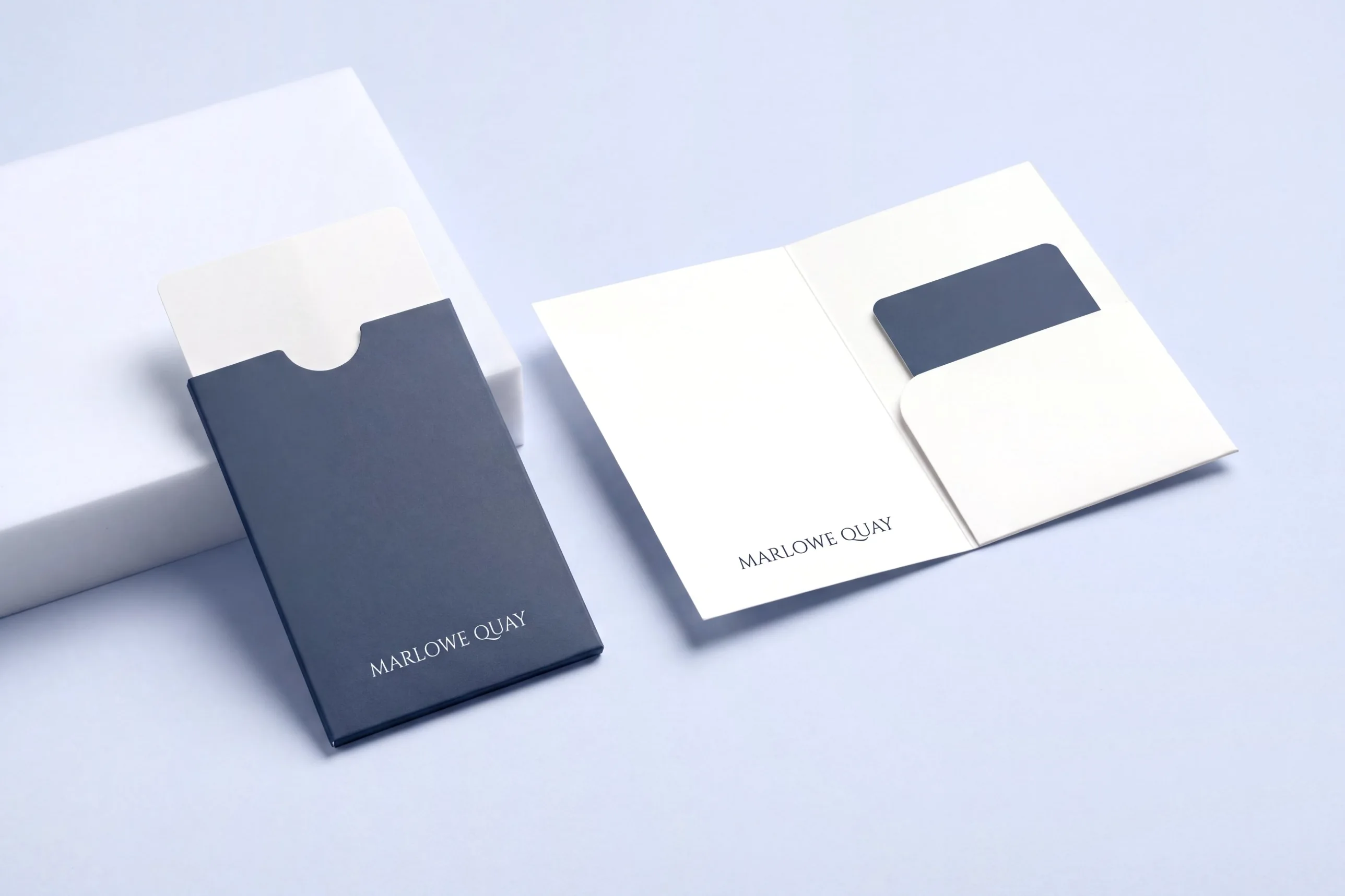
Card sleeves

Paper sleeves made to the CR80 format, printed from the card artwork.

Accessories →

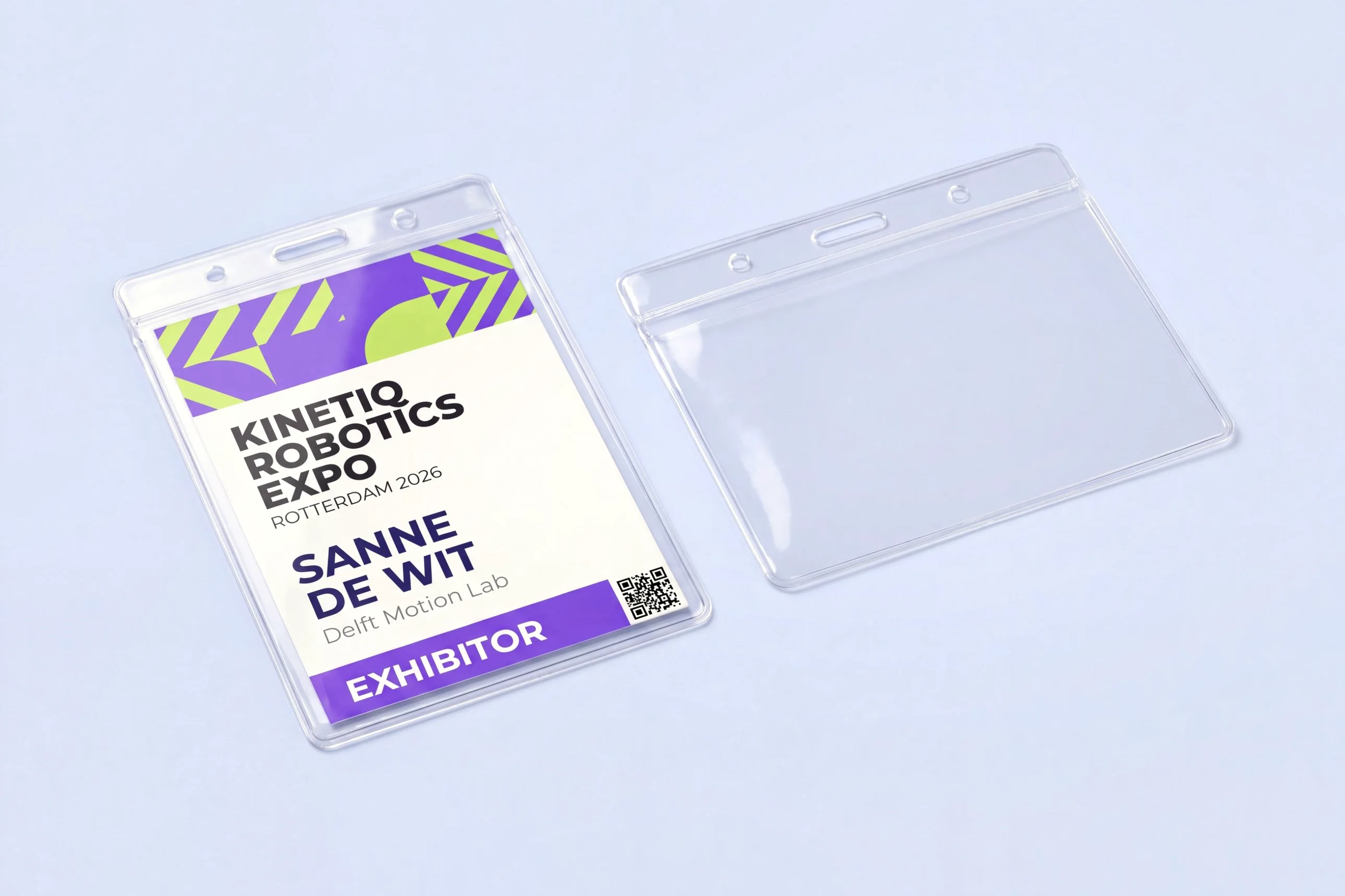
Clear badge holders

Soft clear PVC holders for cards worn on a lanyard by staff and visitors.

Accessories →

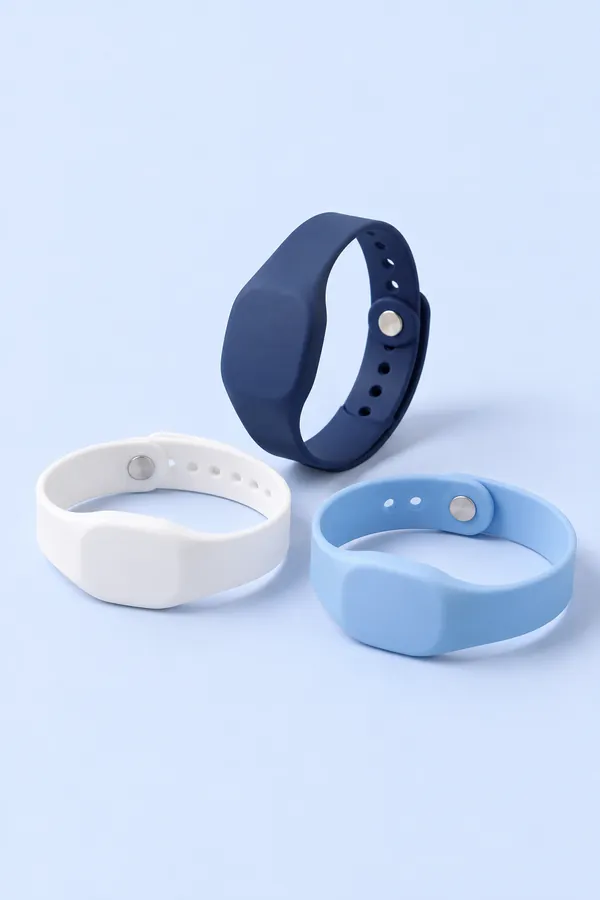
Wristbands

Where a card is impractical, in wet areas and kitchens. Same chips, so cards and bands run on one system.

Wristbands →
Shape library

More than 180 shapes

Standard card
S014 · 85 × 54 mm
Card and key tag
S244 · 85.6 × 54 mm
Two-part card
S070 · 85.5 × 54 mm
Large radius corners
S009 · 85.5 × 54 mm
Large badge
S032 · 100 × 70 mm
Disc with centre hole
S054 · Ø 45 mm
Oval tag, two holes
S027 · 28 × 40 mm
Hexagon
S052 · 53.98 × 60.36 mm
Teardrop
S104 · 45 × 30 mm
Rounded tag
S144 · 50 × 26 mm
Pointed tag
S175 · 40 × 80 mm
Custom outline
S166 · 36 × 40 mm

The full library, every outline with its code and size, comes as a PDF.

Request the full shape library

Start with a sample.

Tell us the event, the quantity and the chip, and ask for a free sample.

A free sample to test
In the material and chip you asked for, so you can test it on your reader and on a wrist before you sign off.
A reply the same working day
Quote requests are answered the same working day.
12 calendar days
The same lead time for every format, from 500 units.