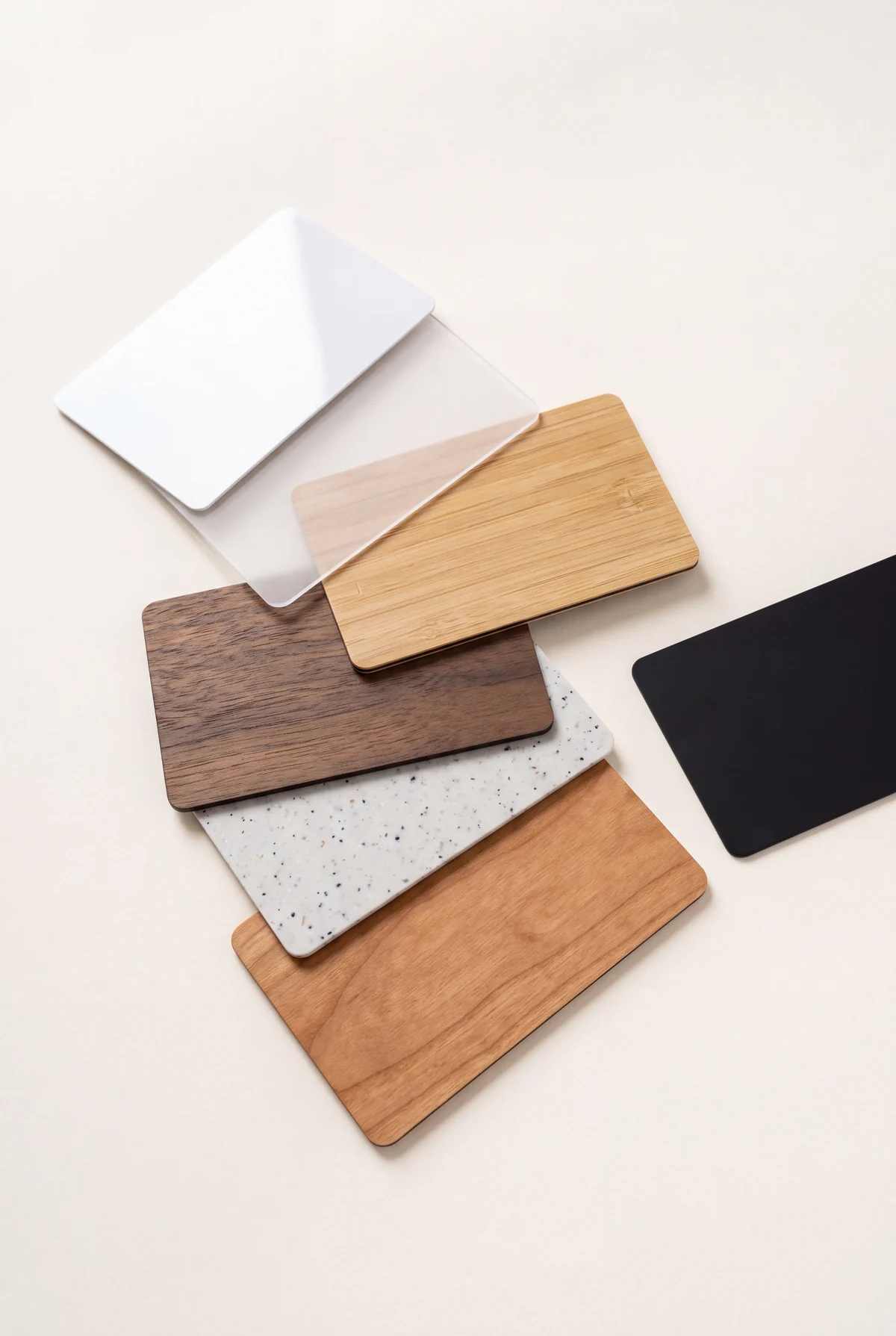
Member cards, wristbands for wet areas and key tags, on one chip, so the turnstile, the locker and the desk read the same member.
Three formats, one chip and one member number. Which one a person gets usually depends on where they go once they are inside.
Photograph, name and member number printed per card in the same pass as the artwork. The card a person shows at the desk is the same one the turnstile reads.
Silicone or elastic, which are the two that go into water every day and come back out, and neither has a closure to break. Numbers laser engraved rather than printed.
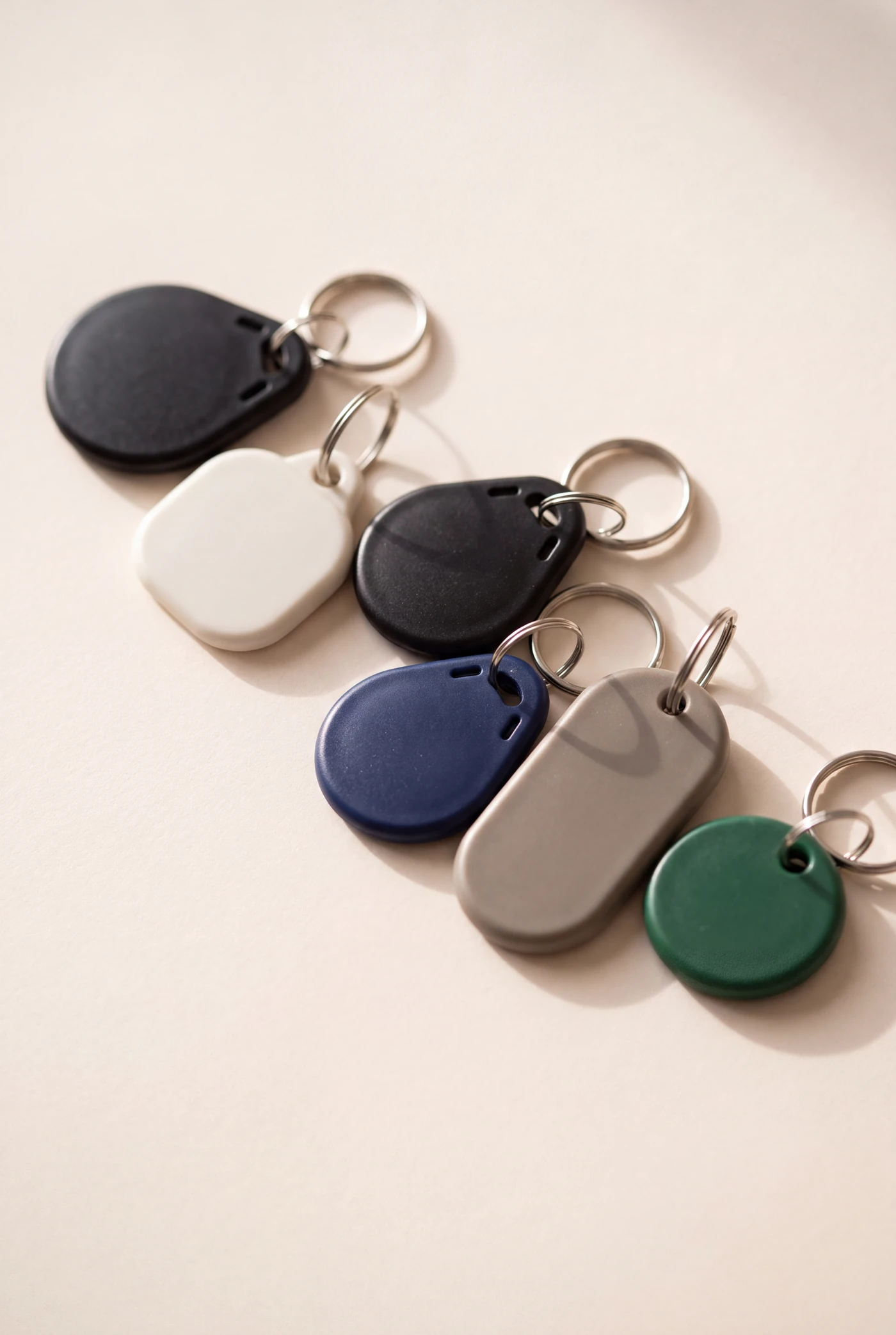
For the members who will not carry a card. Cut from the same sheet, on the same chip and the same number, so the reader does not know the difference.
The same order, photographed where it ends up.
A member passes four readers on an ordinary visit. They should all be reading the same thing.
The one that decides whether anyone has to be at the desk. The reader model is what we confirm the frequency and chip family against, before anything is produced.
Often a different system from the door, and often installed years apart. Where a single chip covers both we will say so, and where it does not we will say that instead.
A card in a pocket is not going to the pool. This is where the wristband exists, on the same chip and the same number, so it is the same member to the reader.
The only reader that is a person. That is why the photograph, the name and the category are printed on the card and not held only in the chip.
A club reissues on a calendar, not when it runs out. That changes what is worth printing on the card.
A year or a season on the card tells the desk who is up to date, without checking a screen.
Member, family, junior, staff. Same artwork, different colour, one run instead of four orders.
From artwork approval to dispatch, 8 on express. Counted back from the day the season opens.
Cards, bands and tags on one order, one approval, one delivery, encoded to the same system.
CR80 in PVC or recycled PVC, at 125 kHz, 13.56 MHz or UHF, with the photograph and the member number printed on every card.
RFID and NFC cards →Silicone, fabric, nylon, elastic, vinyl and Tyvek. Which one it has to be is decided by how long the band stays on a wrist, not by the chip.
Wristbands →Moulded ABS across twelve shapes, at 125 kHz and 13.56 MHz. The material that survives a keyring, which here is the whole job.
Key fobs →Yes, in the same pass as the artwork rather than as a later step. The images come in with the member numbers, and the cards come back finished, not ready to personalise.
From the reader model, or from the card the club issues today, we confirm the frequency and chip family in writing before production. If we cannot be certain from the model, we say so.
It is common, because doors and lockers are usually installed years apart. Both models are needed. Where one chip covers both we say so, and where it does not we say that instead of guessing.
Yes, on the same chip and the same number, so the reader treats them as the same member. Quoted, encoded and delivered on one order.
Laser engraved rather than printed, so they are still readable a year later. Silicone and elastic are the two materials that go into water every day and come back out, and neither has a closure to break.
Yes. Full member, family, junior and staff on the same artwork with a different colour or marking, produced on one run rather than as four orders.
13 calendar days from artwork approval to dispatch, 8 on express. The count runs backwards from the day the season opens, with room for the artwork to be approved before the clock starts.
Yes, free where the request is qualified. It can be tried on the real turnstile and the real lockers before the whole club is issued with it.