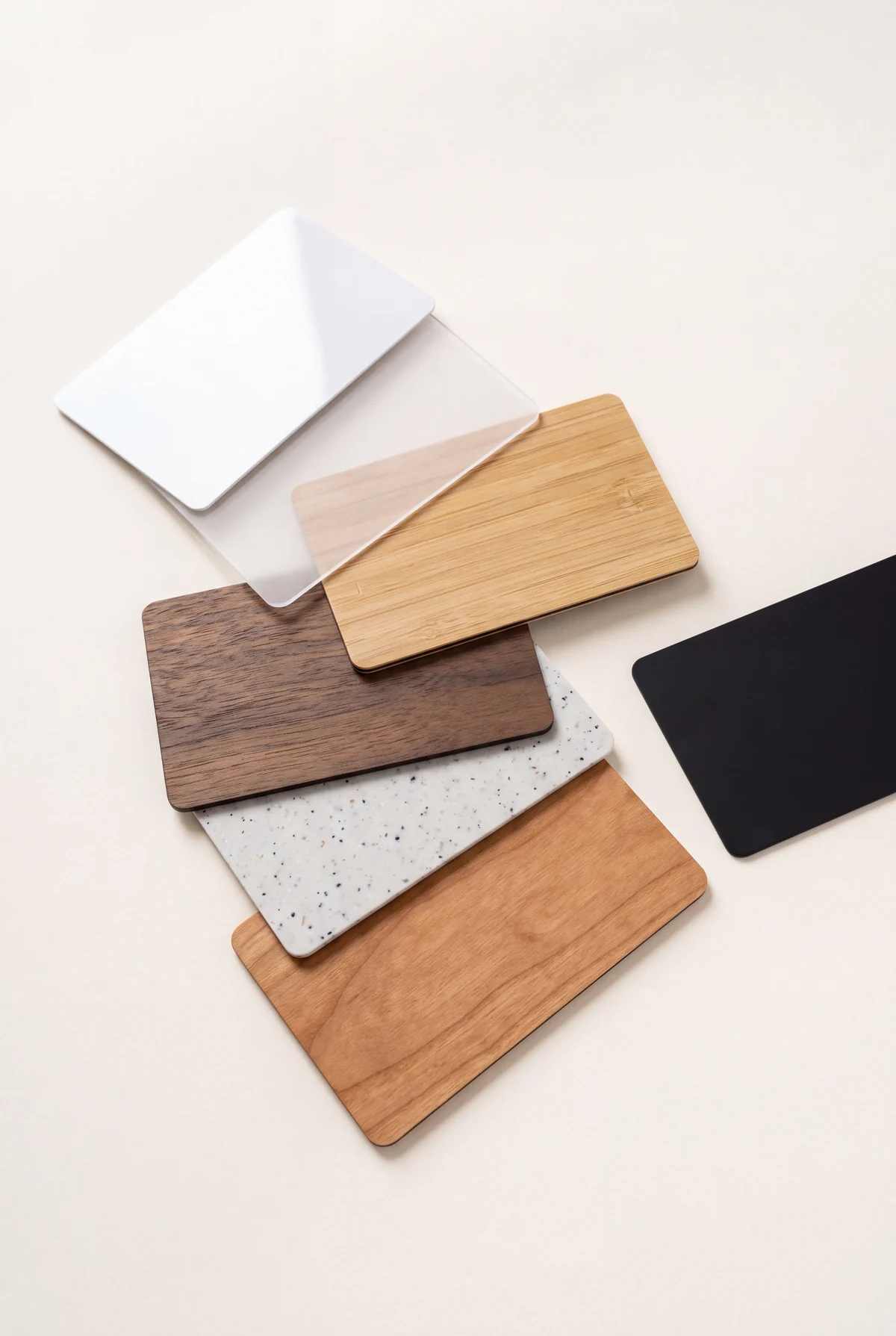
Moulded ABS fobs from 31 to 56 mm, encoded in our plant. On many sites they are the credential, not an accessory to the card.
Offices, buildings, industrial sites and gated developments where the credential belongs on a keyring rather than in a wallet. Encoded to the system already on the door, so the fobs arrive ready to issue rather than ready to programme. Where a site needs photo ID as well, the same chip goes into a card and both run on the same reader.
Access control and security →Turnstiles and member entry, where a fob survives a gym bag rather better than a card does. Membership numbers can be laser engraved instead of printed, so the number is still readable after a year of use. Reorders keep the same chip and change only the numbering.
Clubs and associations →Staff and back of house credentials, and guest keys on properties where a keyring is more practical than a wallet card, such as villas and resort developments. The lock decides the chip, so we start from the lock and work back, and we ask you to test a sample in your own door before a full run.
Hospitality →It depends on the reader already on your door, never on the fob itself. Fobs run at 125 kHz and 13.56 MHz. They are not available in UHF, so if your system reads at 860 to 960 MHz the credential has to be a card or a wristband, and we make both.
Older proximity readers, door intercoms and the legacy access systems still in service.
Most current access control, gym turnstiles, campus systems and phone taps over NFC.
Fobs are moulded, marked and encoded in the same plant that makes our cards, so the box you open is ready to issue.
Less surface than a card, so the mark has to do more work with less room. Three ways to put it on.
The chip and the encoding are the same, so the reader cannot tell them apart. Everything that differs is physical, and it is set out below rather than left to a sales conversation.
| Key fob | Card | |
|---|---|---|
| Where it lives | On a keyring | In a wallet or a holder |
| Frequencies | 125 kHz and 13.56 MHz | 125 kHz, 13.56 MHz and UHF |
| Printable area | One small face | Both faces, edge to edge |
| Full colour artwork | Yes | Yes |
| Laser engraving | Yes | On wood only |
| Magnetic stripe | No | On PVC only |
| Photo ID | No | Yes |
| Best for | Staff and members who carry keys anyway | Anything that has to be seen, shown or printed on |
Send us the reader or lock model you use. We confirm what we can supply before you order, rather than guess.
Frequency and chip family, from the reader or lock model or from the fob you use now. You can also post us a fob and we verify it here.
No UHF in a fob, at 860 to 960 MHz the credential has to be a card or a wristband. On encrypted systems we can supply the correct chip, but credentials controlled by the system owner may need to be written by them.
A free sample in the model and chip you need, so you can test it on your own reader before a full production run.
All trademarks are the property of their respective owners. No affiliation or endorsement is implied.
10M
Cards a month
1,300m²
Plant floor in Dongguan
87
People in the plant
15+
Years making cards at this plant
A vector file for anything engraved, and a print-ready file for anything printed. The face of a fob is small, so send the simplest version of your mark rather than the fullest.
Send the model name or system and version. A clear photo of the reader is often enough to identify it, and it tells us the frequency before anything else is decided.
An approximate quantity is enough to start. It helps us recommend the right production setup.
An approximate delivery date is enough. It helps us plan production and confirm the best option for your order.
If the reader runs at 125 kHz or 13.56 MHz, yes, and it reads the fob exactly as it reads a card. Send the reader or lock model and we confirm the chip against it before you order.
No. Fobs are 125 kHz and 13.56 MHz only. If your system reads at 860 to 960 MHz, the credential has to be a card or a wristband. We make both, so the answer is a different product rather than a different supplier.
Yes, and plenty of sites do exactly that. Cards for the people who need a photograph on the credential, fobs for the people who do not. The same chip goes in both, encoded the same way, so the reader does not know the difference.
Yes. Serial numbers and QR codes are laser engraved individually, and the chip can be encoded individually as well. Send the data as a spreadsheet, one row per fob.
Moulded ABS. It is the material that survives a keyring, which is the whole job of a fob.
From 31 to 56 mm across twelve shapes, and from 4.3 to 8.16 mm thick. Tell us where it has to fit, or send a photo of the keyring it will live on, and we will suggest the model.
Yes, CMYK on the flat face, and silkscreen where you need a solid Pantone. Laser engraving is the third option and it is the one that does not wear off, which matters more on a keyring than it does in a wallet.
Yes, and we recommend it. We send a free sample in the model and chip you asked for, so you can try it on your own reader before committing a run.
Usually. Send the fob itself if you can, along with the reader model and any specification you were given at installation. Photographs help, but the fob in our hand settles it.
Most sites need both. Cards for the people whose credential has to carry a photograph, fobs for the people whose does not, on one system and one order.
RFID and NFC cards →For the part of the site that carries a badge rather than a keyring, and for the packaging the fobs arrive in. Printed from the same artwork.
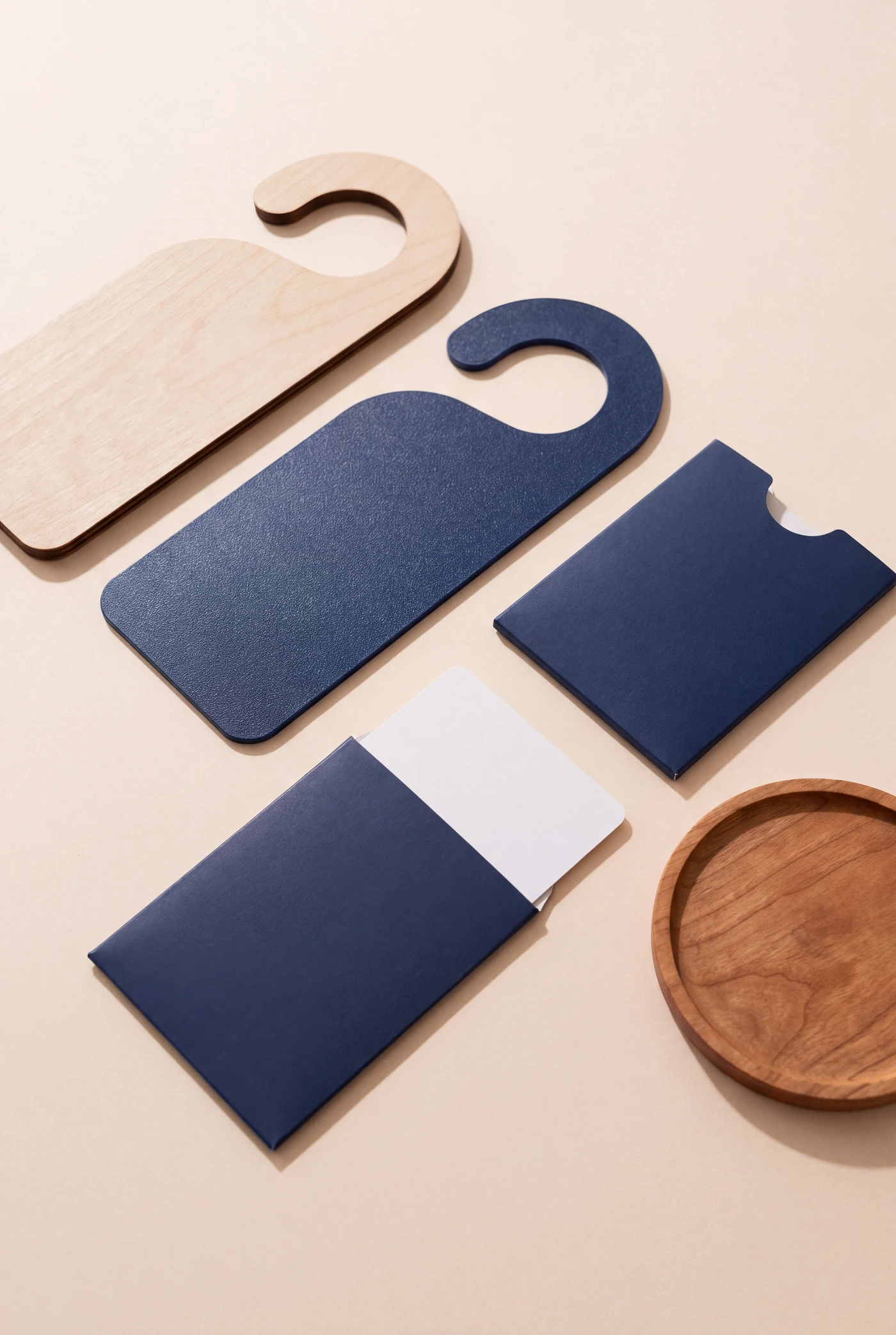
Accessories →Where the credential has to stay on a person rather than on a keyring, for pools, leisure and anywhere pockets are not an option on the day.
Wristbands →