Security ID card manufacturer for employee, student and visitor cards. Photo, data and chip in one order, every chip read-tested before shipping.
Every card in a run is different: a name, a photo, a number. The plant prints that variable data in the same pass as the artwork, so each card arrives ready to issue.
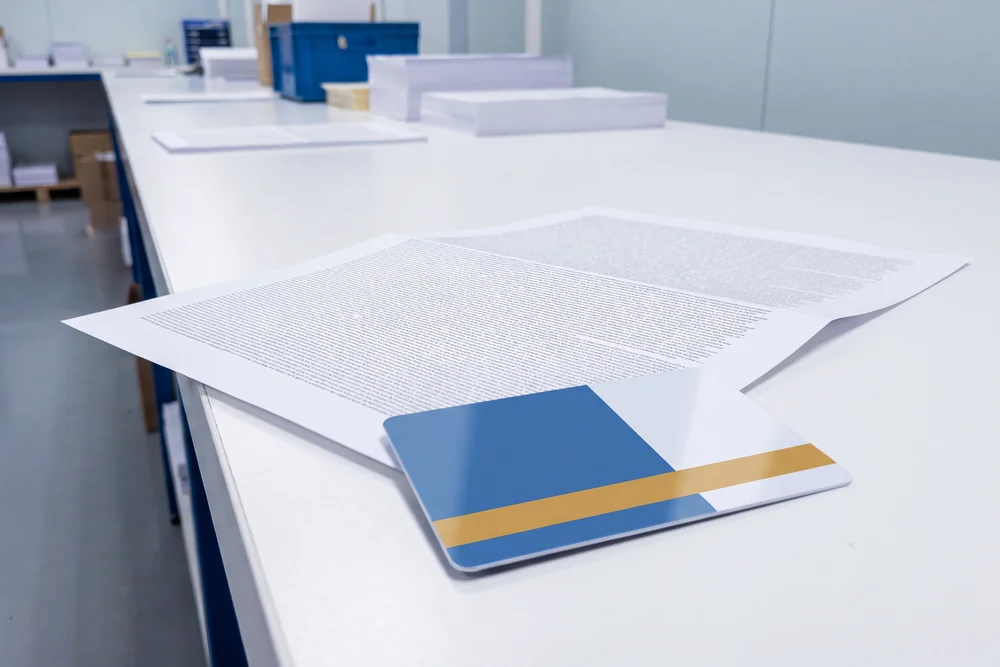
Photo ID, name, department and expiry printed in one pass with the artwork. Send a spreadsheet and the photo files, and each card is matched to its row.
Sequential numbering, barcodes and QR codes printed from the same data file, so the number on the face matches the number in the chip and in the database.
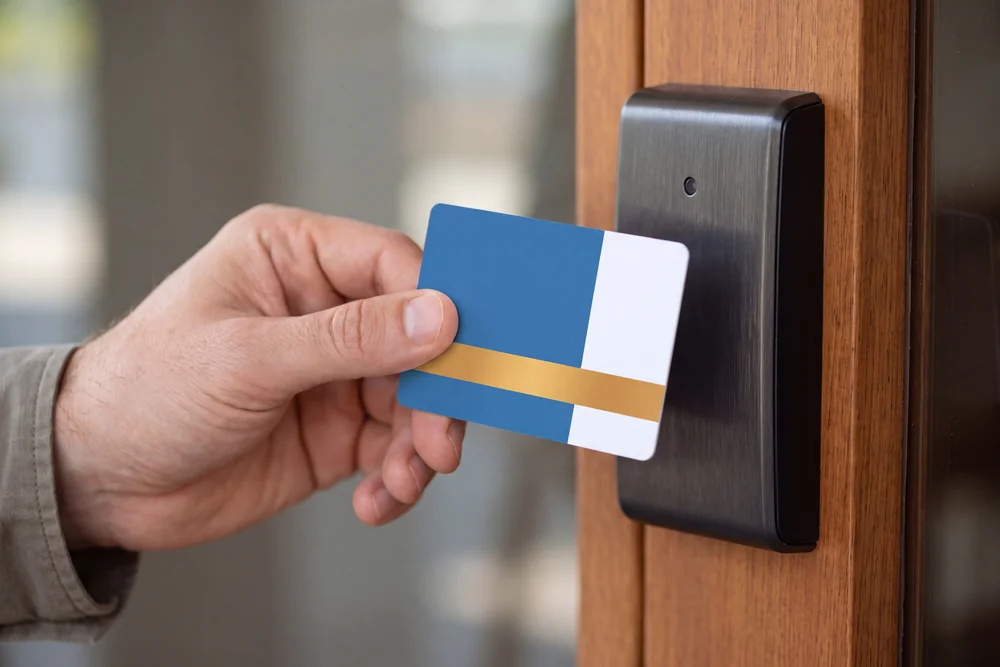
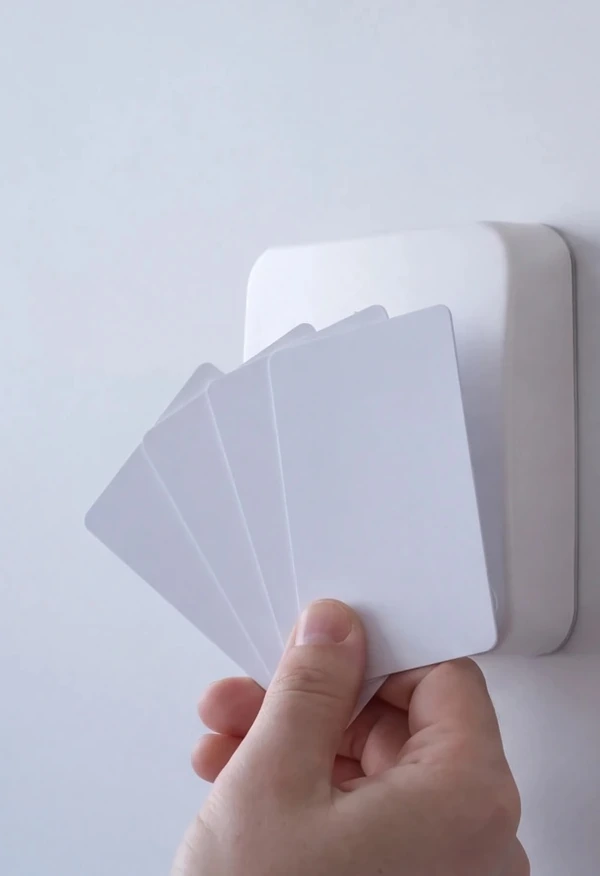
Send the reader model. The chip is confirmed against that reader in writing before production starts.
The chip, the layout and a sample card, each approved before the run. Nothing goes to print on a guess.


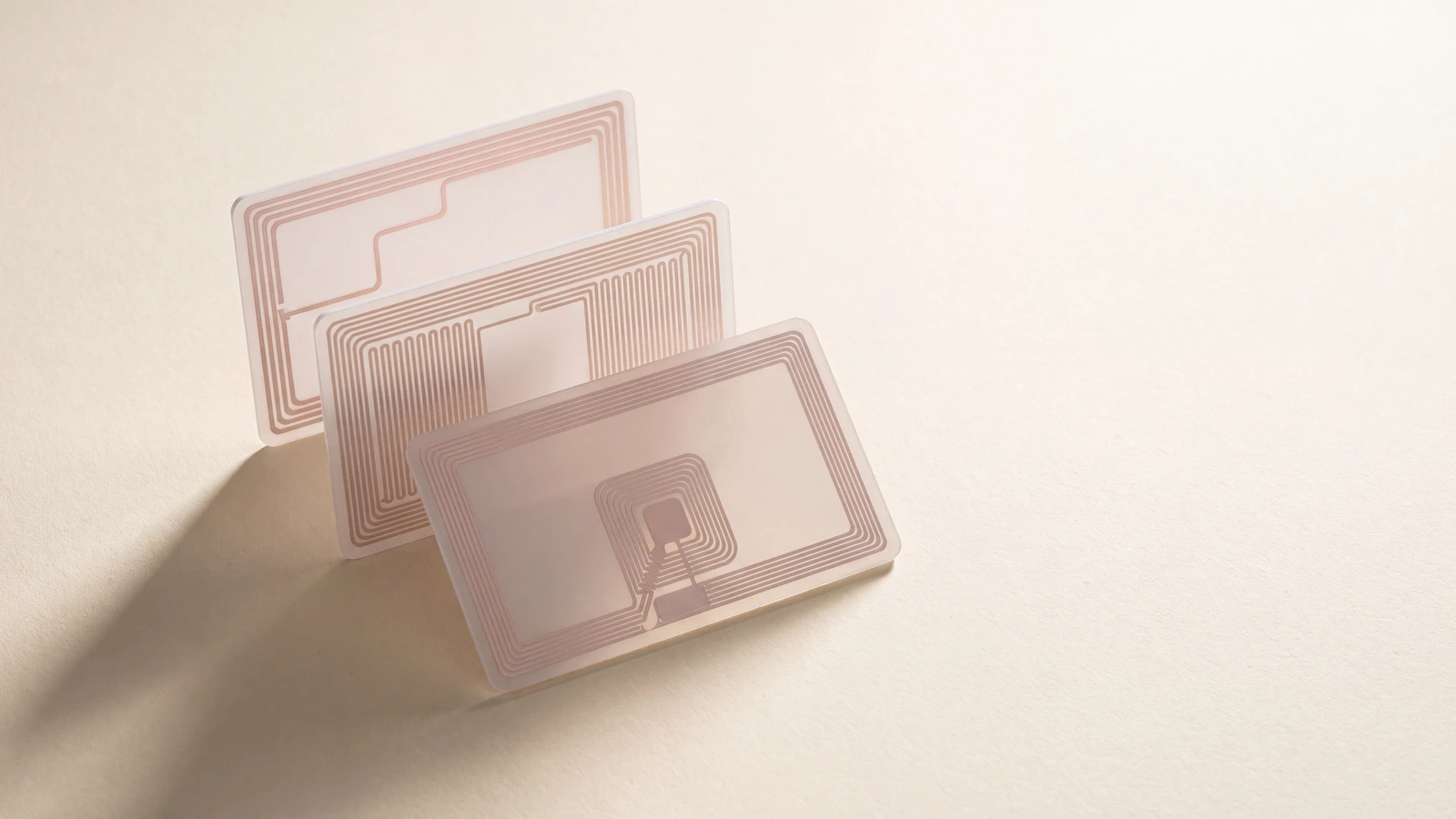
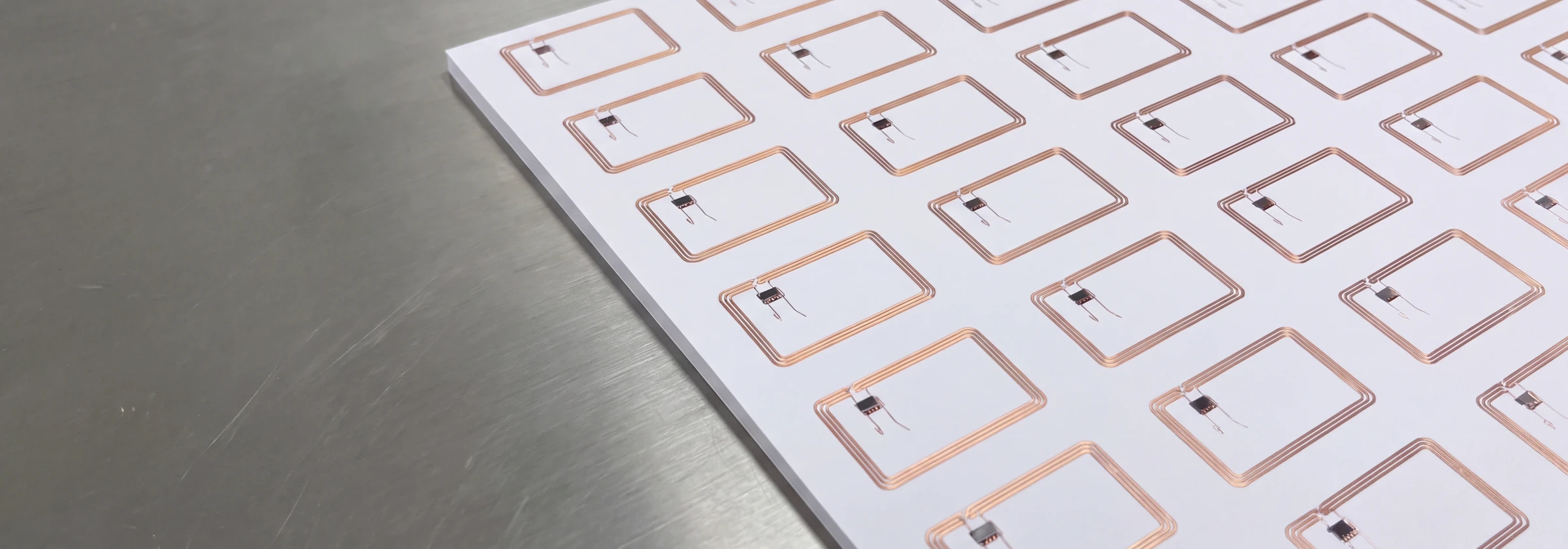
Chip options for employee, student and visitor cards, chosen by what the reader on the door expects.
MIFARE Classic EV1 1K and 4K for office and campus doors, MIFARE DESFire EV2 and EV3 where the system needs encrypted credentials. Read and write depends on chip features and permissions.
EM4200 (read only) and T5577 (read and write), the usual choice for employee badges on proximity readers. Printed with the photo and number like any other card.
Impinj Monza and Alien H3 in PVC ID cards. Read at a distance, not at a tap. Used at car park barriers and staff gates, read and written in enabled memory areas.
A magnetic stripe sits on the same PVC card as the chip, for canteen, printing or older door systems. Send the encoder model so HiCo or LoCo is matched, not assumed.
Added at print, not stuck on afterwards: UV ink, microtext, guilloche, hologram, hot stamping, signature panel and magnetic stripe, combined as the risk requires.
Hologram overlays and hot stamped foil in gold or silver catch the eye at a reception desk or a gate. A guard can check them at arm's length, in a second, without a reader or a lamp.
UV ink prints an image or a code that only appears under ultraviolet light, and microtext reads as a plain line until it is magnified. Both make a copy from a desktop card printer easier to spot.
Guilloche patterns of fine interlaced lines sit behind the photo and the name. The lines tend to blur on a scanned or reprinted copy, which makes it easier to spot.
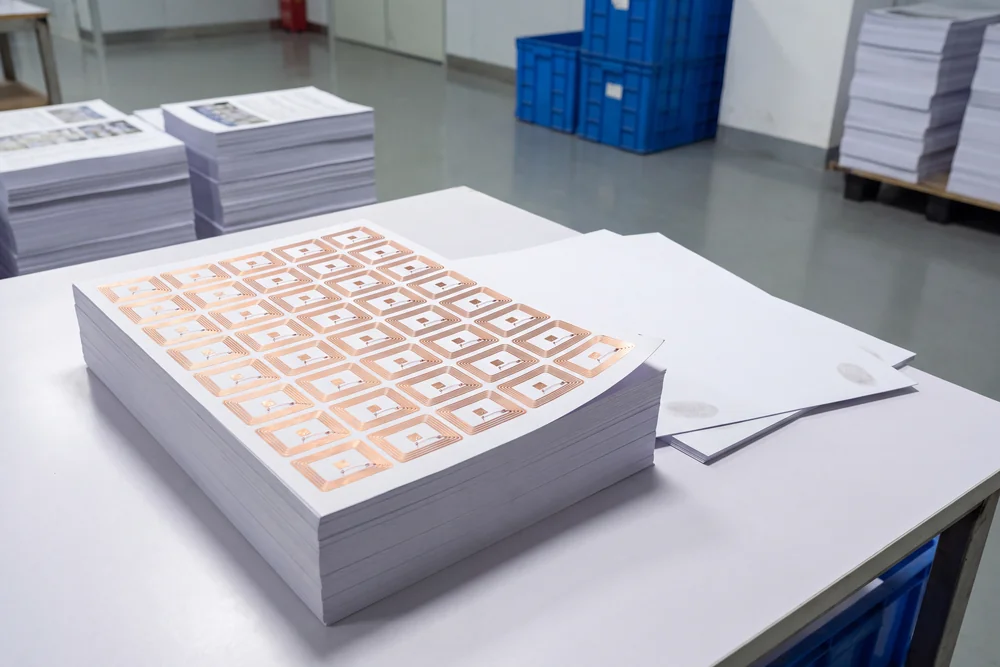
Cards are encoded at the plant in Dongguan, with UID lists, sector data and numbering where the chip allows, then every chip is read-tested, 100%.
The chip family and frequency, confirmed in writing against the reader model. Post a card in use today and it is identified at the plant.
On encrypted systems the correct chip is supplied ready for issue, and whoever holds the site keys writes the final credential at enrolment.
A UID list and numbering file travel with the cards, so the access database is loaded before the boxes are opened. Lanyards and holders ship with them.
Security features are combined per card design and confirmed on the sample before production. The final mix depends on the card material, the artwork and the print area available.
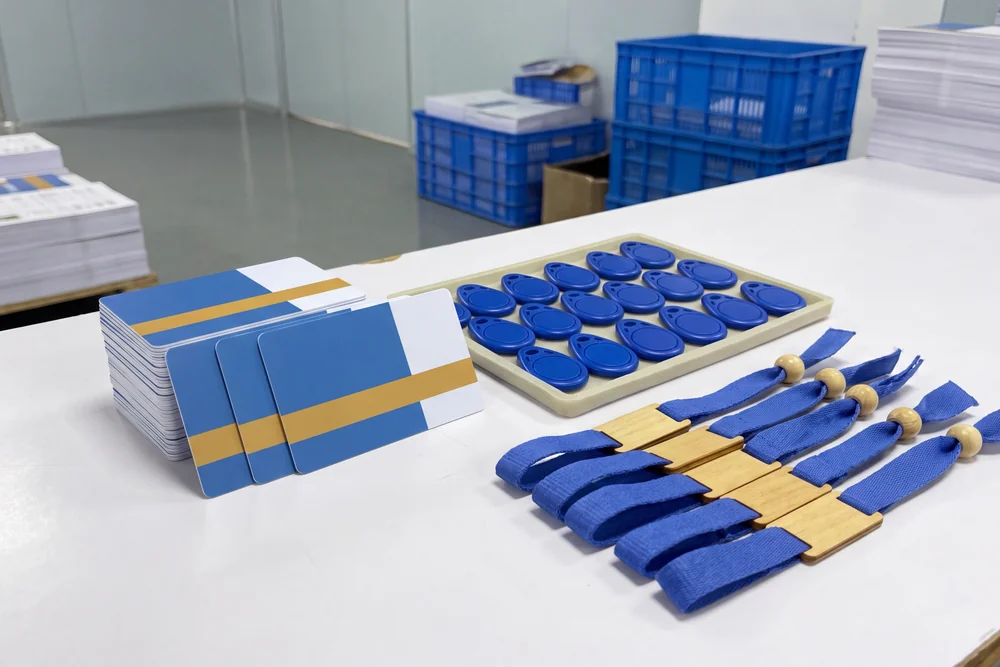
The ID card carries the photo. Lanyards and holders ship on the same order, and fobs or wristbands carry the same chip for contractors, shift teams and visitors at sites, plants, campuses and hospitals.
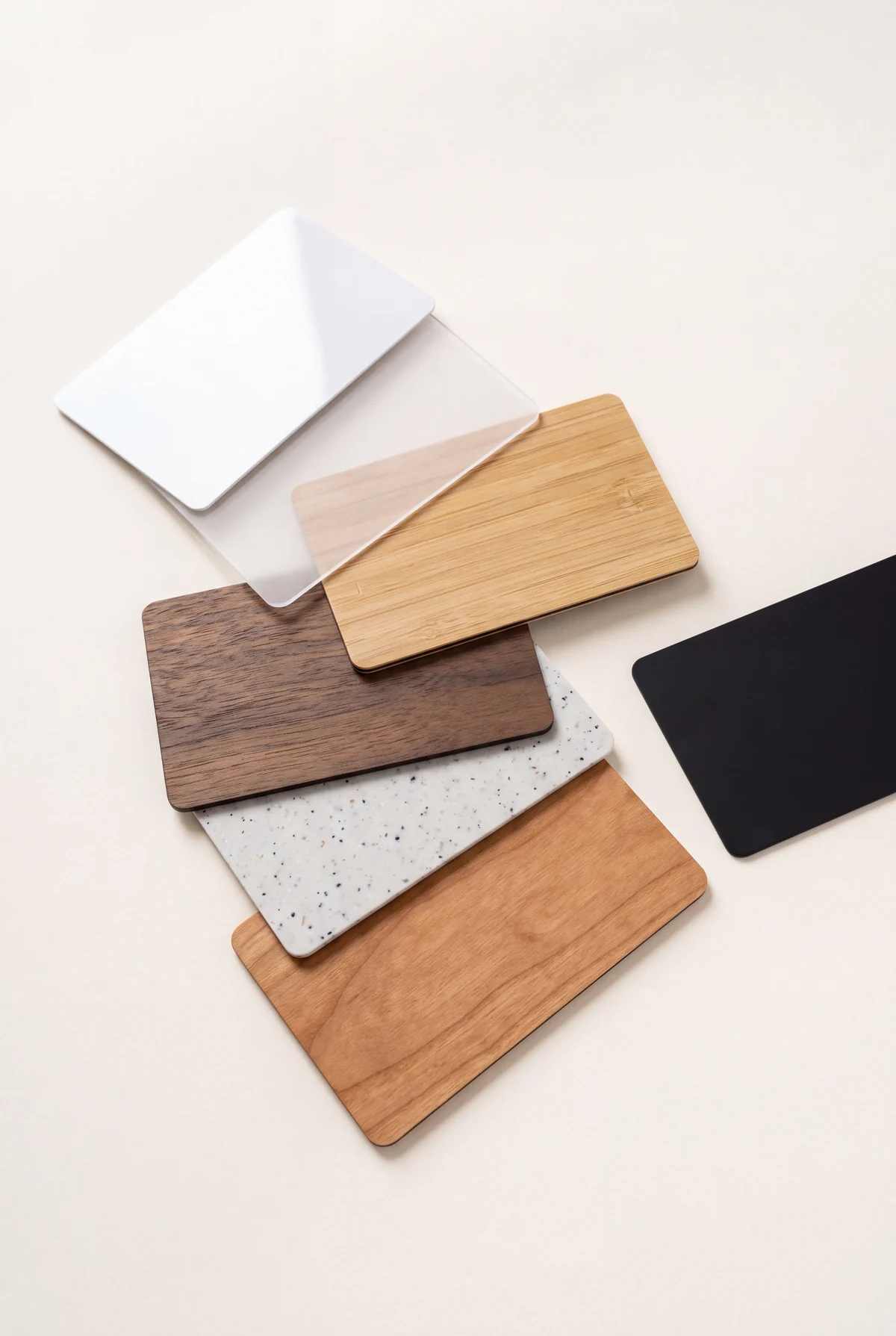
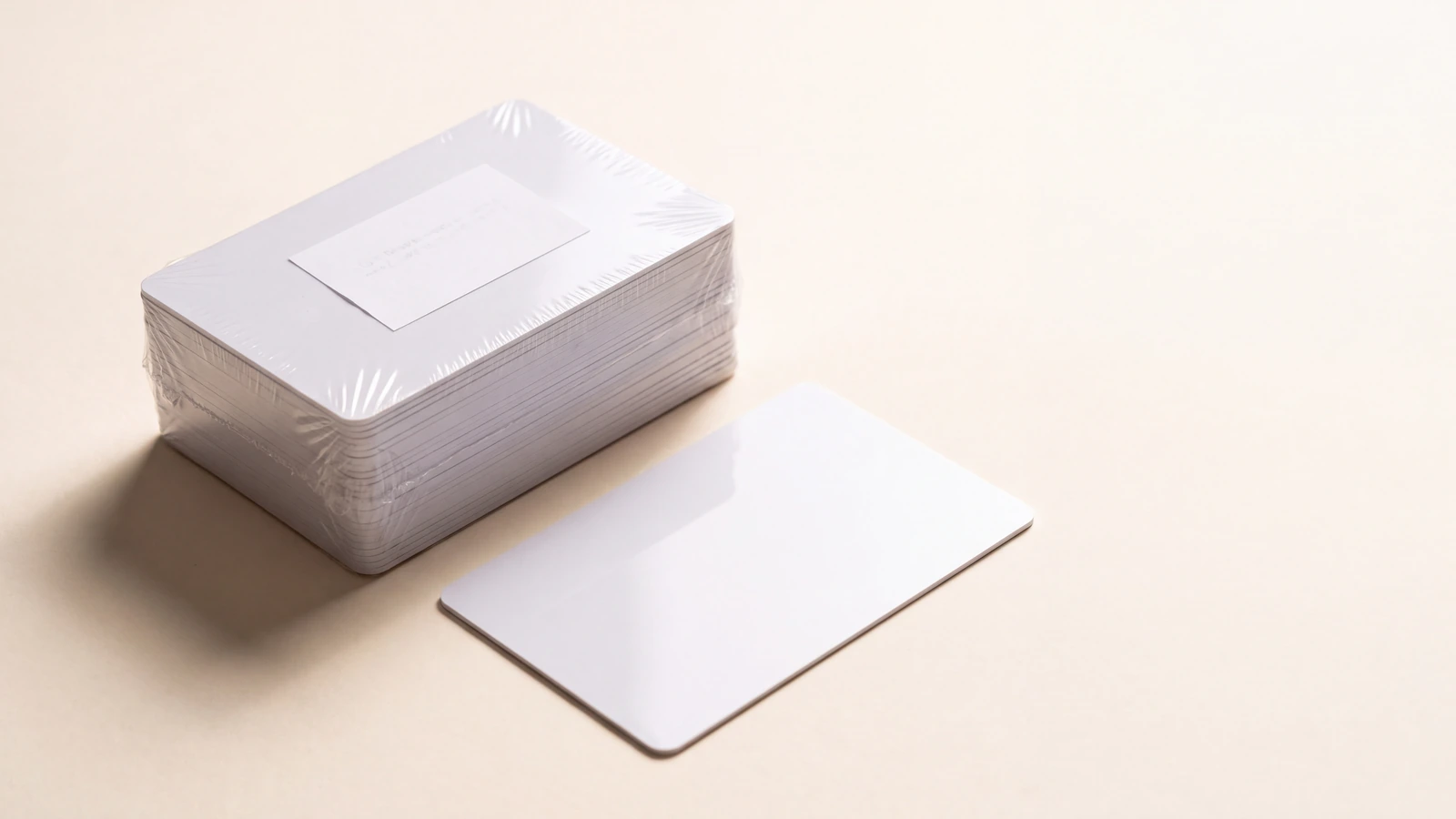
CR80 PVC at 0.76 mm, printed on both sides, carrying photo, number, barcode and chip in one card, ready for a holder or a clip.
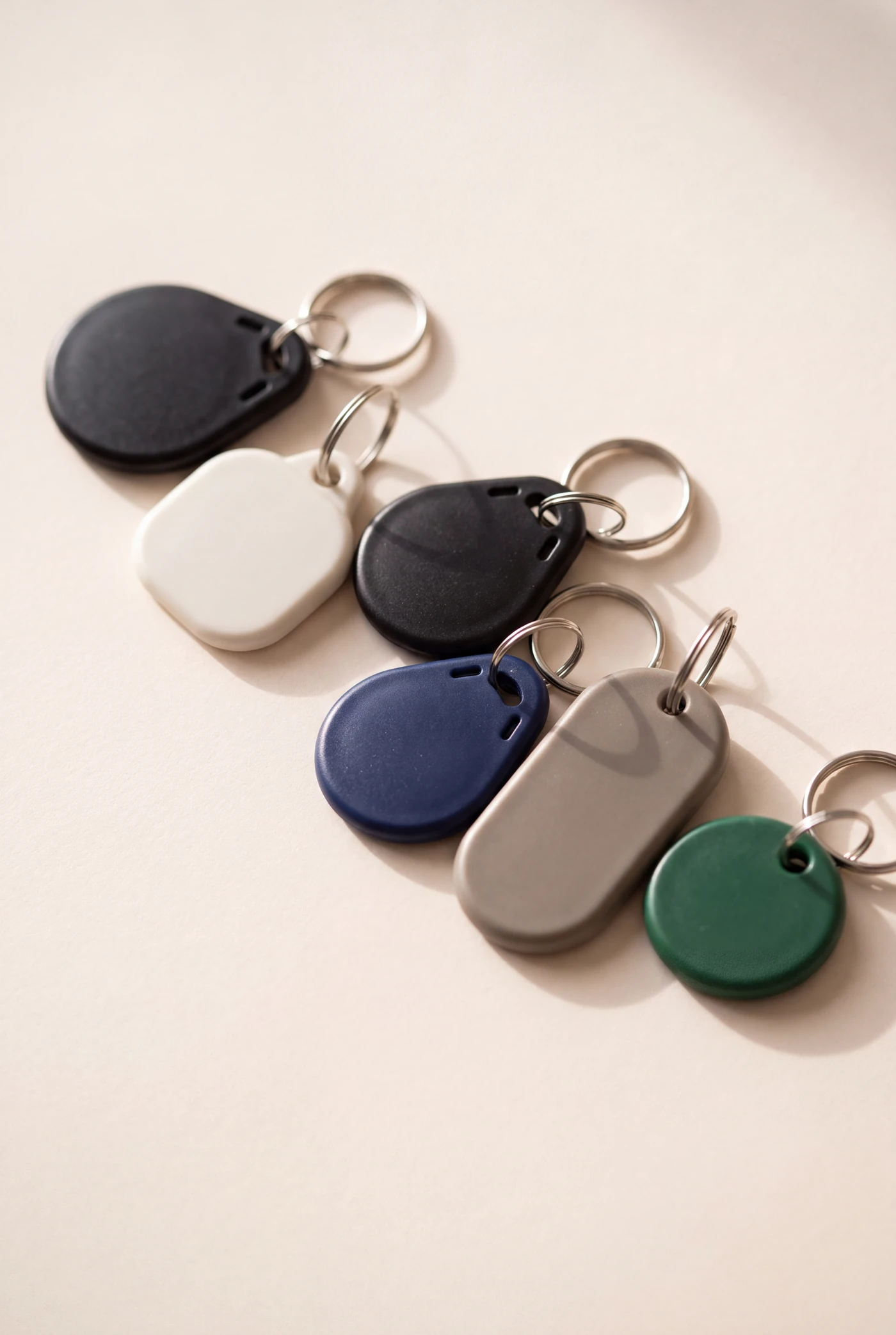
ID and RFID cards →ABS fobs at 125 kHz or 13.56 MHz on the same chip as the card, for staff who would rather keep access on a keyring than a lanyard.
See the key fobs →Waterproof silicone bands on the same chip as the badge, for staff in kitchens, wet processing areas and hospital wards, where a lanyard gets in the way of the job.
See the wristbands →Send the reader model, the artwork and a few rows of the data file. The layout is adapted for print.
Quote requests are answered the same working day, with the chip named against your reader.
A free sample goes out before any order. Check the photo, the print and the read.
Standard production is 13 calendar days. Minimum order is 500 units. Every chip is read-tested, 100%, and the layout stays on file for new starters.
Yes. Send the photo files and a spreadsheet with names, numbers and expiry dates. Every card is printed from its row in the same pass as the artwork, then checked against the file and read-tested before shipping.
The one the reader expects. Send the reader model, or post a card in use today, and the chip is confirmed in writing before production: EM4200, T5577, MIFARE Classic EV1, DESFire EV2 or EV3, or UHF.
UV ink, microtext, guilloche, hologram, hot stamping, a signature panel and a magnetic stripe, all applied at the plant. They are combined per design and confirmed on the sample.
Yes, from the same order. Lanyards and card holders are quoted, produced and delivered with the ID cards, so the site receives one shipment.
Yes. The layout, colour references, chip and numbering sequence stay on file, so cards for new starters continue the series and read the same as the first batch.
Minimum order is 500 units. Universities and large employers often order a full intake at once, then top up through the year against the layout on file.
Standard production is 13 calendar days, and 8 calendar days on express. Transit time to the delivery address comes on top, and the date is confirmed with the quote.
Yes. Visitor and contractor cards can carry a different colour band and their numbering series, so a guard tells them apart at a glance. The chip is matched to the same reader.
What decides whether an ID card opens a door, and the details to collect before a chip is chosen.
Open the guide →Classic, DESFire and Ultralight compared for staff and student cards, one by one.
Compare the chips →When ID cards ship encoded from the plant, and when the site writes them at enrolment.
See the options →