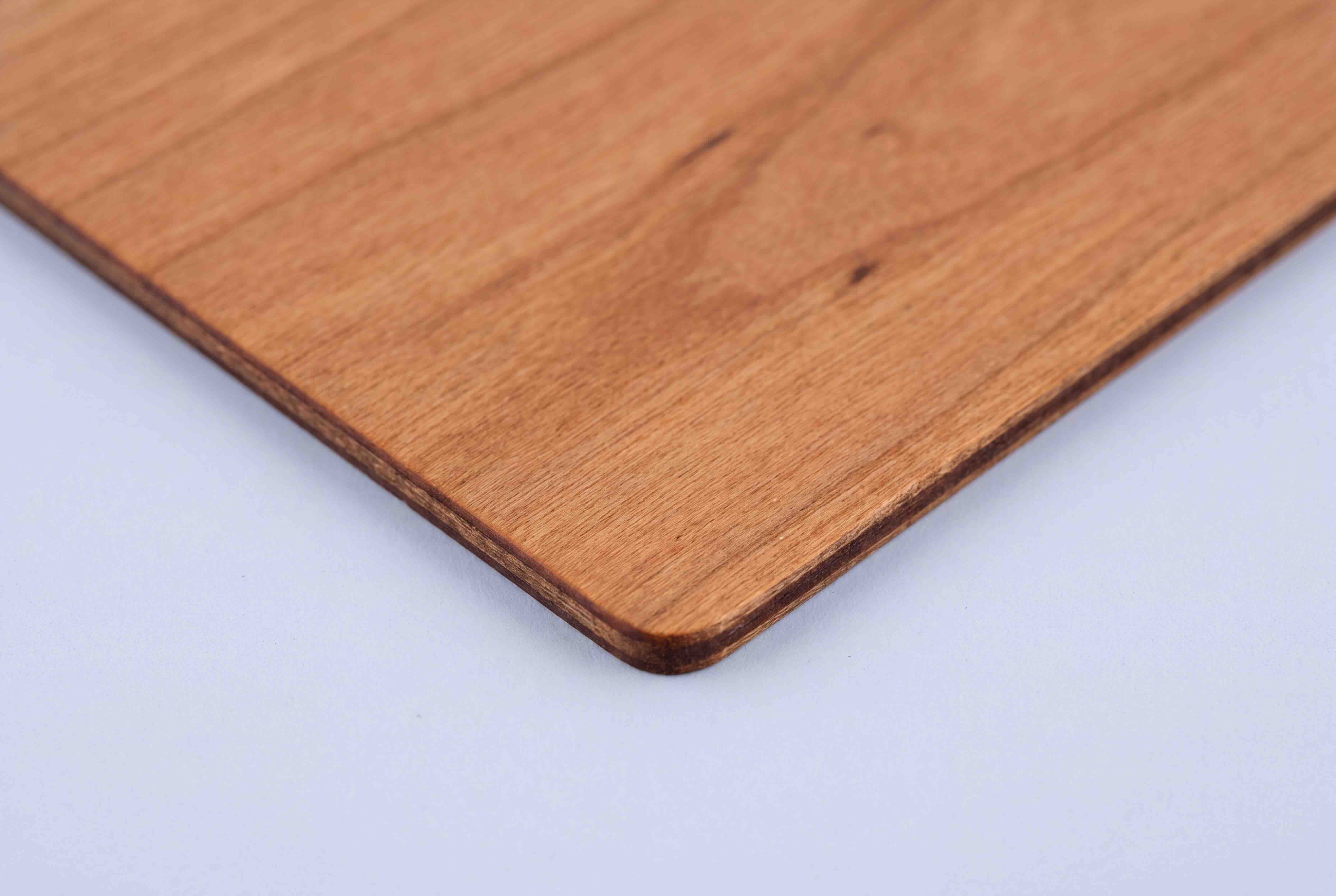
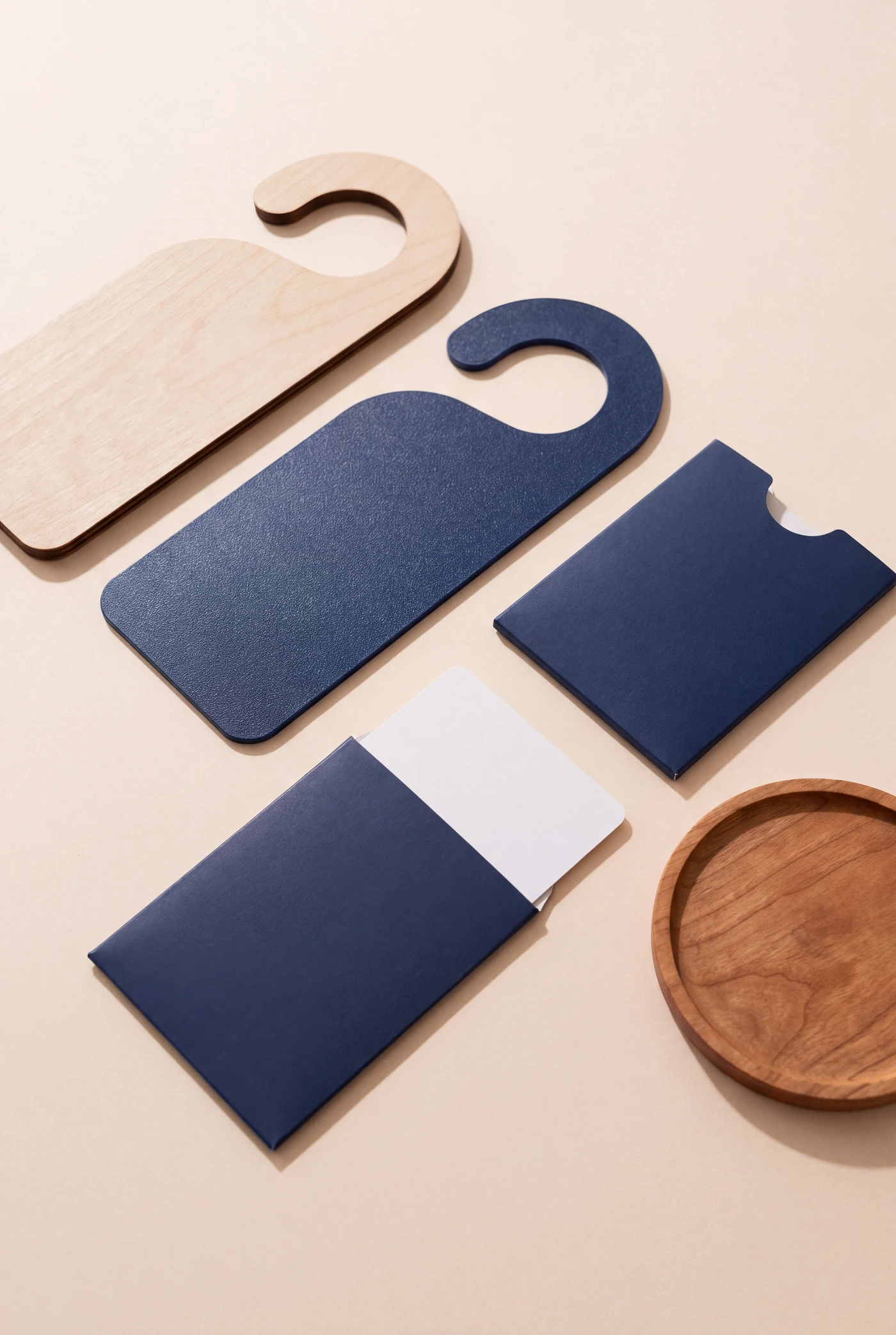
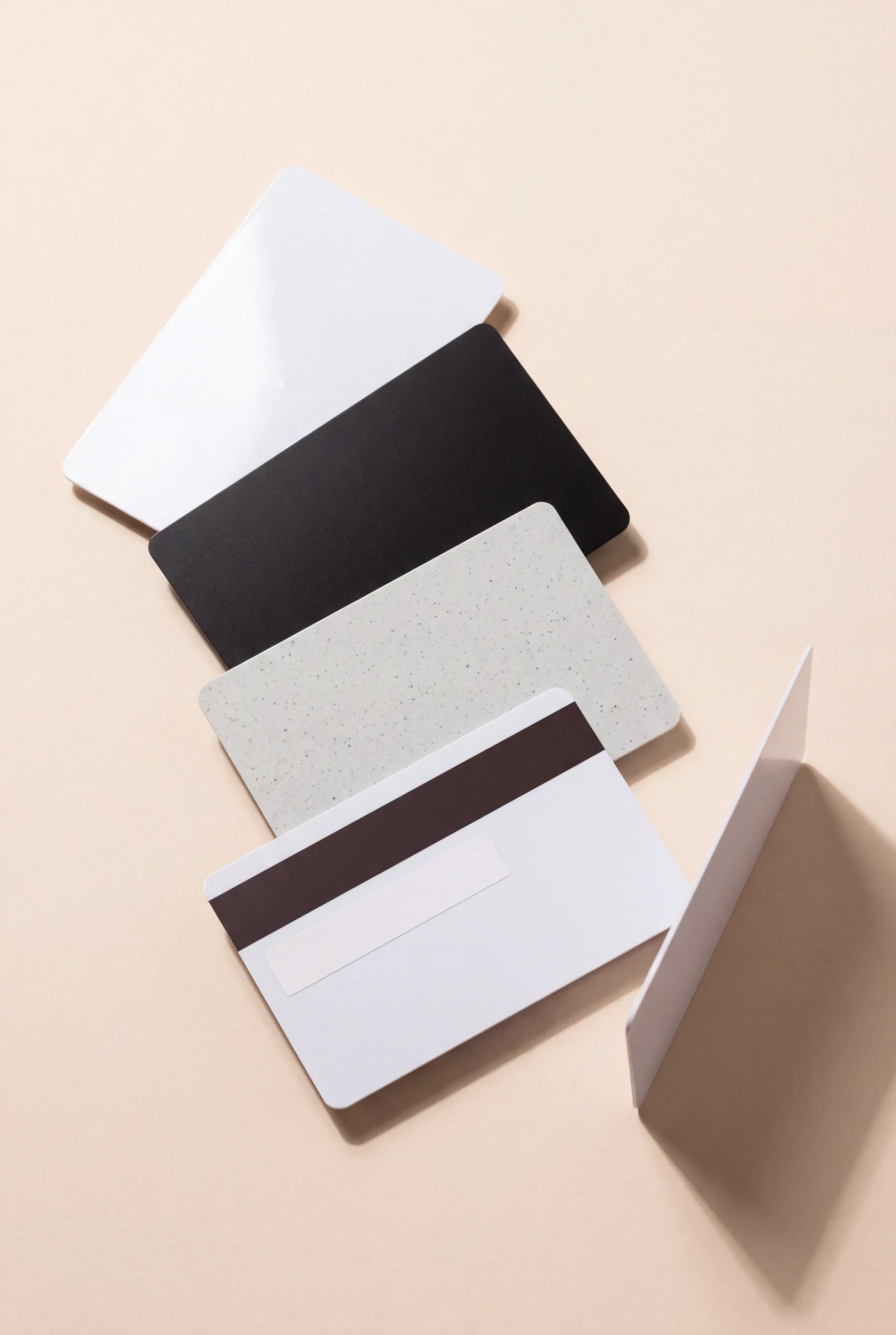
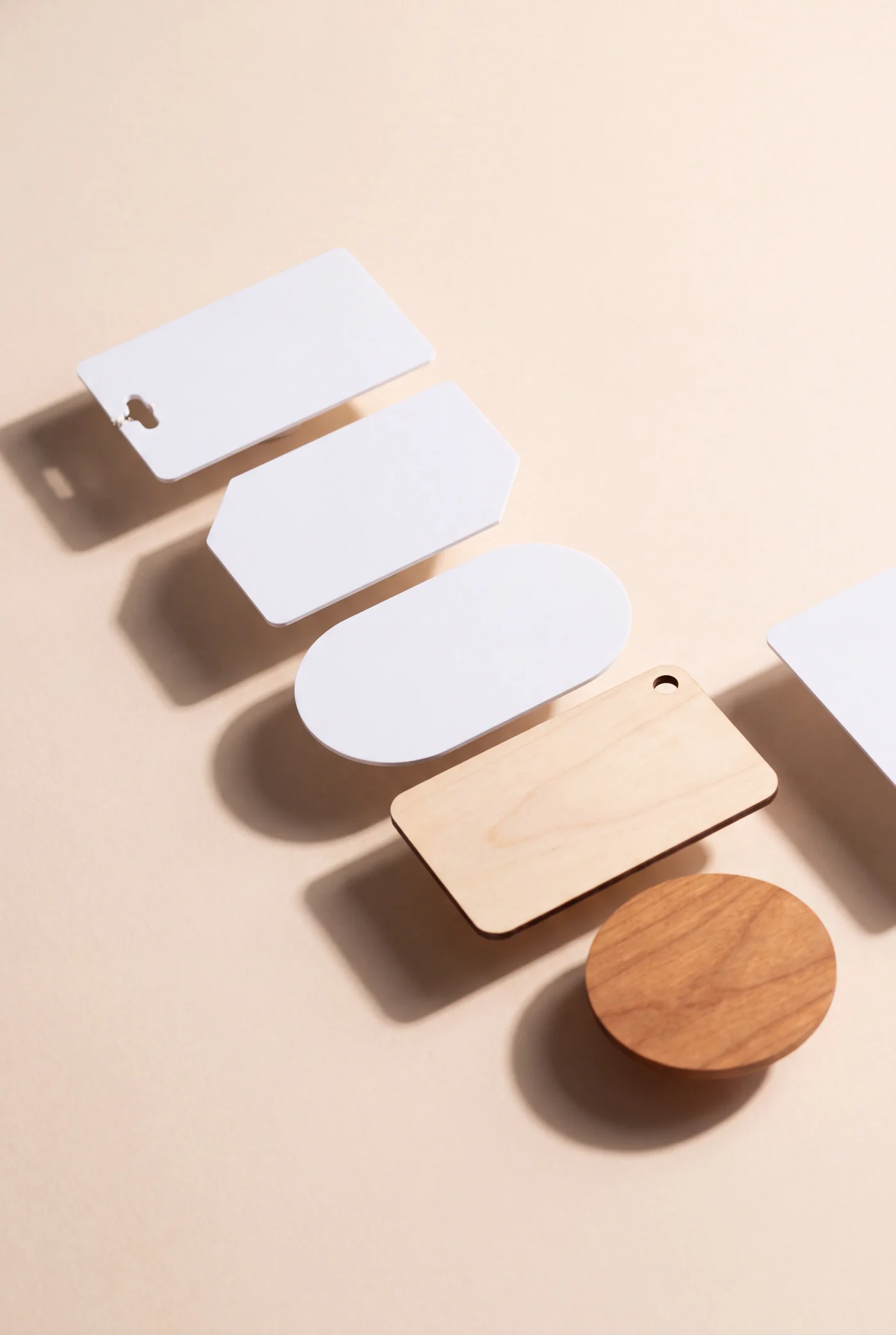
Basswood, black walnut, cherry and bamboo, cut and encoded in our plant. Same chips as PVC, but wood moves in thickness and colour.

The room key a guest is reluctant to hand back. Wood is what a property chooses when the key is part of the arrival rather than a piece of plastic to return at the desk. The lock decides the chip, so we start from the lock and work back, and we ask you to test a sample in your own door before a full run.
Hospitality →Programmes that need a top tier to feel different from the one below it without changing the system behind it. The chip and the encoding stay the same as the PVC cards already in circulation, so a wood card can be added to a running programme rather than replacing it. Artwork and numbering change with every batch. The chip usually does not.
Retail and loyalty →Clubs and member venues issuing a credential that stays in a wallet for years rather than months. Wood takes a serial number by laser, burned into the grain rather than printed on top of it, so the number is still readable after a season in a gym bag. It is also the card a member notices, which is most of the argument for it.
Clubs and associations →Three finishes, and they can be combined on the same card. Which one suits you depends as much on the wood as on the artwork, so send us both and we will tell you what will actually look right on the species you have chosen.
The mark is the wood itself, darkened by the laser rather than sitting on top of it. It does not rub off, and it is the finish most wood cards use.
Four colour printing straight onto the wood face, for artwork that needs photographs or gradients. The grain stays visible underneath, which is usually the point of choosing wood.
A single dense colour laid on the surface, white being the one most asked for. It is the cleanest way to put a mark on a dark wood such as black walnut.
Cards are cut, finished and encoded in the same plant, so the box you open is ready to issue rather than ready to programme.
The same contactless chips as a PVC card, laminated between the veneers rather than milled into them. That is also the one real limit: wood takes a contactless chip and not a contact one.
Wood is a natural material and it behaves like one. None of the following is a problem. All of it is easier to read here than to discover after a delivery.
Send us the reader or lock model you use, and tell us whether the property has an energy-saving card slot. We confirm what we can supply before you order, rather than guess.
Frequency and chip family, from the reader or lock model or from the card you use now. You can also post us a card and we verify it here.
Thickness rather than technology. A wood card is 1.20 to 1.30 mm against 0.76 mm in PVC, so a tight reader slot or an energy-saving slot has to be tested. Wood also cannot carry a magnetic stripe.
A free sample in the wood and the chip you need, tested in your own door before a full run. With wood this counts twice over, because you are checking the fit as well as the read.
All trademarks are the property of their respective owners. No affiliation or endorsement is implied.
10M
Cards a month
1,300m²
Plant floor in Dongguan
87
People in the plant
15+
Years making cards at this plant
FSC is a chain, not a badge. Every link holds its own certificate, and the claim only survives if none of them breaks. Here is the whole chain, including the parts we do not run ourselves.
The timber enters the chain from an FSC certified forest. This is where the certificate starts, and it is the part of the chain we do not run.
The mill that cuts the veneer holds its own Chain of Custody. Certified material stays separated from uncertified stock at every handover, which is the whole point of the standard.
Xinkaiwei Smart Card (Dongguan) Ltd holds Chain of Custody licence FSC-C195226, certificate SGSHK-COC-331895, issued by SGS Hong Kong. The card is cut, engraved and encoded here.
The FSC claim is stated on the sales and delivery documents for the orders it applies to, so it can be forwarded as it is and used in your client's own reporting.
A print-ready PDF or AI file, both faces, with bleed. Tell us which parts are engraved and which are printed, because on wood those are two different processes on the same card.
Send the model name or system and version. If the property uses an energy-saving card slot, say so, because it changes the thickness we quote.
An approximate quantity is enough to start. It helps us recommend the right production setup.
An approximate delivery date is enough. It helps us plan production and confirm the best option for your order.
Usually. It carries the same chip as a PVC card and reads the same way. What has to be checked is the slot rather than the chip, because a wood card is thicker than PVC. Test a sample in your own door before a full run.
1.20 to 1.30 mm. That is the working thickness for wood, against 0.76 mm for a PVC card. For properties using an energy-saving card slot, 1.10 mm can be produced on request, with a tolerance of plus or minus 0.1 mm.
Because they are wood. Colour and grain change from card to card even within one species, following the age of the tree, where it grew and the weather it grew in. It is the material behaving normally, not a fault in the batch.
Basswood, black walnut, cherry and bamboo. Each one takes engraving and printing differently, so tell us which finish matters most to you and we will say which one carries it best. Bamboo is a grass rather than a timber, and it behaves a little differently under a laser.
No. A stripe needs the smooth continuous surface that wood does not give. Where a property needs a stripe the card has to be PVC. We make both, so a mixed order across the same property is not a problem.
FSC certified wood card options are available. Our manufacturing facility holds FSC Chain of Custody certification, licence FSC-C195226, issued by SGS Hong Kong. The FSC claim is stated on the sales and delivery documents for the orders it applies to, so ask for it when you specify the card.
Yes. CMYK offset prints photographic artwork directly onto the wood and the grain stays visible underneath. Laser engraving and silkscreen are the other two finishes, and all three can be combined on one card.
Yes. Serial numbers and QR codes can be laser engraved individually, and the chip can be encoded individually as well. Send the data as a spreadsheet, one row per card.
Yes, and with wood we push for it. Wood is a material you have to hold to judge. We send a free sample in the wood and chip you asked for, and you test it in your own door.
A wood card is one people notice, and handing it over in a printed carrier is what most properties do. Both are made to the format of the card, on one sheet.
Accessories →Where a stripe is required, or for the everyday issue that sits alongside the wood. A mixed order across one property is no problem, both come from one plant.
PVC cards →
Wood does not have to stay rectangular. The same species and the same finishes, cut to an outline you send us, on the same run as the standard cards.
Special shape cards →