Request a quote
CapabilitiesThe plantResourcesContactRequest a quote
Home/Products/RFID and NFC cards
Products · Cards

RFID and NFC proximity cards

Contactless cards in 13.56 MHz, 125 kHz and UHF, encoded in our own plant against your reader, not against a catalogue.

Frequency
13.56 MHz · 125 kHz · UHF
Standard format
CR80 · 85.60 × 53.98 mm · 0.76 mm
Encoding
In house before shipping
Compatibility
Matched to your reader or lock
Personalisation
Your own artwork, full colour, both sides
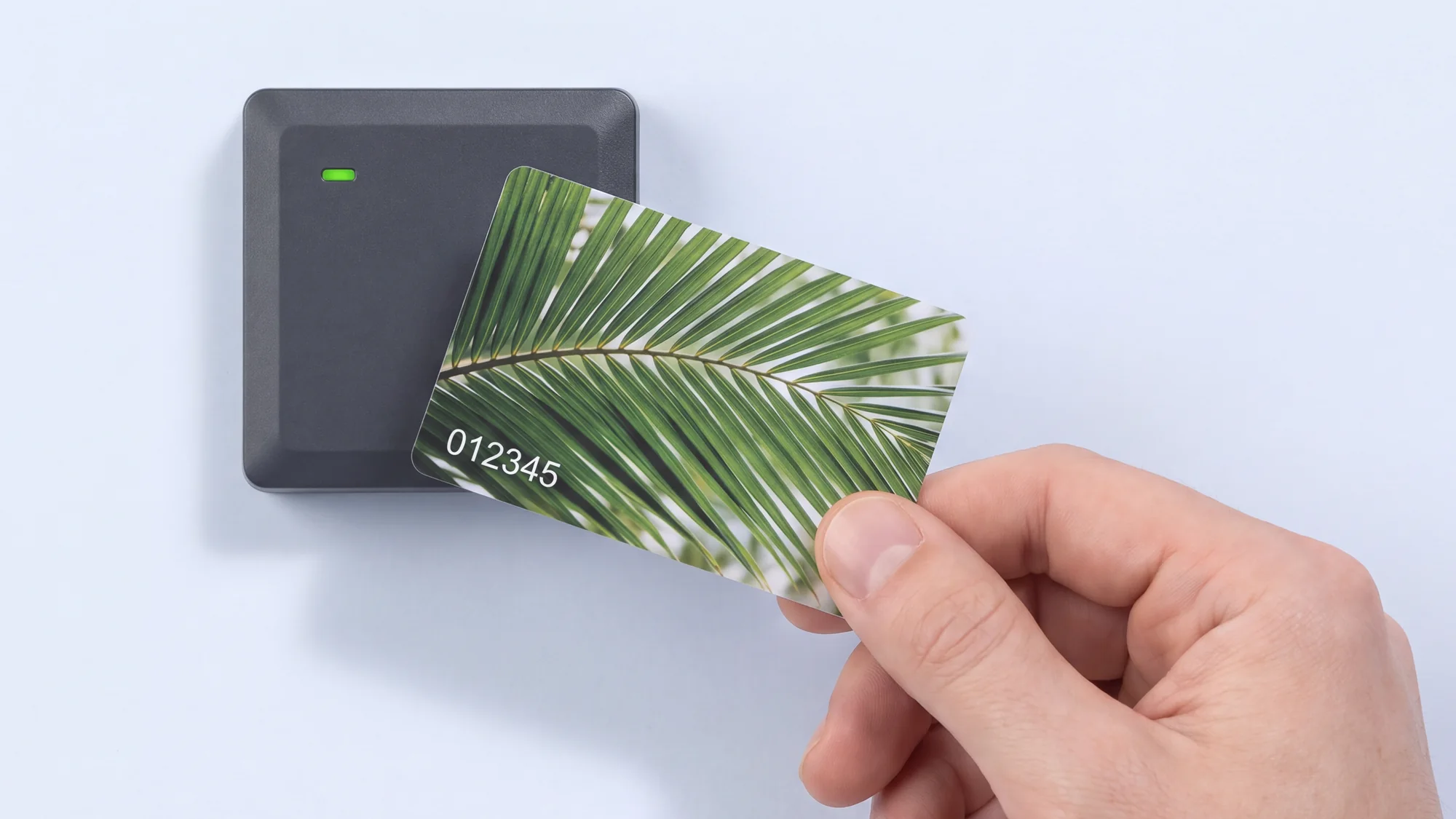
A hand presenting an RFID card to a matte dark grey wall reader. The card is printed edge to edge with a green palm frond and carries a serial number.
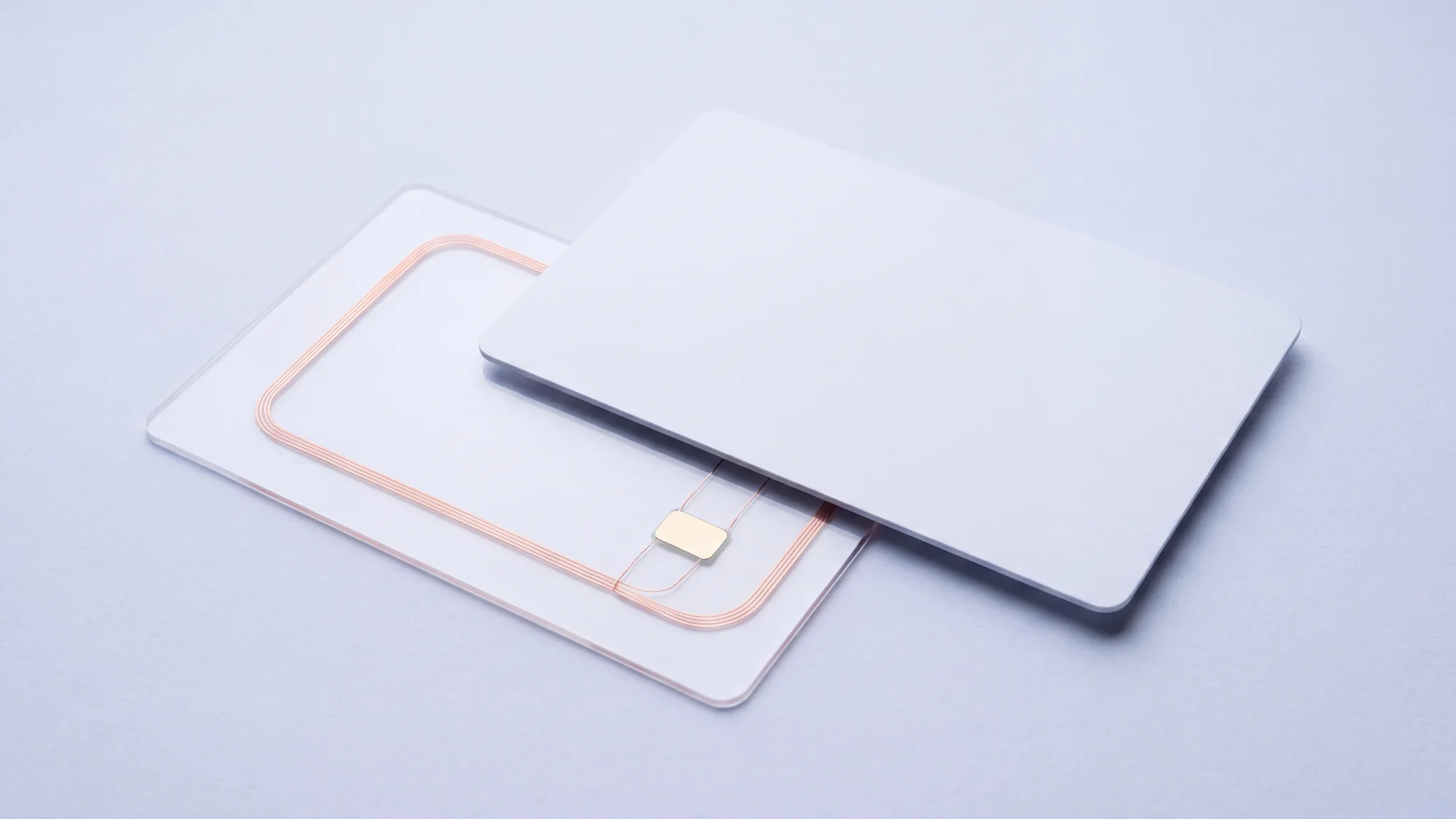
An RFID inlay on a table, showing the single loop of copper wire and the small gold chip module, with a finished white card resting on top of it.
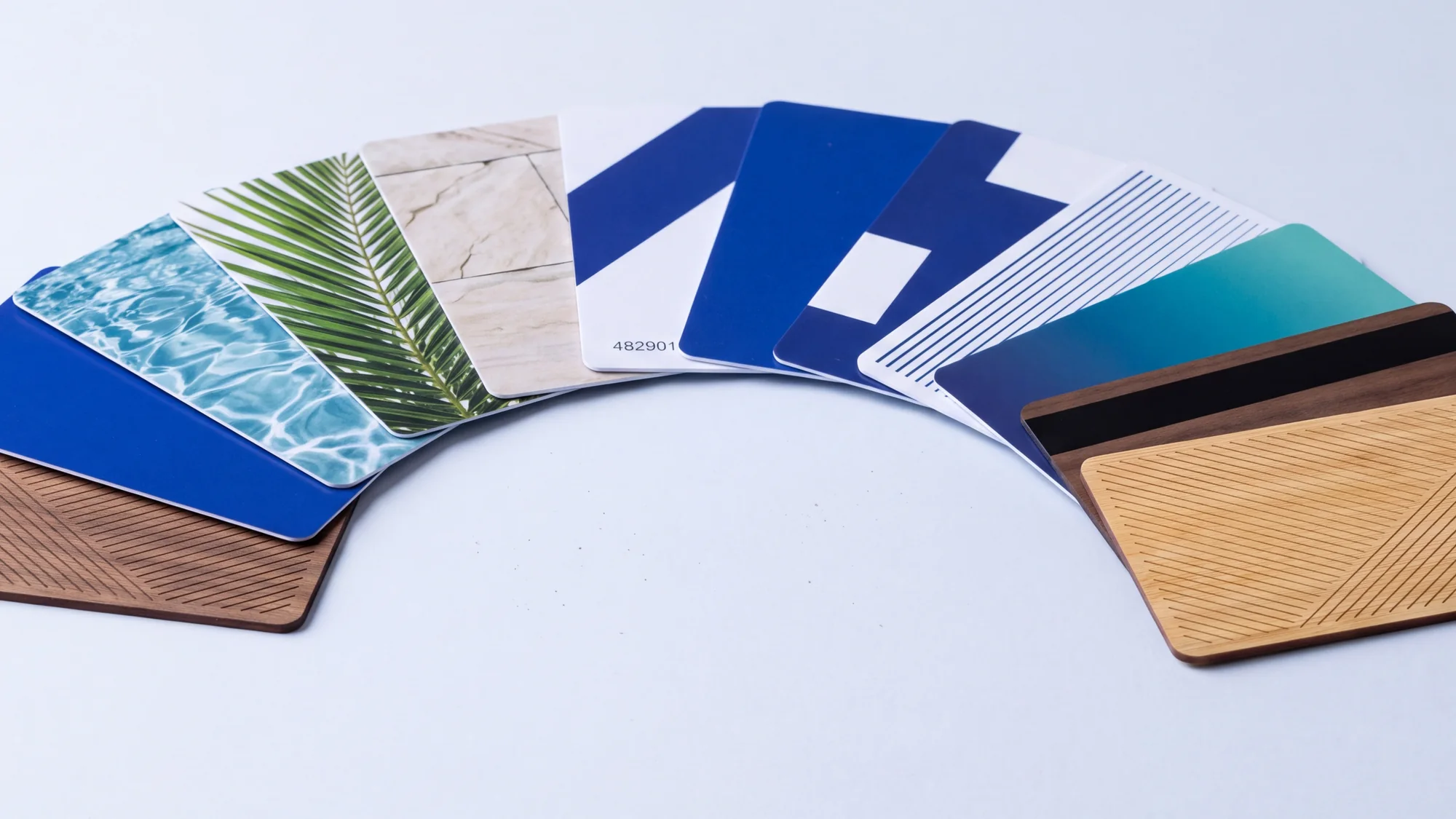
Fourteen RFID cards fanned out across a table in a production run, printed in different designs, with laser engraved walnut and bamboo cards among them.
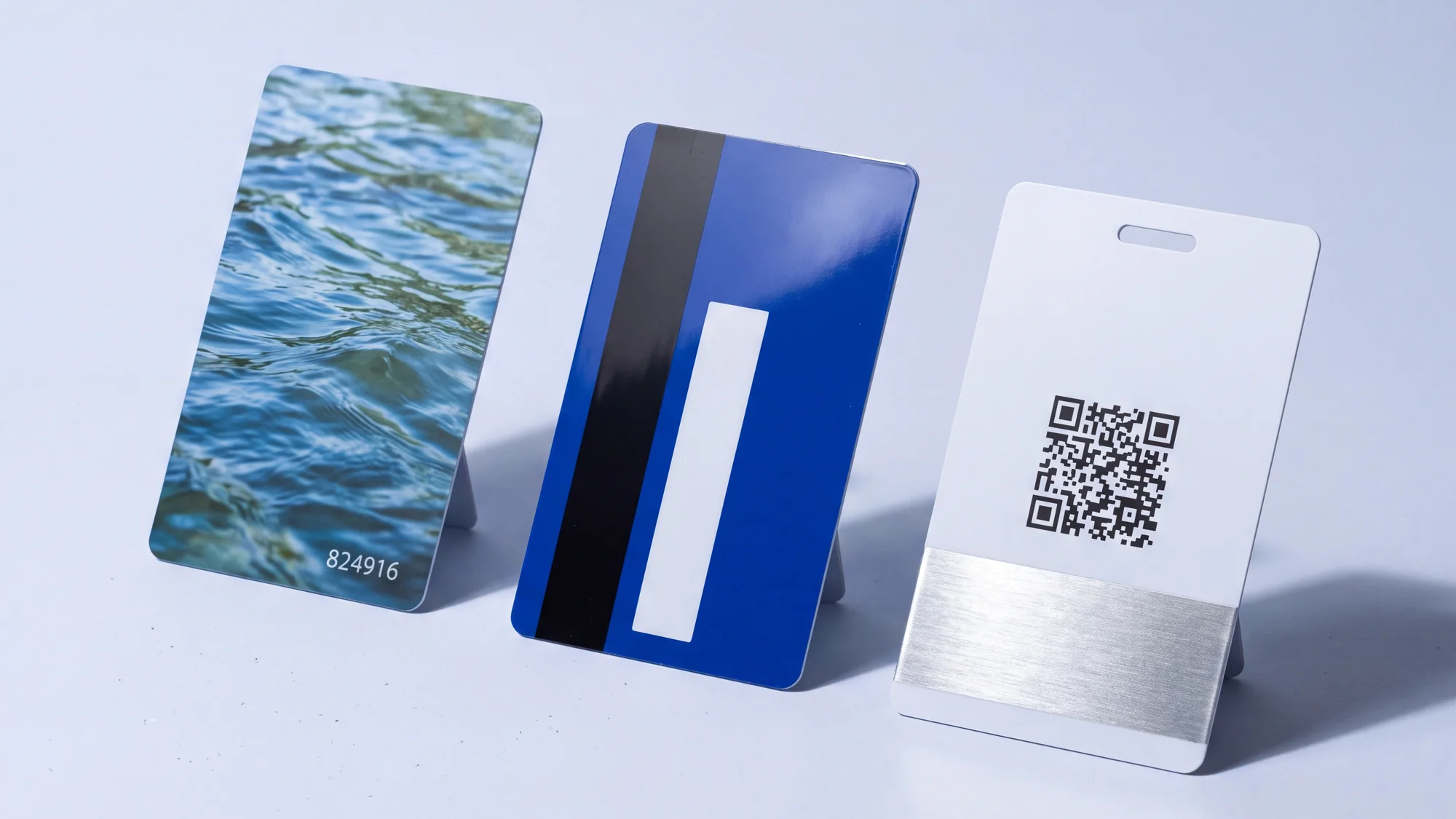
Three RFID cards standing in a row: a matte card with a full colour photographic print and a serial number, a gloss card with a magnetic stripe and signature panel, and a card with a QR code, a silver foil band and a punched lanyard slot.

What are they used for?

Access and entry

Offices, buildings, industrial sites and campuses, including multi tenant buildings where each floor runs its own reader. One credential per person, encoded to the system already on the door, so the cards arrive ready to issue rather than ready to programme.

Access control and security →

Membership and loyalty

Gyms, clubs, retail programmes and associations issuing credentials across a large member base. Artwork and numbering change with every batch while the chip usually stays the same, which is what keeps a reorder quick and the cards working on the readers you already have.

Retail and loyalty →

Hotel groups and resorts

Guest and staff cards for hotel groups, resort developments and management companies rolling out across several properties. The lock decides the chip, so we start from the lock and work back, and we ask you to test a sample in your own door before a full run.

Hospitality →

Specifications

Which frequency do you need?

It depends on the reader or the lock already on your door, never on the card itself. If you are not sure which one you have, send us the model and we confirm it in writing before you place an order, so nothing is decided by guesswork.

Low frequency
125 kHz

Older proximity readers, door intercoms and the legacy hotel locks still in service.

Chip families
EM4200T5577
High frequency
13.56 MHz and NFC

Most current access control, hotel locks, campus systems and phone taps over NFC.

Chip families
MIFARE Classic 1KMIFARE Plus 4KMIFARE Ultralight CMIFARE DESFire EV1NTAGICODE
Ultra high frequency
860 to 960 MHz

Long range reads at a barrier or a gate, for vehicles, parking and asset tracking.

Chip families
UHF Gen 2

What can go on the card?

Your own artwork, printed and finished in the same plant that makes the card, so the colour you approve is the colour that ships.

Print
Offset and digital, both faces, full colour artwork, variable print
Finishes
Matte lamination, gloss lamination, hot foil, embossing, spot gloss
Personalisation
Sequential and non sequential numbering, barcode, QR, magnetic stripe, photo ID, variable data

What arrives, and when?

Cards are encoded to your system before they leave the plant, so the box you open is ready to issue rather than ready to programme.

Format
CR80, 85.60 by 53.98 mm
Thickness
0.76 mm in PVC, 1.20 to 1.30 mm in wood
Bodies
PVC, 80% recycled PVC and wood
Minimum order
500 units
Lead time
13 calendar days from artwork approval. 8 on express
Dual frequency
One CR80 card can carry two bands, for example 13.56 MHz with 125 kHz, or UHF with 125 kHz. Send both systems and we specify one card for the two rather than two cards

Which body should you choose?

All three carry the same chip and the same encoding, so the choice is about how the card looks, how it is finished and how many you order. Wood is the one with real limits, and they are listed here rather than left for you to find out later.

PVCRecycled PVCWood
Made fromVirgin PVC sheet80% recycled PVC sheetBasswood, black walnut, cherry or bamboo
Thickness0.76 mm0.76 mm1.20 to 1.30 mm
Full colour printYesYesYes
Laser engravingNoNoYes
Magnetic stripeYesYesNo
FinishMatte or gloss laminationMatte or gloss laminationNatural grain, engraved
Best forEveryday issue at volume, and any card that needs a stripeThe same card with a recycled body, where the shade can move a littleSuites, memberships and anything kept rather than returned

What we can put on it

Personalisation
Full colour (CMYK)
Chip encoding
000127
Sequential numbering
4 018127 003
Barcodes and QR
000127
Photo ID
Magnetic stripe
Security
Signature panel
418290
Scratch panel
UV ink
KAWAYKAWAYKAWAYKAWAY
Microtext
Guilloche
Hologram
Finishes
000127000127
Embossing
Hot stamping
Spot UV varnish
MATTEGLOSS
Matte and gloss
Custom die-cutting
Transparent
See how each one is made →

Will it work with your system?

Send us the reader or lock model you use. We confirm what we can supply before you order, rather than guess.

What can we confirm?

Frequency and chip family, from the reader or lock model or from the card you use now. You can also post us a card and we verify it here.

Where are the limits?

On encrypted systems, we can supply the correct chip, but credentials controlled by the system owner may need to be written by them.

What do we recommend?

We send you a free sample in the material and chip you need, so you can test it in your own reader or lock before a full production run.

Standards the cards are built to
ISO/IEC 7810 ID-1ISO/IEC 14443 Type AISO/IEC 15693ISO/IEC 18000-63
Compatible with
Assa AbloyVingCardSALTODormakabaOnityOrbitaHotekVision LineSaflok

All trademarks are the property of their respective owners. No affiliation or endorsement is implied.

The factory

10M

Cards a month

1,300

Plant floor in Dongguan

87

People in the plant

15+

Years making cards at this plant

What do we need from you?

01

Your artwork

A print-ready PDF or AI file, both faces, with bleed. If not, we can work from the card you use now.

02

Your reader or lock model

Send the model name or system and version. A clear photo of the reader is often enough to identify it.

03

The quantity

An approximate quantity is enough to start. It helps us recommend the right production setup.

04

The delivery date

An approximate delivery date is enough. It helps us plan production & confirm the best option for your order.

Questions we hear the most

Will your cards work with the readers we already have?

Usually, but it is checked rather than assumed. The reader or lock model tells us the frequency and the chip family. System configuration sometimes needs a physical test, and we say so rather than guess.

What do you need from us to confirm compatibility?

The reader or lock model first. Then the chip type if you know it, and clear photographs of both faces of the card you use now. On encrypted systems, a physical sample beats all of it.

Can you match the RFID card we already use?

Usually. We work from the card you use now, the reader or lock model, and any specification you were given at installation. Where that is not enough, we ask for a sample rather than a description.

What is the difference between MIFARE Classic and DESFire?

Both run at 13.56 MHz, which is why they get confused, but they are different families and are not interchangeable. DESFire adds security features. Your reader decides which one you need, not which chip is newer.

Which frequencies and chip families can you supply?

13.56 MHz, 125 kHz and UHF, covering MIFARE, NTAG, ICODE, EM4200, T5577 and UHF Gen 2. The specification above lists what we hold as standard. Send the model if yours is not there.

Can you encode the cards before they ship?

Yes, in our own plant, so cards arrive ready to issue. On open systems we encode to your specification. On encrypted systems we supply the correct chip and the key holder writes the credential.

Can each card carry different data, numbers or codes?

Yes. Numbering, barcodes, QR codes, photo ID and other variable data can change on every card, and the chip can be encoded individually. Send the data as a spreadsheet, one row per card.

Can we test a physical sample before production?

Yes, and we recommend it. Samples go by express so you can try the card in your own reader before committing a run. The real door tells you more than any specification sheet.

Do you supply cards for hotel lock systems?

Yes, it is the most common request we handle. A lock or firmware upgrade can change the chip a property needs. Send the lock system name and version, and test a sample in your own door.

Complete your order

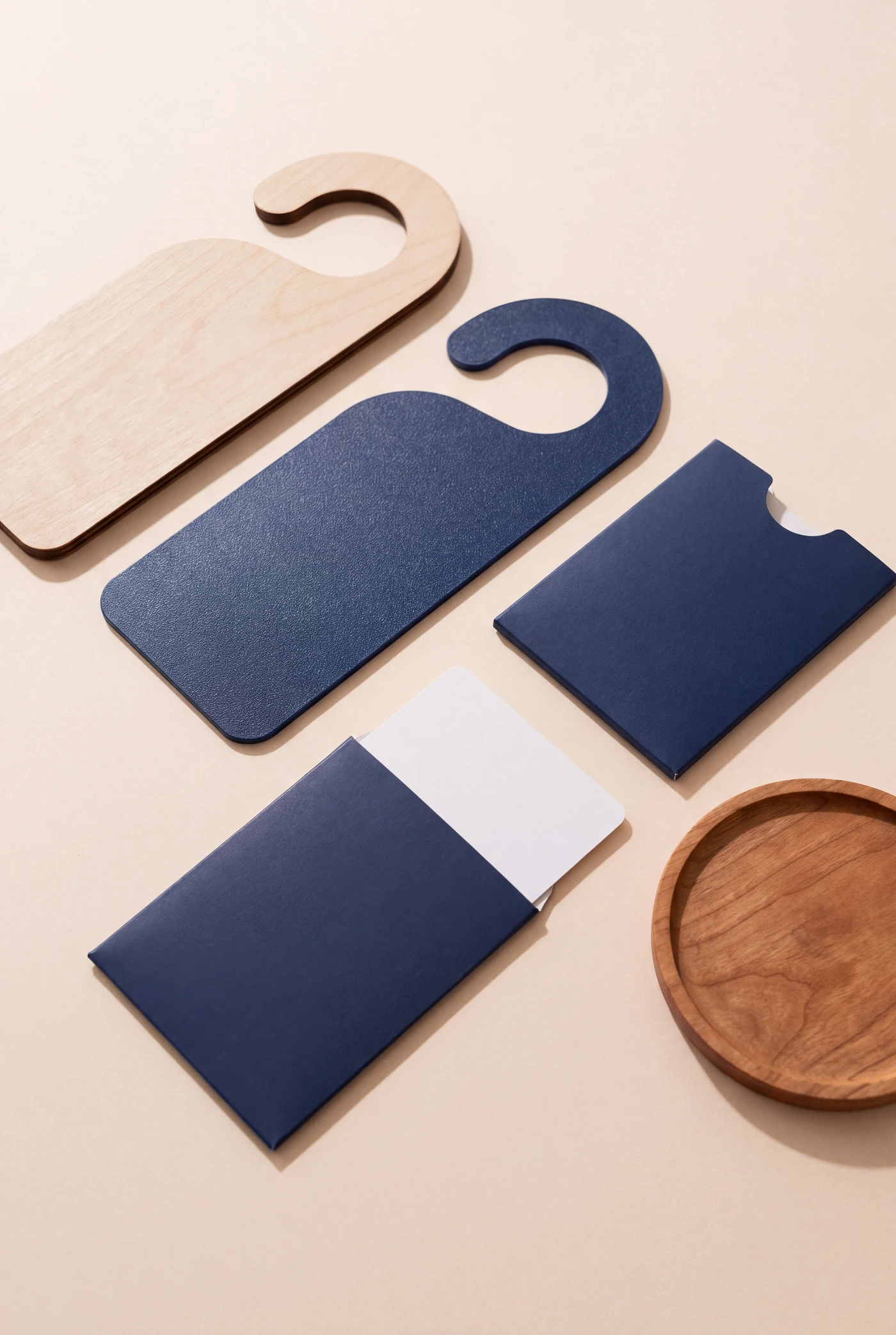
Blank door hangers in wood and navy PVC, two navy card sleeves and a wooden coaster

Card sleeves and holders

The card has to arrive in something and be carried in something. Sleeves and holders are made to the format of the card and specified on the same sheet.

Accessories →
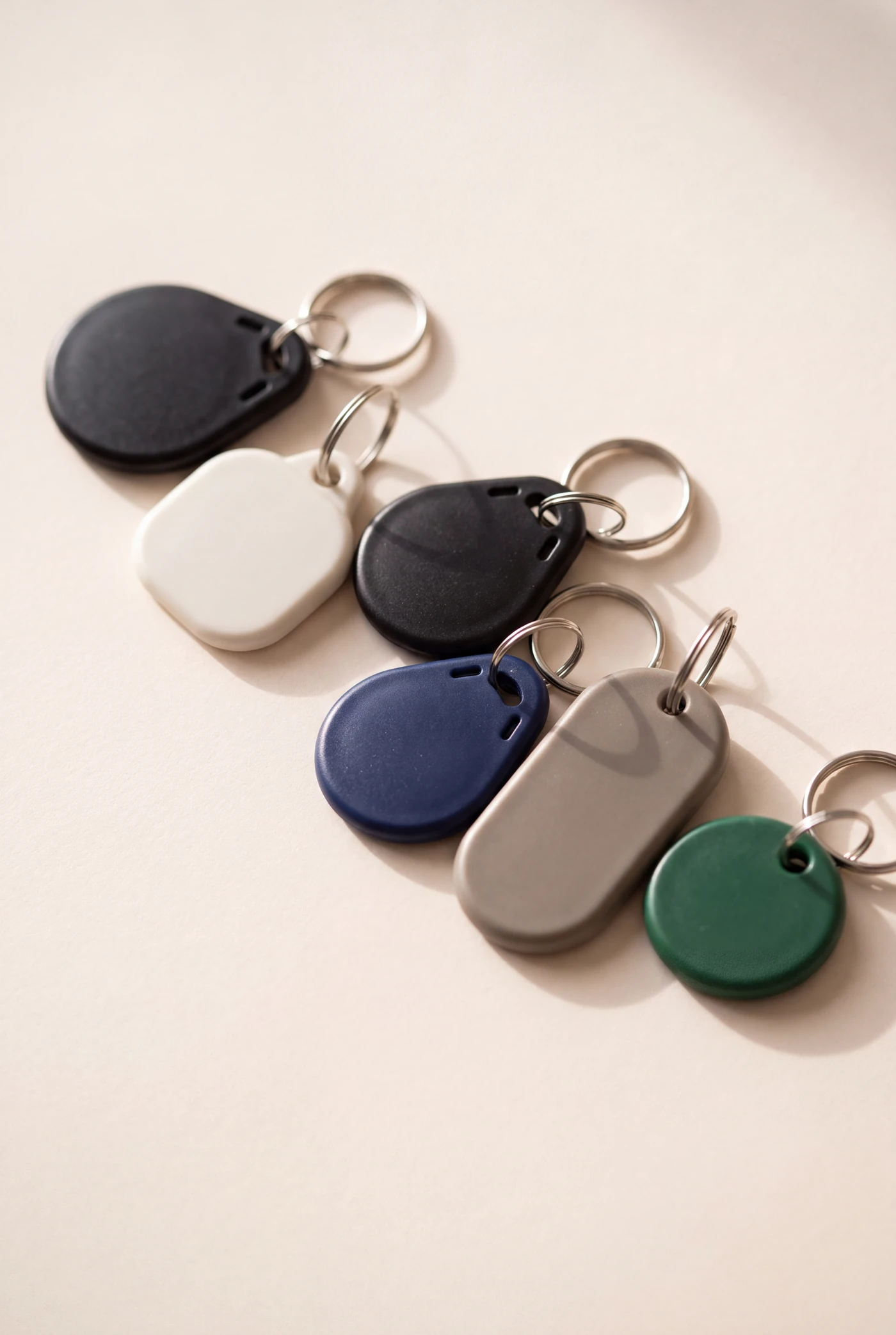
Blank ABS key fobs on split rings, in black, white, navy, grey and green

Key fobs

The same chip, encoded the same way, for the people on the site who carry keys rather than a wallet. The reader cannot tell the two apart.

Key fobs →

Wristbands

For guests, members and anywhere a card is impractical. Same frequencies, same chip families, so one site can run cards and bands together.

Wristbands →

Start with a free sample.

A sample before the run
Free, sent by express in the material and chip you asked for, so you can test it in your own reader or lock before you order.
A reply the same working day
We answer in writing on the working day your request arrives.
Compatibility first
We confirm the frequency and chip family against your reader or lock model, and we tell you when we cannot.