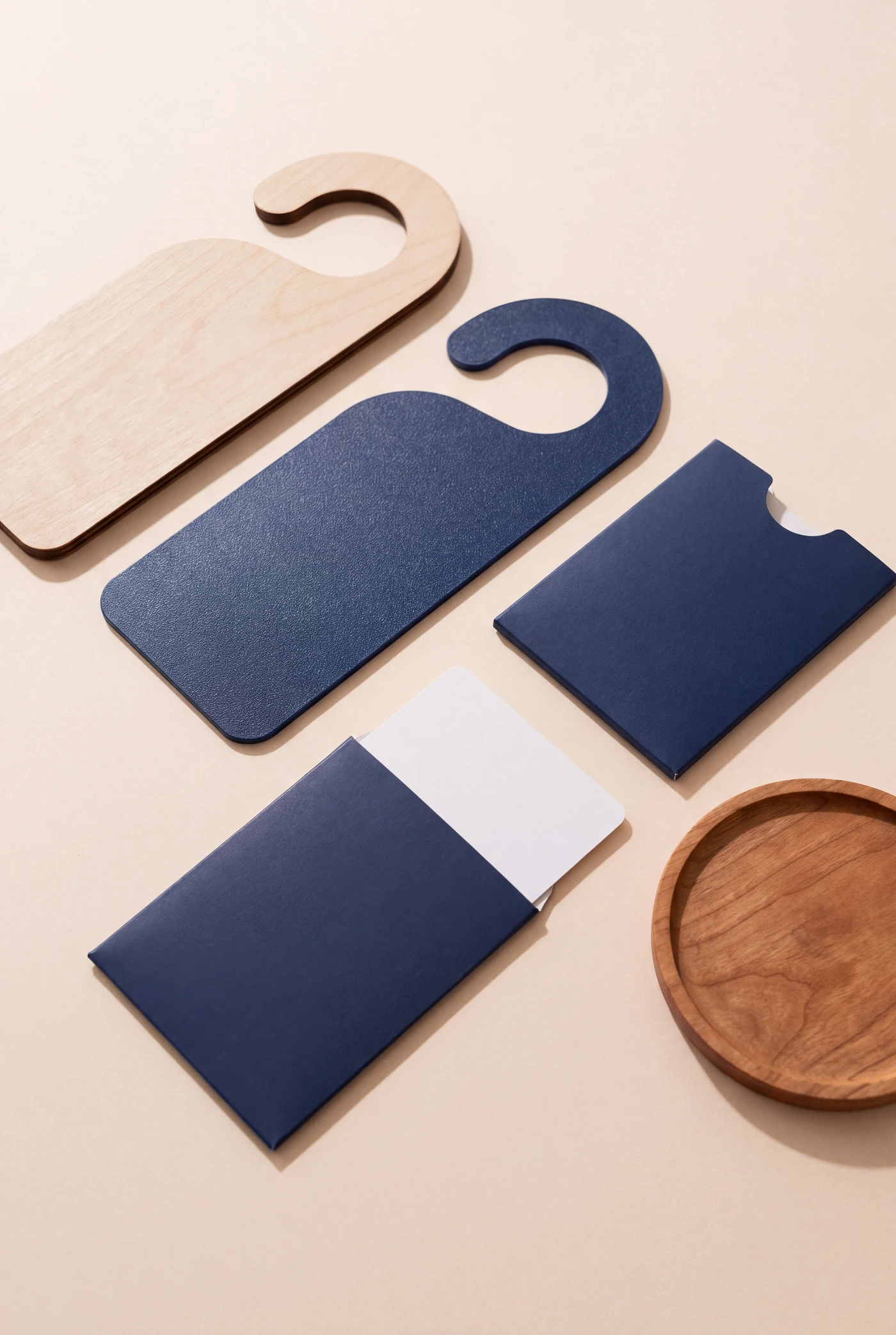
Cards that are not CR80. Same bodies, chips, printing and encoding. What changes is the outline, ours or your own drawing.
Programmes where the shape is the point, because a card that isn't shaped like every other card in a wallet is noticed before it is read. The chip and encoding stay the same as the standard cards already in circulation, so a shaped card can be added to a running programme, not replace it.
Retail and loyalty →Room keys, tags and back of house credentials that do not have to be card shaped. The lock still decides the chip, so we start from the lock and work back, and the outline has to leave room for the antenna. Send both at the same time and it is one conversation instead of two.
Hospitality →Credentials that live on a keyring rather than in a wallet, without moving to a moulded fob. A shaped card can be punched and carried like a tag while still taking full colour print on both faces, which a fob cannot.
Clubs and associations →Twelve of the outlines already cut in our own plant, drawn to the same scale so the range is visible rather than described. A dashed line is where the piece breaks apart. Blue marks a hole or a slot, and on most of these the position can move. If your shape is close to one of them, it is already a die we own.
The set above is what we have already cut, not a menu you have to pick from. Most enquiries land somewhere near one of those outlines, and the ones that do not get quoted from your drawing instead.
The same chip and the same encoding as a standard CR80 card. The outline changes nothing about the technology.
Everything a standard card takes, within the area your outline leaves for it.
Send us the reader or lock model and the outline at the same time. The two decide each other, so we would rather see both before we answer either.
Frequency and chip family, from the reader or lock model or from the card you use now, and whether the antenna for that chip fits inside the shape you have drawn.
A small outline restricts the antenna, which restricts the chip. On encrypted systems we can supply the correct chip, but credentials controlled by the system owner may need to be written by them.
Send the outline before the artwork. Changing a shape after the artwork is drawn to fit it costs you a round trip that a five minute conversation would have saved.
All trademarks are the property of their respective owners. No affiliation or endorsement is implied.
10M
Cards a month
1,300m²
Plant floor in Dongguan
87
People in the plant
15+
Years making cards at this plant
A vector file with the cut line on its own layer, and the overall width and height in millimetres. That is the one thing we cannot start without.
PVC, recycled PVC or wood. Wood is thicker and it changes what a shape can do, so tell us early rather than late.
Send the model name or system and version. It decides the chip, and the chip has to sit inside your outline, so the two questions are really one question.
Approximate figures are enough to start. They help us recommend the right production setup and confirm the best option for your order.
The set drawn on this page is what we already have tooling for, from key tags and break-apart cards to squares, circles and octagons. Anything outside it is quoted from your own drawing. Send a vector outline with the overall dimensions and we tell you what we can cut, what we would change and why.
Up to 200 mm on the longest edge. The shapes we already hold tooling for run to 150 mm, so a lot of outlines turn out to be something we have cut before. Send the drawing with the overall width and height and we confirm it against your specific shape, because how the dimension falls across the outline matters as much as the number does.
Yes, the same chips as a standard card. The antenna has to sit inside your outline, so send the shape at the same time as the reader model rather than after it. A small shape can rule out a chip family, and it is better to find that out now.
On PVC only, and only where the outline leaves the stripe a straight run. Send the shape and we confirm it. Wood cannot carry a stripe at all, whatever the shape.
Yes, in basswood, black walnut, cherry and bamboo. Wood runs at 1.20 to 1.30 mm rather than 0.76 mm, it takes contactless chips only, and it is a natural material, so grain and colour vary from piece to piece even within one species.
It is quoted with the shape rather than fixed in advance, because a shape is not a standard card. Send the outline and the quantity you have in mind and we will tell you where the numbers work and where they do not.
We send a free sample in the body and chip you asked for so you can test the read on your own system. A sample in your own outline is a separate step, and we tell you what it involves when we quote rather than leaving you to ask.
Usually. Send the card itself if you can. A physical sample gives us the outline, the thickness and the chip in one go, which a drawing on its own does not.
A shaped card needs a sleeve cut to the same outline, the one accessory you cannot buy off a shelf afterwards. Send the outline once, it covers both.
Accessories →The standard CR80 that usually runs alongside a shaped card, for the volume issue that does not need to stand out. Both come off the same sheet.
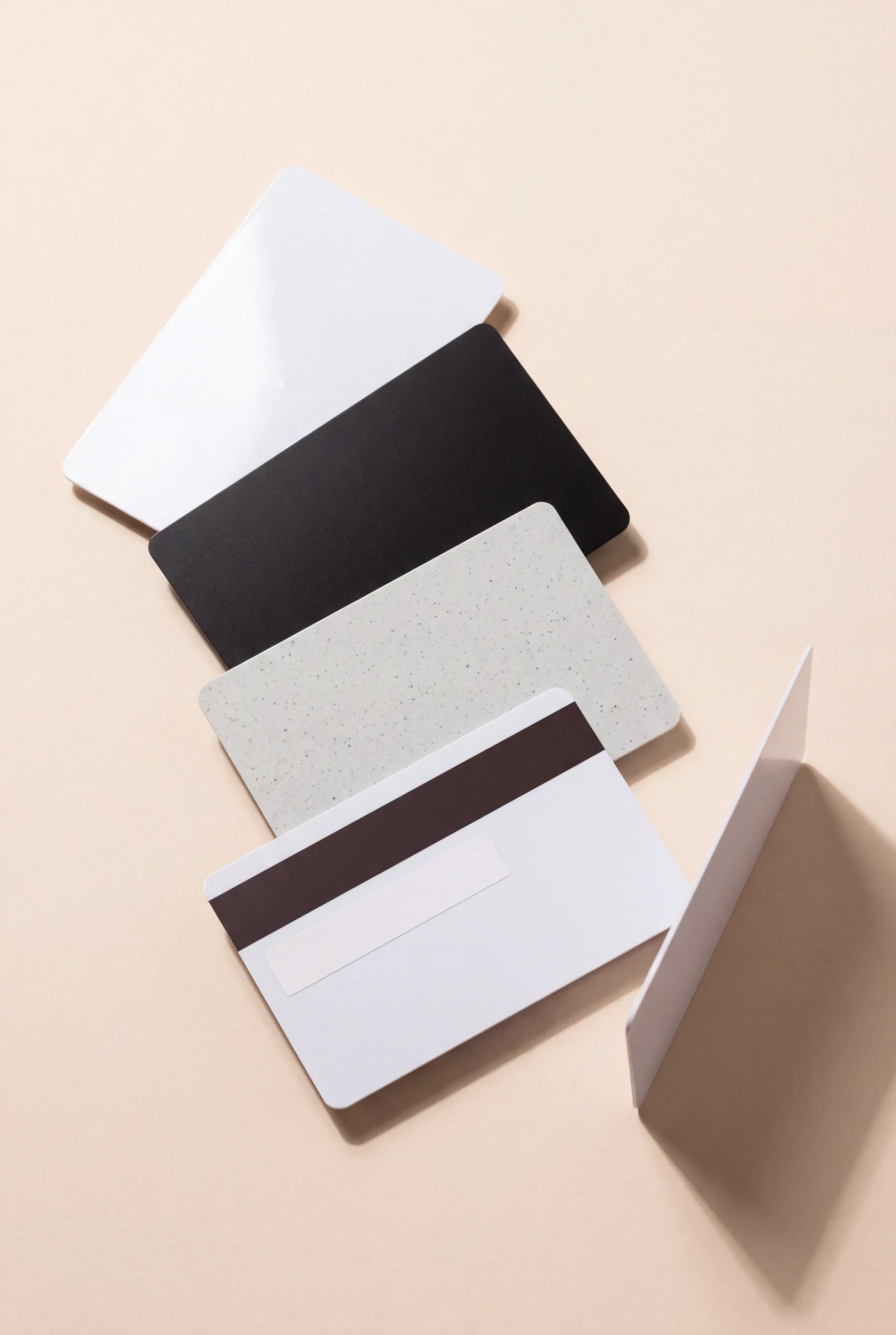
PVC cards →Shapes can be cut in wood as well as PVC. Wood runs thicker and varies in grain, which changes what a fine outline will hold cleanly.
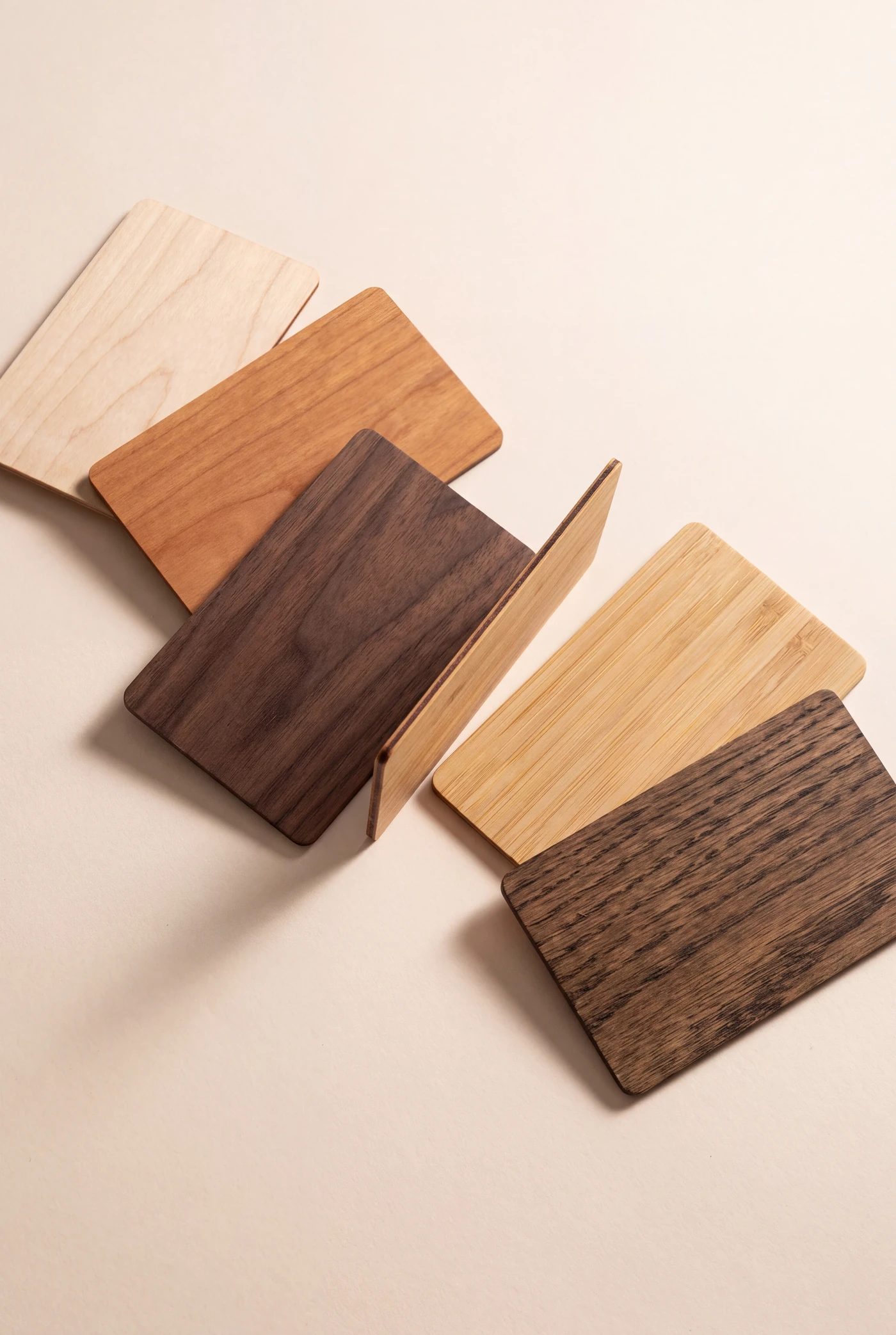
Wooden cards →