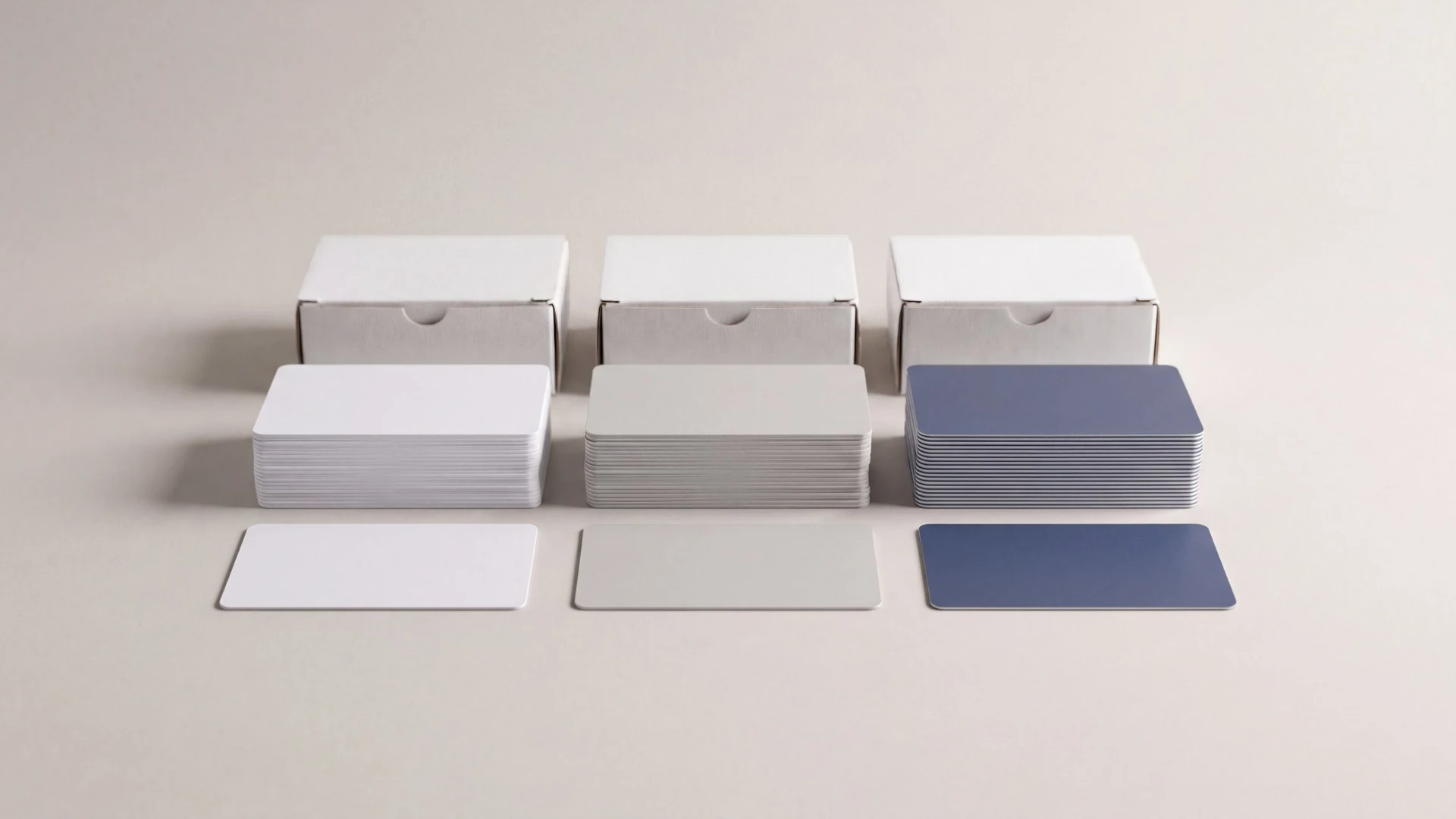
Hotel groups: combining key card designs in one order
How a hotel group keeps a design per property and still buys key cards on one order: what separates references and what the group can share.
November 19, 2026
/
8
min read
A group can buy key cards for several properties on one order, and every property can keep its own design. What decides whether two properties sit on the same line of that order is not the brand above the door: it is the chip the lock system is configured for, the card body and the artwork. Build the order as a list of references, one line per combination of those three, and most of the rest becomes arithmetic.
This guide is for the person who has to turn a group of properties into a single purchase: a central purchasing office, an operations director, or the technical lead asked to confirm what each property actually needs. It covers how to keep per property designs while buying together, what forces two properties onto separate references, what the group can genuinely share, and how a consolidated order is delivered. The commercial side of a group purchase sits on the hospitality page for hotel groups; this page is about how to specify it.
01. The order is a list of references, not a quantity
A purchase order for 24,000 cards is not an order for one thing. A reference is one manufacturable item: one chip specification, one card body and thickness, one artwork, one numbering rule. Two properties share a reference only when all four match. State the reference list first, then the quantities, and a quotation can be compared line by line instead of as a single total.
A group with four properties might arrive at a list like this one.
Property
Lock configuration
Card body and design
Quantity
City centre, 180 rooms
13.56 MHz, encrypted credential, keys held by the integrator
Recycled PVC, property artwork
12,000
Resort, 240 rooms
13.56 MHz, same system, earlier software generation
Recycled PVC, property artwork
9,000
Boutique, 42 rooms
13.56 MHz, same system as the city centre property
Wooden card, group artwork
1,500
Serviced flats, 60 rooms
125 kHz, read only credential
PVC, group artwork
2,000
Illustrative scenario, not a Kaway case study. Three properties share a frequency and a system and still need three references, because the software generation, the card body and the artwork differ. The fourth is a different technology altogether.
02. What keeps two properties on separate references
Most of the work in a group order is deciding which lines cannot be merged. Five things separate them, and only the last one is a design decision.
The chip and its configuration. Two properties on the same lock brand can be running different credentials. NXP lists the MIFARE families as separate products, with MIFARE Plus described as easing migration from MIFARE Classic to higher security levels, so a brand name does not resolve to a chip. The memory structure, the security mode and the keys are set when the property's system is configured, not when the lock is made. What decides this is covered in the hotel key card compatibility guide, and it has to be settled per property before a group quantity means anything.
Frequency. An estate assembled over fifteen years often runs two generations at once: 125 kHz at the older properties, 13.56 MHz at the newer ones. These are not interchangeable cards and a group total that mixes them is not a quantity anyone can price.
Magnetic stripe properties. Where a property still runs stripe doors, coercivity, track layout and stripe position all have to match the existing encoder. A stripe card and a contactless card are separate references even under identical artwork. Wooden cards are supplied as contactless RFID/NFC only; a magnetic stripe can be applied to wood, but it wears faster and gives more read problems than on PVC, so it is not recommended.
Card body and thickness. Material changes what sits around the antenna, and insert style readers are the most sensitive to it. A property moving to wood is a new reference and a new approval, not a substitution on an existing line; what that body can and cannot carry is set out in the guide to wooden hotel key cards.
Numbering and variable data. If cards carry serial numbers, each property needs its own reserved range, or a reorder at one property will reissue a number already circulating at another.
Each distinct configuration can be proved before the group commits anything. Free samples are available: a sample in your material and chip goes out before any order, which means every reference on the list can be tested on its own doors rather than on a specification sheet.
03. What the group can actually share
The references stay separate. Almost everything around them does not.
Element
Shared or per property
What that means in practice
Artwork template
Shared
One layout, with the property name and any local wording as the only variable.
Chip specification
Per property
Confirmed against each system before the quantity is set.
Proof approval
Per reference
One named approver for each line, not one for the group.
Read testing
Shared
Every chip is read-tested individually before shipping (100%, not sampling).
Packing and labelling
Shared process, per property boxes
Boxes labelled by property, so goods receipt does not have to re-sort them.
Freight booking
Shared
One booking, even when the cartons separate at the destination.
Retained sample
Per reference
The approved card kept as the reference for the next order.
The pattern is that anything technical stays per property, and anything procedural is worth centralising. A group that centralises the specification and leaves the paperwork to each property has it backwards.
Freezing what was approved is what makes the second order cheap, and it is the part groups skip. The record each reference needs is in the guide to reordering without batch drift.
04. Quantity per reference, and how small a design can be
Minimum order is 500 units. How that figure is applied when one order carries several designs is confirmed with the quotation, so the request should state the quantity for each reference separately and ask how it is counted across the order. A group total of 24,000 units says nothing about whether a 42 room property can have its own card.
The quantity for each line comes from cards issued and retired at that property over a real period, not from its room count. Two properties of the same size can differ by a factor of three depending on whether cards are collected at checkout, how long the average stay is, and how many are handed over per stay.
Where a small property cannot justify its own design, there are two honest options and one bad one. It can move to the group artwork, which carries no property name and can therefore be ordered at group volume. It can keep its own design and accept holding the stock longer, which is only sensible if the branding is stable, because artwork tends to change before a five year stock is used. The bad option is ordering a short run of its own design at the same unit price as the group and being surprised later.
05. One shipment, or several deliveries
Consolidating production and consolidating delivery are two different decisions, and groups often assume the second follows from the first.
Swipe the diagram sideways to see all of it
The order can be consolidated upstream and still split at the point of delivery.
A central store means one customs clearance, one goods receipt and one place that knows what is in stock. It also means someone at the group has to pick, pack and send cards onward to each property, and that internal leg is rarely costed. Direct delivery removes the internal leg and adds a clearance and a receipt per site.
Either way, the quotation has to say where delivery happens and who clears customs, because that is what the price covers. The ICC describes the Incoterms rules as a set of standards used in international and domestic contracts for the delivery of goods, clarifying the tasks, costs and risks involved in moving goods from seller to buyer. Naming the term is not a formality: it decides who pays duty and who carries the risk if a pallet is held. How the rest of the schedule behaves is set out in the guide to lead times and freight.
One risk belongs specifically to groups. A consolidated shipment that is held at the border holds every property at once, which is the opposite of what consolidation is supposed to achieve. Safety stock is therefore counted per property and held at the property, whatever the delivery route.
06. Approval is the schedule, not production
Standard production is 12 calendar days from approval for PVC and wooden cards. On a single property order that figure is the schedule. On a group order it is the easy part: the clock does not start until the last reference is approved, and the last reference is usually waiting on a general manager who has not seen the proof yet.
Two roles fix most of it. One owner for the order, who holds the reference list and chases approvals. One named approver per reference, who signs that property's proof and its chip confirmation. Without the second role the group discovers at week three that nobody at one property was ever asked.
Hotel groups can ask for a proposal for their quantities, properties and designs. What makes that proposal useful on the first pass is the reference list: for each property, the lock system as precisely as it can be stated, the chip specification it is authorised for or a card that currently opens its doors, the card body, the artwork or a rough of it, and the quantity. A list with four complete lines is worth more than a brief with a group total and an assurance that the properties are all the same.
07. References
ICC, Incoterms rules, where the rules are described as standards for the delivery of goods that clarify the tasks, costs and risks between seller and buyer, with Incoterms 2020 as the current edition: iccwbo.org.
NXP, MIFARE product families, a page that presents each family as a product of its own and positions MIFARE Plus as the migration route out of MIFARE Classic towards higher security: nxp.com.
08. Asking for a group proposal
Send the quantity and the chip requirement for each design, with the property each one belongs to, and ask for a proposal covering the properties, designs and quantities of the group. If one property's chip is still unconfirmed, send it as an open line rather than leaving it out: an incomplete reference list is still the fastest way to find out which properties can share a card. Ask for a group proposal.
About this guide
Published by Kaway Group. The date on this page shows when this guide was last updated. If anything here is out of date, or contradicts what your integrator tells you, tell us and we will correct it.
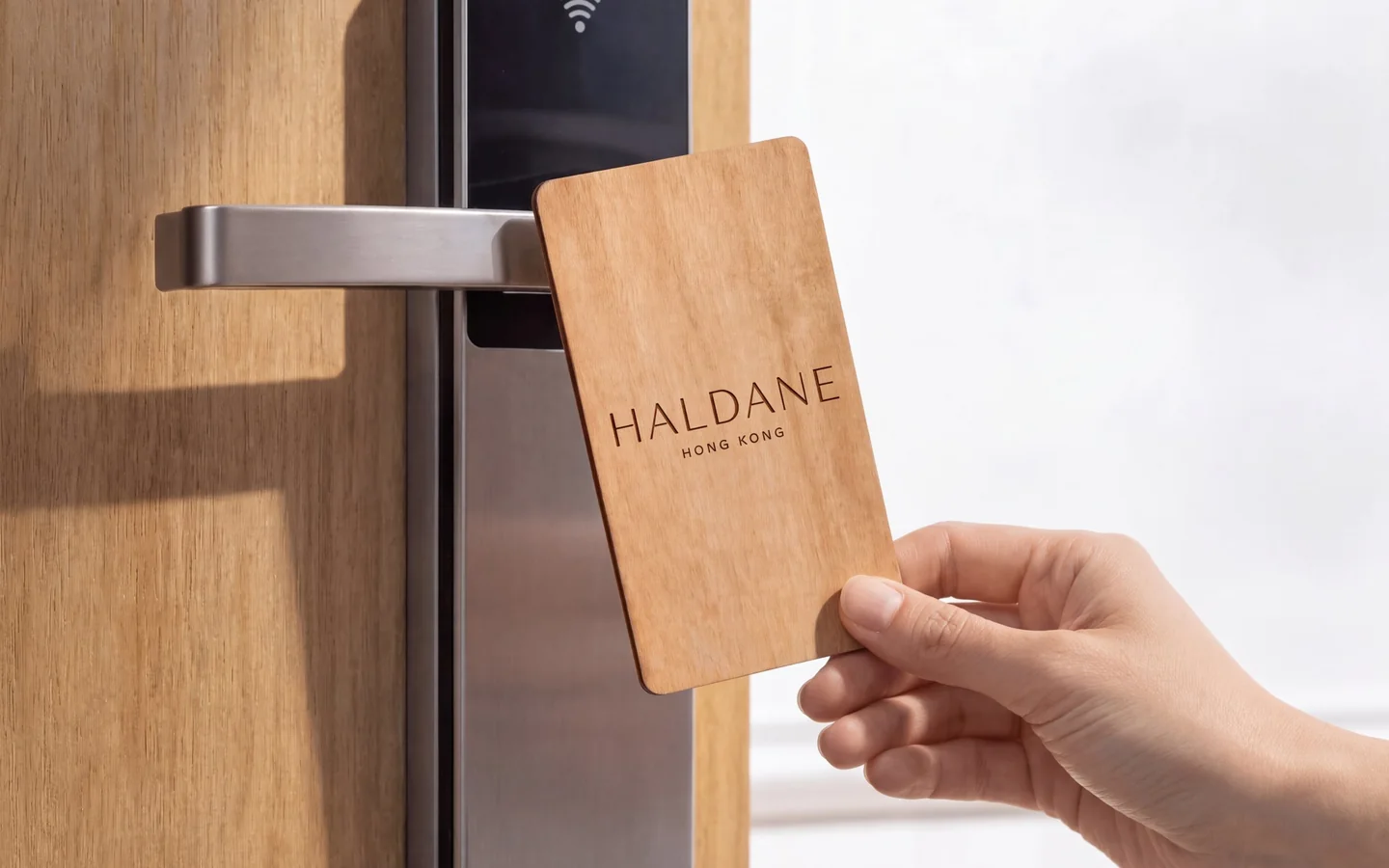 HospitalityRoom keys, staff credentials and the pieces around them.
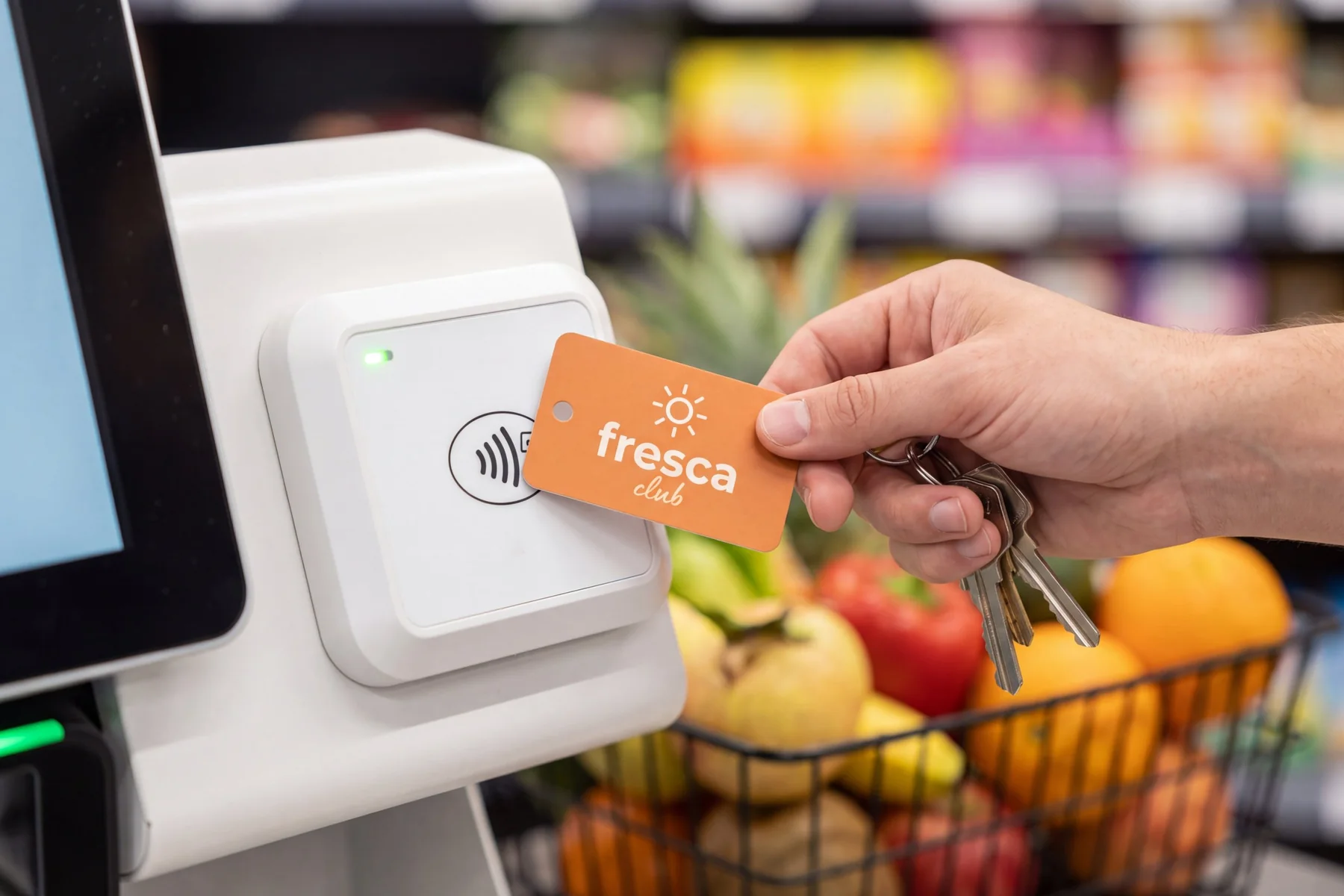 Retail and loyaltyGift, loyalty and membership cards with variable data.
 Access controlCards and fobs matched to the reader you installed.
 Clubs and associationsOne chip for the turnstile, the locker and the desk.
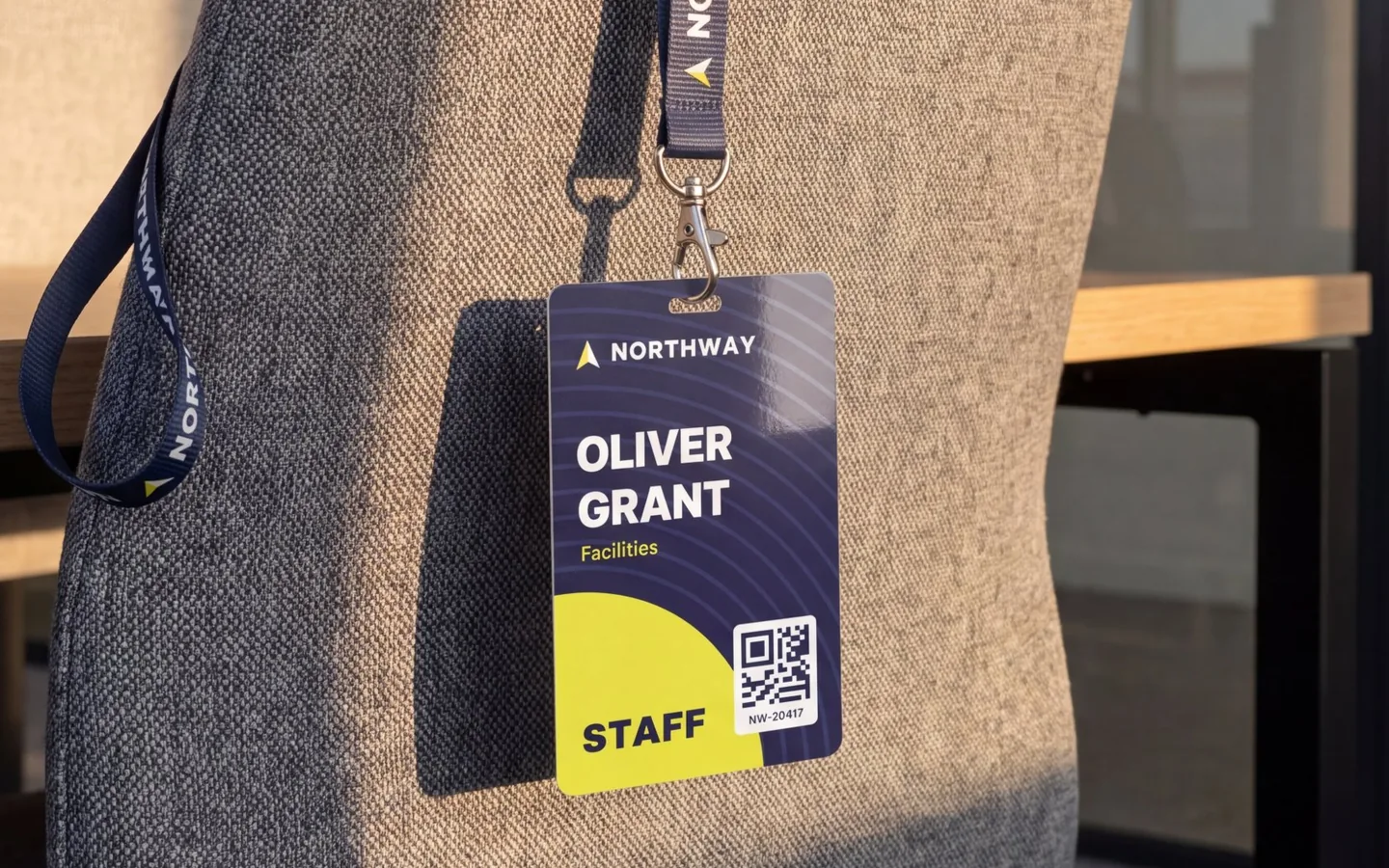
 Events and festivalsWristbands, badges and lanyards for each edition.